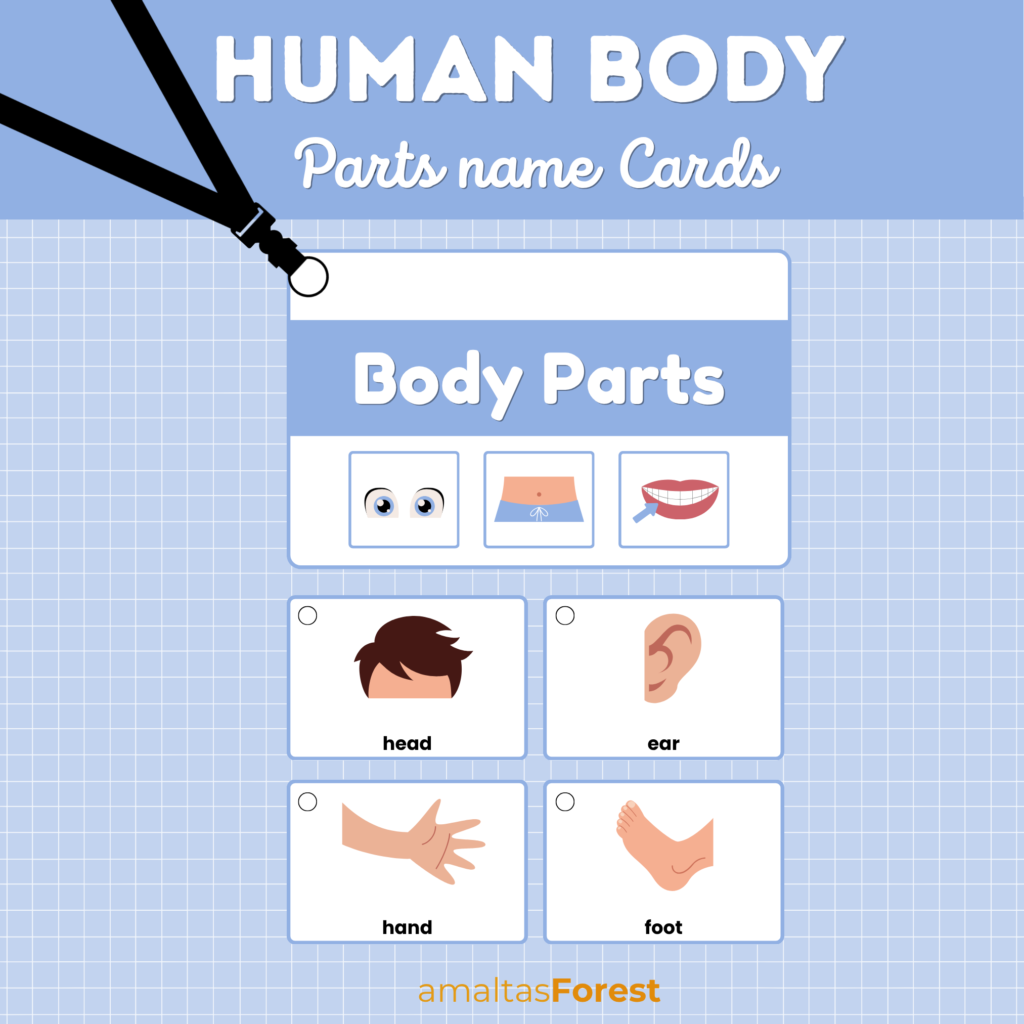
As the children start growing it becomes very important for kids to learn about their body parts like hands, knees, eyes etc it helps them understand their function more efficiently. For toddlers it creates self-awareness, communication and healthy boundaries.
Learning body parts boost vocabulary, and early language skills, it also help them describe feelings (“my tummy hurts”) and follow simple instructions (“touch your head”), which supports later literacy and classroom readiness.
Why Should Children Learn Body Parts Names ?
Children should learn body-part names because this simple topic builds language skills, safety awareness, body understanding, and healthy habits together.
Language and Communication : Naming body parts builds early vocabulary and helps children connect words like “hand,” “tummy,” and “foot” to real things. It also helps them clearly express pain or needs instead of just crying or pointing.
Body awareness and Movement : Knowing body-part names helps children understand their body and how it moves, which supports balance, coordination and safe play. Fun games and songs like Head, Shoulders, Knees, and Toes connect movement with words and improve motor skills while learning.
Safety and Boundaries : Using correct names for private parts helps children understand body boundaries and say when something feels wrong. It supports body safety and helps them talk to trusted adults about unsafe touch.
Hygiene, Health and Confidence : When children know words like hand, mouth, teeth, and feet, they follow habits like washing hands and brushing teeth more easily. It also builds confidence, self-esteem and a positive body image.
Also check out Omnivore animals with printable worksheets for improving animal awareness.
Tips for Effective Learning Body Parts Names
Teaching body-part names works best when learning is simple, fun and repeated often. Here are easy tips you can use in any toddler or preschool classroom.
1. Start with big, easy parts
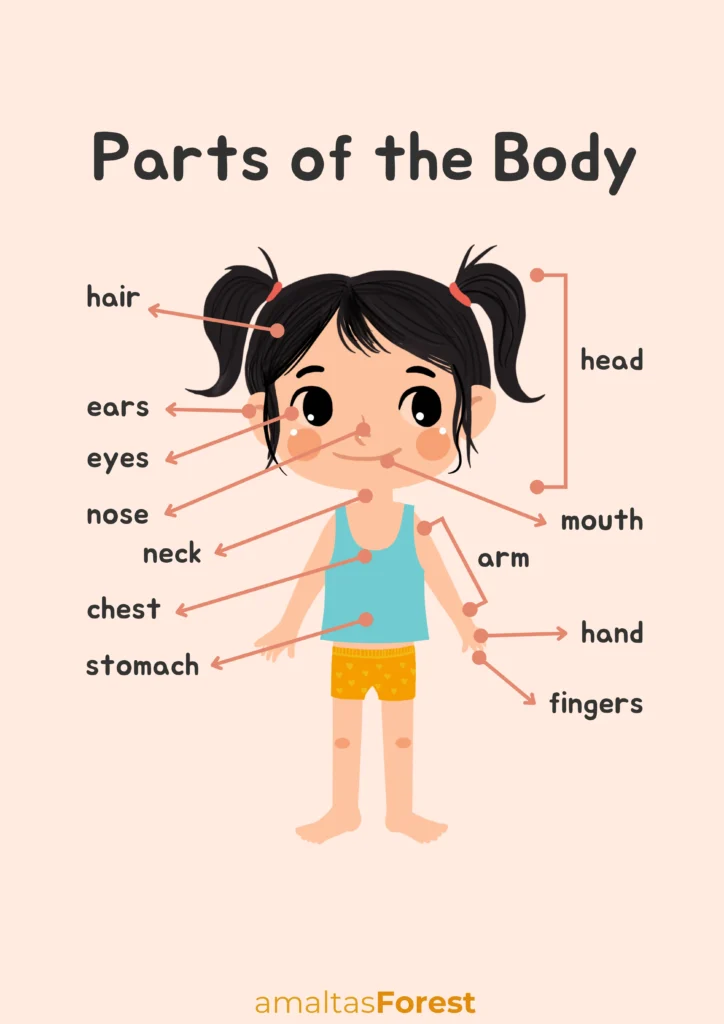
Begin with simple body parts like eyes, nose, mouth, ears, hands, and feet, then slowly add tummy, head, knees, arms, and fingers.
2. Use songs, rhymes, and movement
Sing action songs like Head, Shoulders, Knees and Toes and touch each body part while singing. This helps children remember words through movement and sound.
3. Turn daily routines into mini-lessons
Use daily activities like washing, dressing and brushing teeth to name body parts (e.g. “Wash your hands,” “Open your mouth”), so children learn naturally through real-life actions.
4. Use visual aids and hands-on activities
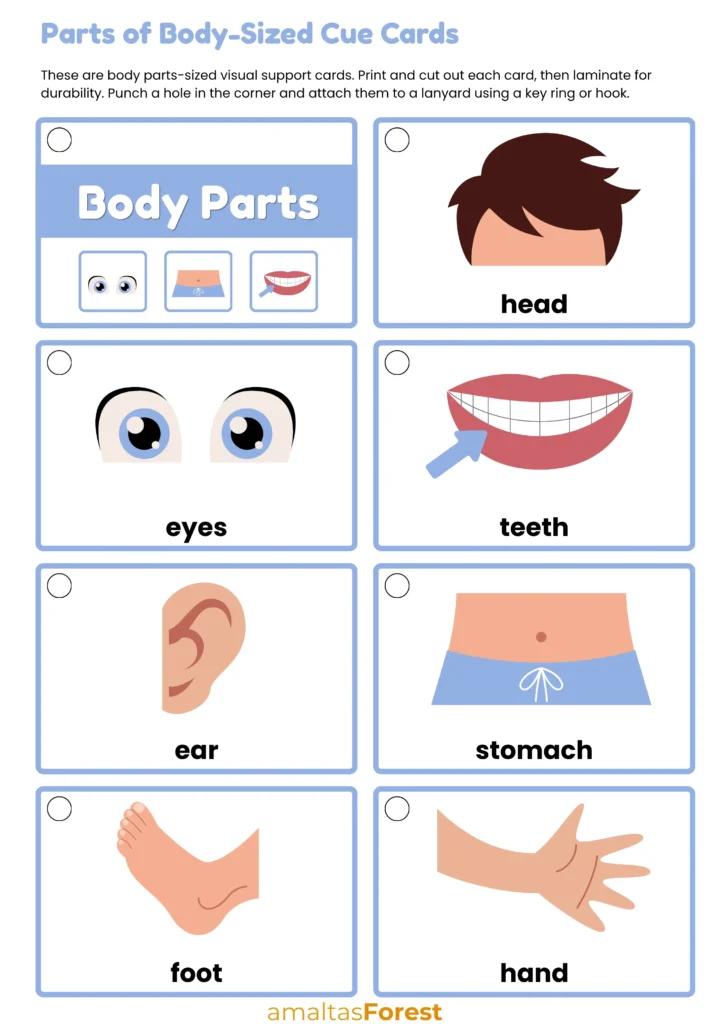
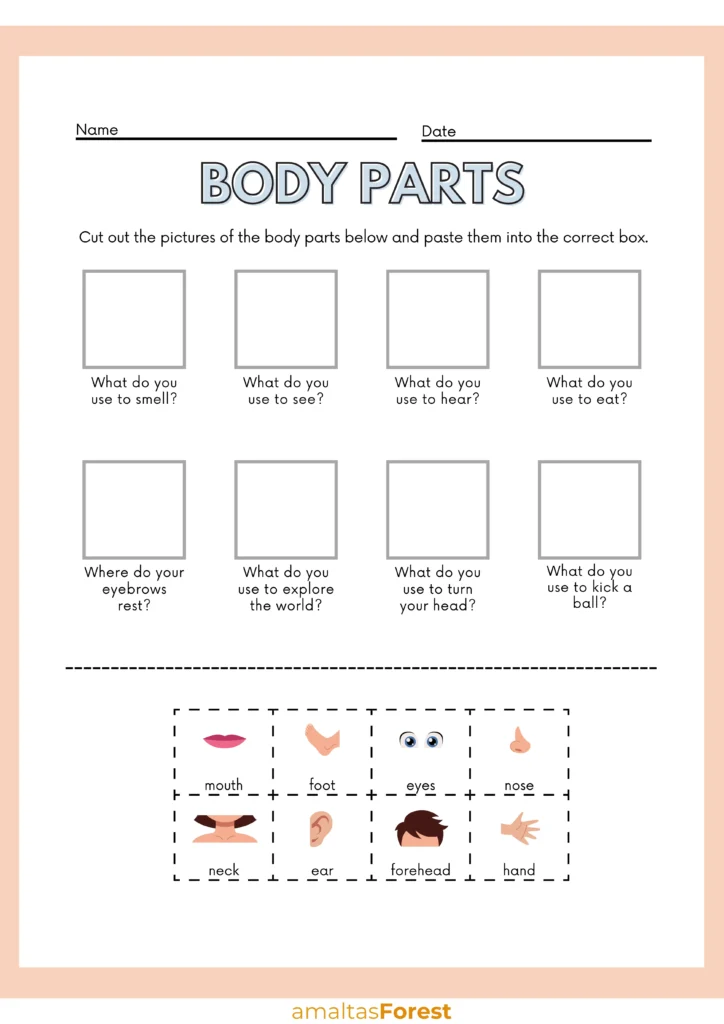
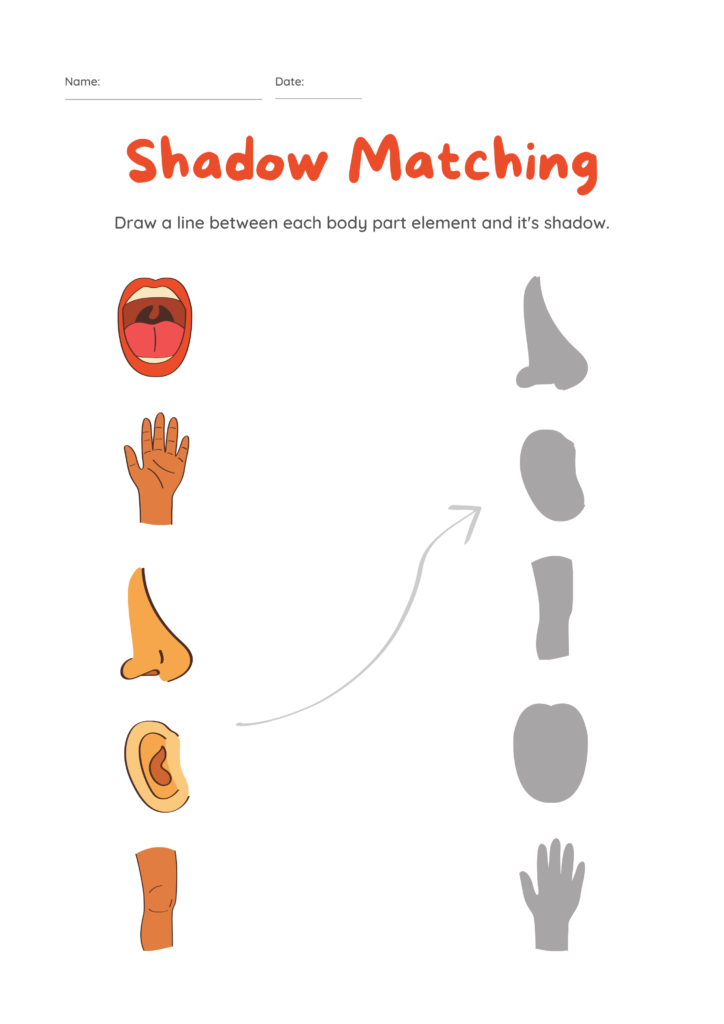
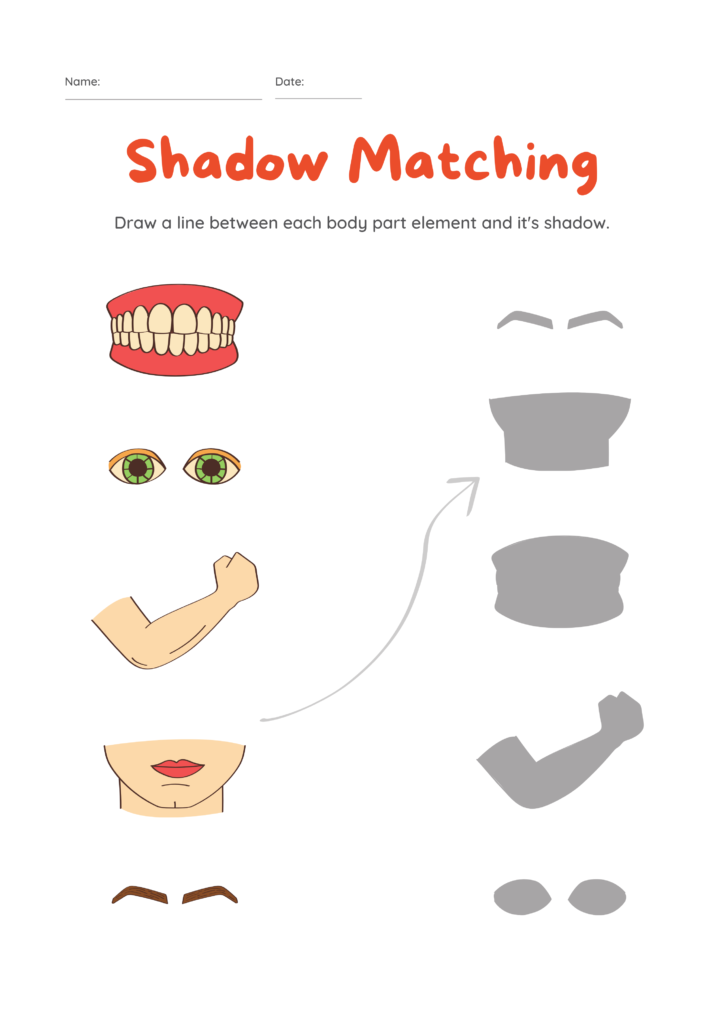
Use pictures, flashcards or a body chart, and let children do fun activities like matching, colouring or tracing. You can also use puzzles or toy models to help them see how body parts fit together.
5. Make it into games
Play fun games like Simon Says (“touch your nose”) or Touch and Name to practise body parts. Games keep children active, engaged and help them learn faster.
Essential Human Body Parts and Their Functions for Students
Here is a simple and easy overview of important human body parts and their functions, made for young learners and early-grade students.
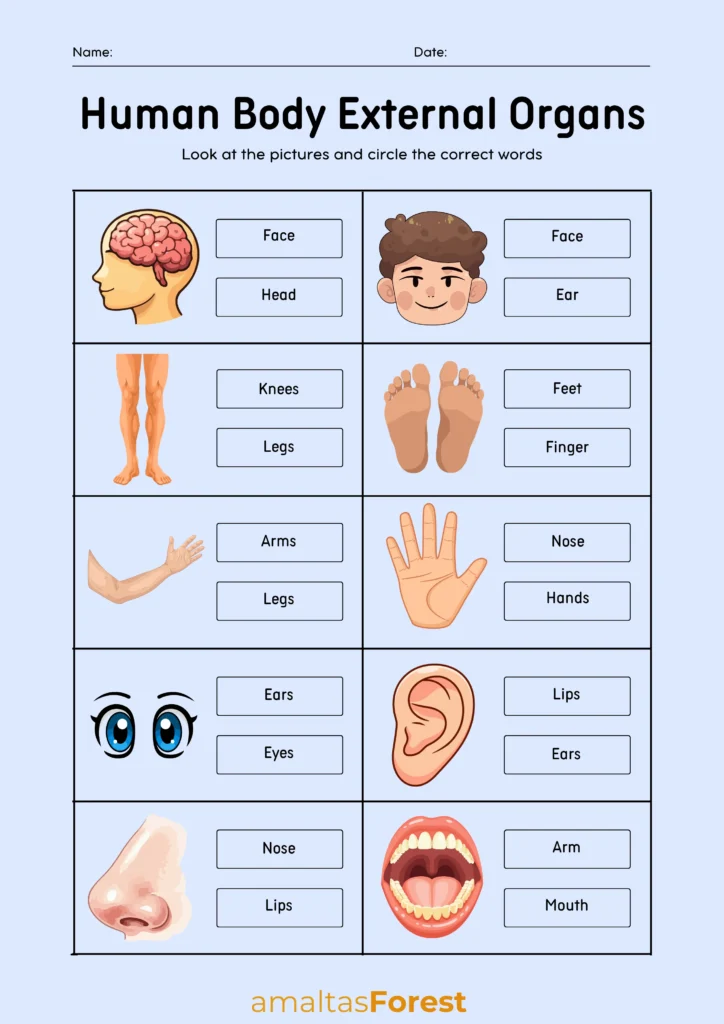
Basic External Body Parts
These are the main body parts children learn first and use every day.
- Head – holds the brain and sense organs and helps us think and learn
- Face – has eyes, nose, mouth, and ears and shows our feelings
- Eyes – help us see
- Ears – help us hear and keep balance
- Nose – helps us smell and breathe
- Mouth – helps us eat, drink, taste, and speak
- Hands – help us hold, write, draw, and touch
- Arms – help us reach, lift, and carry
- Legs – help us stand, walk, run, and jump
- Feet – help us balance, stand, and move
Do read carnivorous animals name list in details, you will get introduce with different types of carnivorous animals with animals chart for practice.
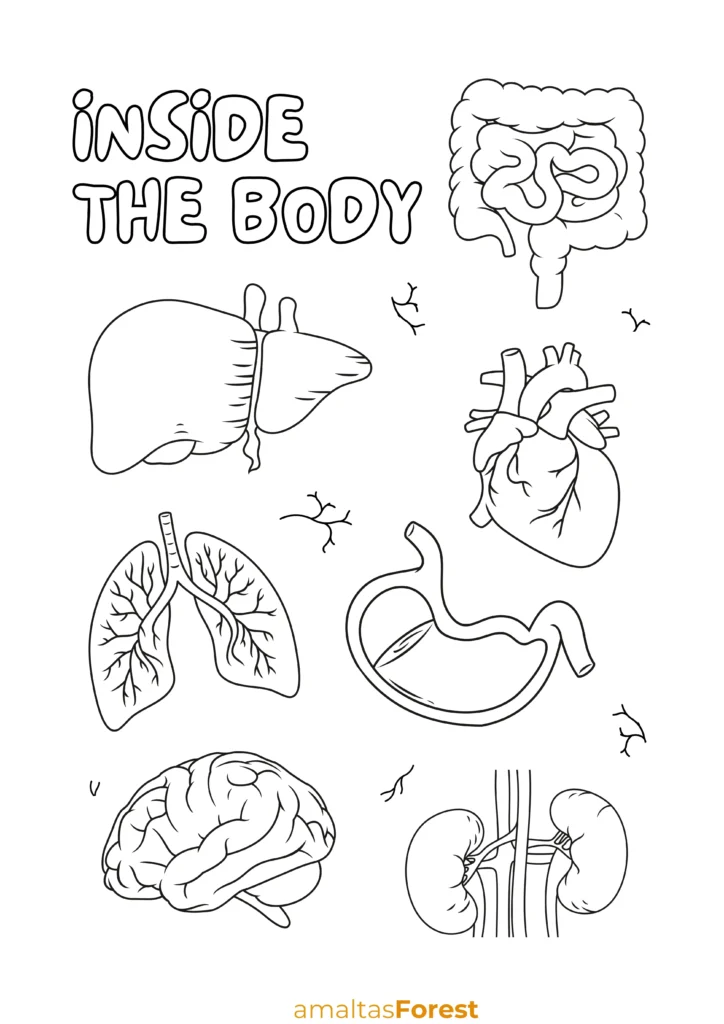
Key Internal Organs and Their Functions
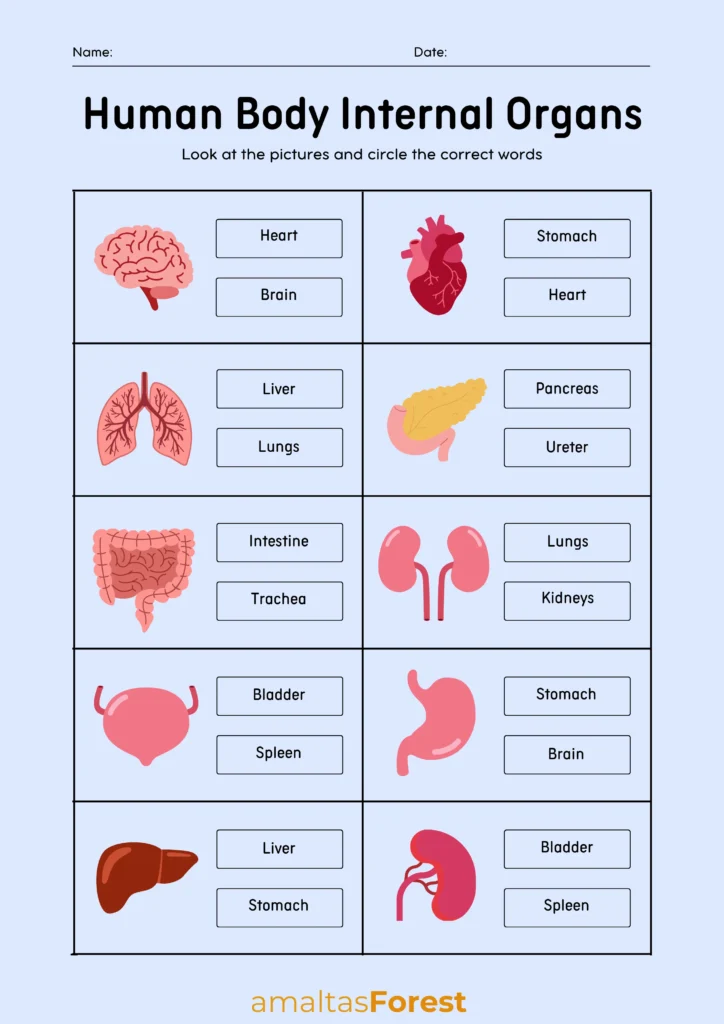
These are the list of internal organs that keep our body alive and working.
- Brain – controls thinking, memory, feelings and movement
- Heart – pumps blood around the body
- Lungs – help us breathe in oxygen and breathe out carbon dioxide
- Stomach – breaks down food for digestion
- Intestines – absorb nutrients from food and remove waste
- Liver – cleans blood, stores energy, and helps digest food
- Kidneys – remove waste and make urine
- Skin – protects the body and helps us feel touch, heat, and cold
- Pancreas – helps digest food and controls sugar levels in the body
- Spleen – helps clean blood and fight infections
- Bladder – stores urine until it leaves the body
Female Body Parts Name
For young students, keep the list simple and clear by focusing on body parts they can easily see and recognize.
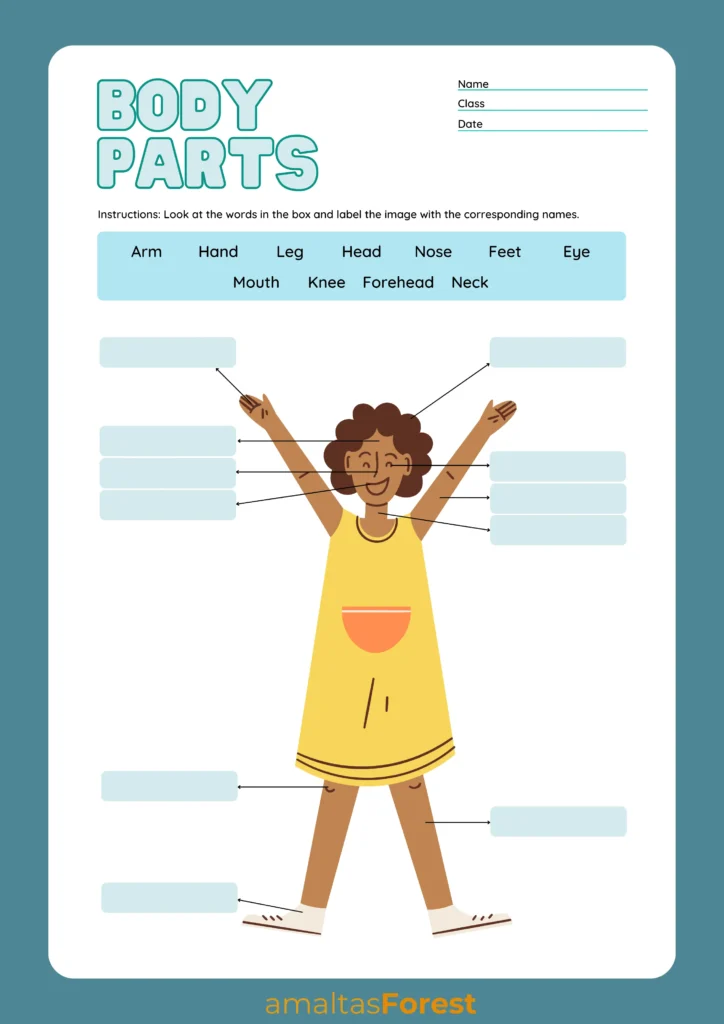
Head & Face
These are the main parts of the head and face for a woman (same basic structure as in men, used for daily‑life naming).
- Head
- Forehead
- Eyes
- Eyebrows
- Ears
- Nose
- Cheeks
- Mouth
- Lips
- Chin
- Hair
Upper Body
These are the main outer upper‑body parts visible on a woman.
- Neck
- Shoulders
- Arms (upper arm, forearm)
- Elbows
- Hands (wrist, fingers, thumb)
- Chest (front upper body)
- Breasts (milk‑supplying organs, important for life‑science and health, but keep description simple for young learners)
- Ribs (ribcage under the chest)
- Stomach / tummy (front middle‑upper body)
- Back (upper back, spine area)
Lower Body
These are the main outer lower‑body parts.
- Hips / pelvis
- Waist (middle part between chest and hips)
- Belly / abdomen
- Lower back
- Buttocks (bottom)
- Legs (thighs and lower legs)
- Knees
- Calves (back of lower leg)
- Ankles
- Feet (toes, heel, sole)
- Reproductive organs (for older primary / life‑science level: vulva, vagina, uterus, ovaries)
Male Body Parts Name
These are the main external body parts students can learn when studying the human body.
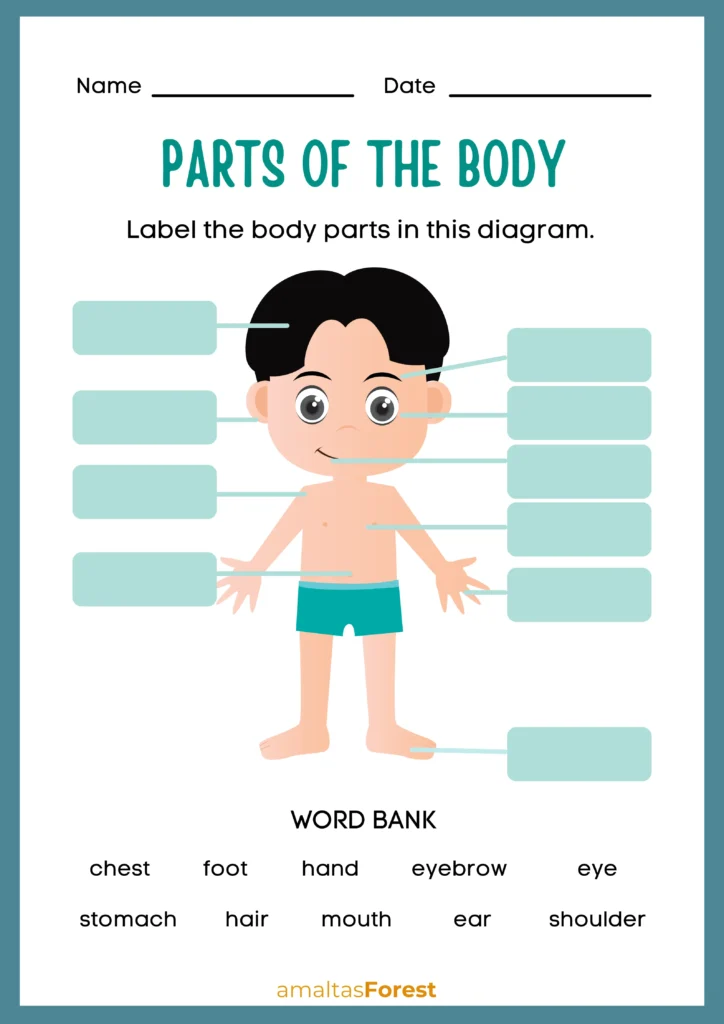
Head & Face
These are the main parts on the head and face.
- Head
- Hair
- Forehead
- Eyes
- Eyebrows
- Eyelashes
- Ears
- Nose
- Cheeks
- Mouth
- Lips
- Teeth
- Tongue
- Chin
- Neck
- Beard, mustache (on many adult males)
Upper Body
These are the main outer upper‑body parts.
- Shoulders
- Arms (upper arm, lower arm)
- Elbows
- Wrists
- Hands (palm, fingers, thumb, nails)
- Chest (front upper body)
- Pectoral muscles (chest muscles)
- Abdomen / tummy / stomach (front middle body)
- Ribs (ribcage under chest)
- Back (upper back, along the spine)
- Waist (middle part between chest and hips)
Lower Body
These are the main outer lower‑body parts.
- Hips / pelvis
- Lower back
- Buttocks (bottom)
- Thighs (upper leg)
- Knees
- Calves (lower back of leg)
- Ankles
- Feet (heel, sole, toes)
- Male reproductive parts (for life‑science / older grades):
- Penis (urine and reproduction)
- Scrotum (skin sac holding the testes)
- Testes (testicles; make sperm and male hormones)
The Torso
The torso (or trunk) is the middle part of the body between the neck and hips that holds important organs and connects the head, arms, and legs.
What the torso includes
- Chest : the upper front part where the heart and lungs are, protected by ribs
- Abdomen (tummy) : the middle part with organs that help digest food
- Back (spine area) : supports the body and helps us stand straight
- Pelvis : the lower part that connects the body to the hips and legs
To make the learning more informative check out Herbivorous name their food habit, living habitat and activities worksheets.
The Extremities
In simple words, extremities are the four body parts that come out from the torso, two arms and two legs. They help us move, hold things, walk, run and play.
Upper Extremities (Arms)
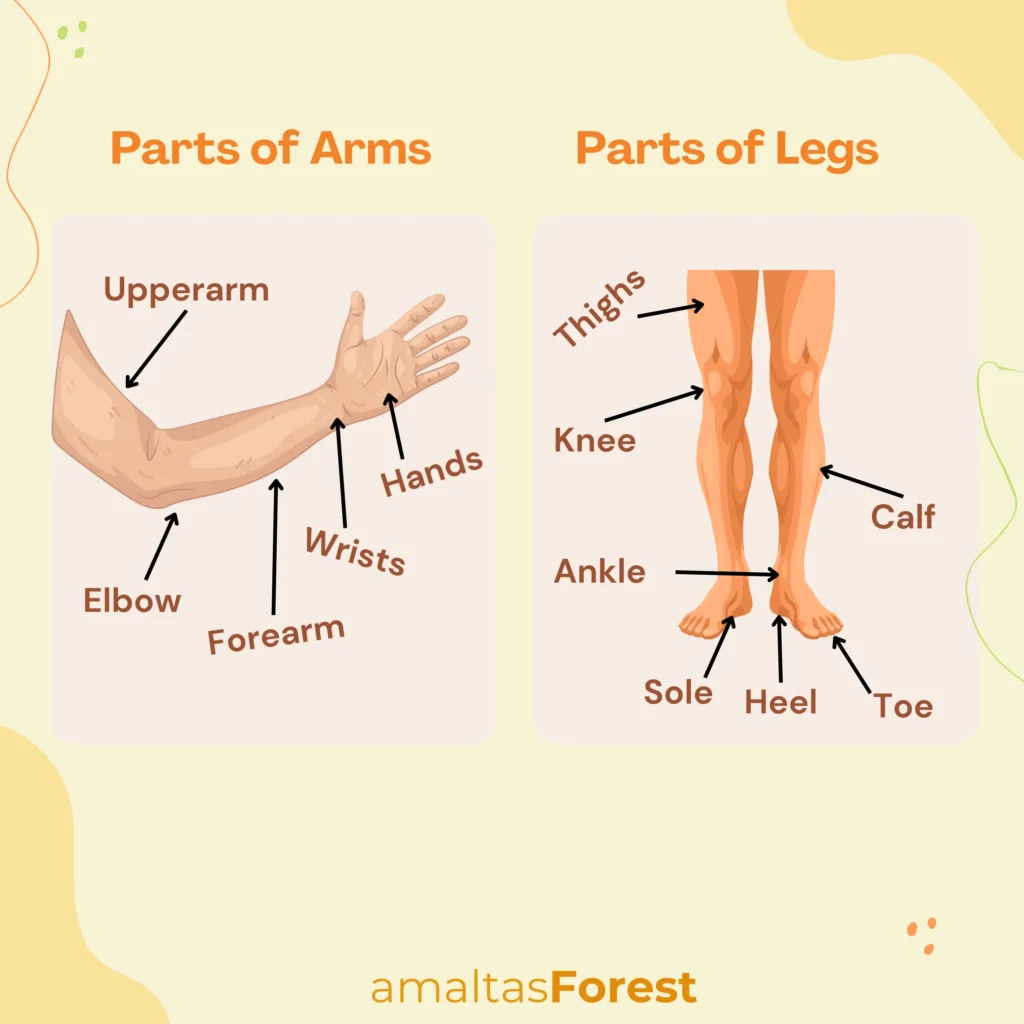
The upper extremities run from the shoulders to the fingertips and include:
- Shoulders
- Upper arms
- Elbows
- Forearms
- Wrists
- Hands (including fingers and thumb)
Lower Extremities (Legs)
The lower extremities run from the hips to the toes and include:
- Hips
- Thighs
- Knees
- Lower legs (shin and calf)
- Ankles
- Feet (including toes)
Body parts name for kids a to z
Here is a simple A-Z list of body‑parts names for kids, using only common, child‑friendly words :
- A – Arm
- B – Back
- C – Chin
- D – Digits (fingers & toes)
- E – Ear
- F – Foot
- G – Gums
- H – Hand
- I – Iris (part of the eye)
- J – Jaw
- K – Knee
- L – Leg
- M – Mouth
- N – Nose
- O – Organs
- P – Palm
- Q – Quadriceps (thigh muscle)
- R – Rib
- S – Shoulder
- T – Teeth
- U – Uvula (back of the throat)
- V – Veins
- W – Wrist
- X – Xiphoid (small bone in chest)
- Y – Yolk sac (early body part in babies)
- Z – Zygomatic bone (cheekbone)
To make the learning more informative check out wild animals name list with pictures and important facts with activities worksheets.
50 body parts name pdf
10 Fun Activities to Teach Body Parts Names
1. “Head, Shoulders, Knees, and Toes” Circle
Sing the song and have children touch each body part while singing, then go faster each time to make it more fun and help them remember.
2. Simon Says – Body Parts Version
Give simple commands like “Simon says touch your nose” or “wiggle your fingers,” and children follow only when they hear “Simon says” to practise listening and body-part names.
3. Body Part Bingo
Make simple Bingo cards with pictures of body parts like eyes, nose, and hands. Call out a name, children cover the matching picture, and the first to get a row says “Bingo!”.
4. Body Part Matching Cards
Make flashcards with a picture and its word (like an eye and “eye”), and let children match pictures to words or find pairs of the same body part in small groups.
5. Body Parts Name Video
30 Body Parts Names: Learn simple English body-part words to help kids build vocabulary and understand the human body easily.
6. Body Parts Name for Kids Learning Book
I Know My Body: A simple and fun baby book that teaches body parts and basic anatomy to help kids learn about their bodies.
Body parts in telugu
Here are common body parts in English and Telugu for kids:
- Head – తల (Tala)
- Hair – జుట్టు (Juttu)
- Eye – కన్ను (Kannu)
- Ear – చెవి (Chevi)
- Nose – ముక్కు (Mukku)
- Mouth – నోరు (Nooru)
- Teeth – పళ్లు (Pallu)
- Tongue – నాలుక (Naaluka)
- Neck – మెడ (Meda)
- Shoulder – భుజం (Bhujam)
- Arm – చేయి (Cheyi)
- Hand – చేయి (Cheyi)
- Fingers – వేళ్లు (Vellu)
- Chest – ఛాతి (Chaati)
- Stomach – కడుపు (Kadupu)
- Back – వెన్ను (Vennu)
- Leg – కాలు (Kaalu)
- Knee – మోకాలు (Mokalu)
- Foot – పాదం (Paadam)
- Toes – పాద వేళ్లు (Paada Vellu)
Learn water animals name with pictures and helps to understand water ecosystem .
Parts of the body in tamil
Here are common body parts in English and Tamil for kids:
- Head – தலை (Thalai)
- Hair – முடி (Mudi)
- Eye – கண் (Kan)
- Ear – காது (Kaadhu)
- Nose – மூக்கு (Mookku)
- Mouth – வாய் (Vaai)
- Teeth – பற்கள் (Parkal)
- Tongue – நாக்கு (Naakku)
- Neck – கழுத்து (Kazhuthu)
- Shoulder – தோள் (Thol)
- Arm – கை (Kai)
- Hand – கை (Kai)
- Fingers – விரல்கள் (Viralgal)
- Chest – மார்பு (Maarbu)
- Stomach – வயிறு (Vayiru)
- Back – முதுகு (Muthugu)
- Leg – கால் (Kaal)
- Knee – முழங்கை (Muzhangai)
- Foot – பாதம் (Paatham)
- Toes – கால் விரல்கள் (Kaal Viralgal)
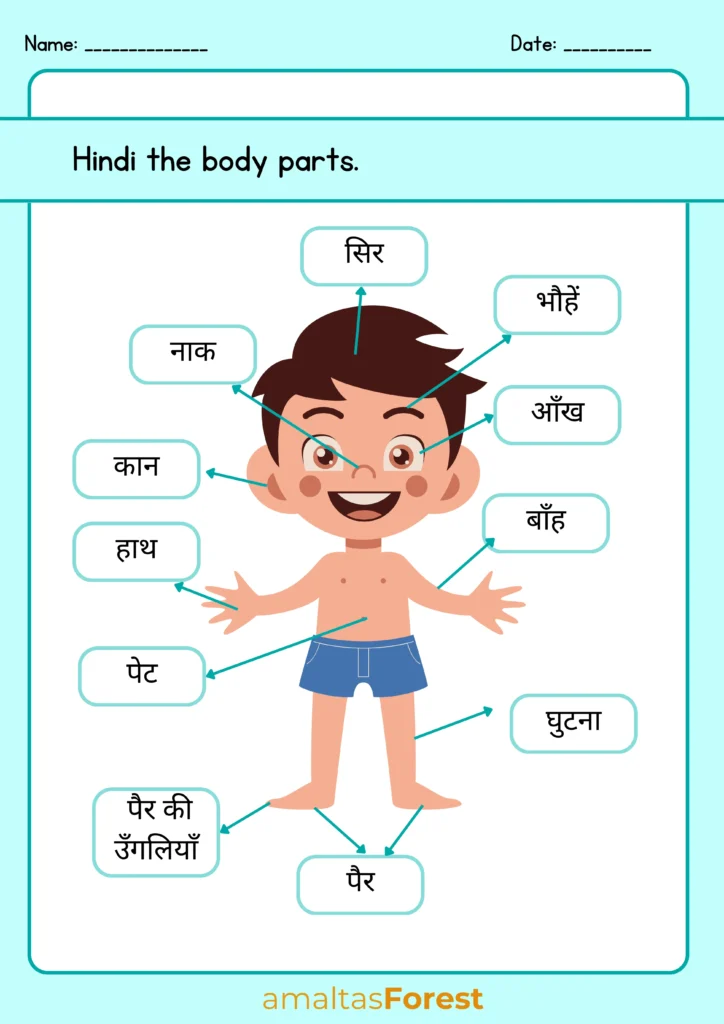
Human body parts name with picture in hindi
Here are common human body parts names in Hindi (with pictures idea) for kids:- Head – सिर (Sir)
- Hair – बाल (Baal)
- Eye – आँख (Aankh)
- Ear – कान (Kaan)
- Nose – नाक (Naak)
- Mouth – मुँह (Munh)
- Teeth – दाँत (Daant)
- Tongue – जीभ (Jeebh)
- Neck – गर्दन (Gardan)
- Shoulder – कंधा (Kandha)
- Arm – बाँह (Baah)
- Hand – हाथ (Haath)
- Fingers – उँगलियाँ (Ungliyaan)
- Chest – छाती (Chaati)
- Stomach – पेट (Pet)
- Back – पीठ (Peeth)
- Leg – पैर (Pair)
- Knee – घुटना (Ghutna)
- Foot – पैर (Pair)
- Toes – पैर की उँगलियाँ (Pair ki ungliyaan)
Related Blog
- Discover the List of colors name in english a to z to make kids aware of colors names.
- A Practical downloadable and printable List of 50 dry fruits name in english and hindi
- A Practical learning experience of Body parts names in english for kids with pictures and worksheets.
- See how Omnivores animals survive their food habits learn with pictures and worksheets.
- Learn more about Pet animals name in english and hindi help in improving understanding.
- Check out 100 vegetables name in english and hindi help in developing healthy eating habit at early age.
FAQ’s
1. What are the 20 body parts name?
Twenty body parts include head, hair, eyes, ears, nose, mouth, teeth, tongue, neck, shoulder, arm, hand, fingers, chest, back, stomach, leg, knee, foot, and toes.
2. What are the 10 basic parts of the body?
Ten basic body parts are head, eyes, ears, nose, mouth, hands, arms, legs, feet, and stomach, which help children learn simple body vocabulary.
3. What is the 79th organ in the human body?
The “79th organ” usually refers to the mesentery, which was recognized in 2017 scientific reclassification as a separate organ in the digestive system.
4. What are the 12 body parts with three letters?
Twelve body parts with three letters include eye, ear, arm, leg, toe, lip, gum, jaw, rib, hip, cap (knee cap), and gut, which are simple words for early learning.
5. What are the 78 parts of the human body?
There isn’t a fixed list of exactly 78 body parts, as the human body has many parts that are grouped differently by use.
6. What is the 5 largest organ?
The five largest organs in the human body are the skin, liver, brain, lungs, and heart, each playing a vital role in protecting and keeping the body working properly.

Team Amaltas is a group of graduates dedicated to creating a fun and effective learning platform for kids through worksheets and educational resources.