Hello kids, we are going to learn vegetable names in English, Hindi and many more languages. We are also going to cover different types of vegetables from green leaves rich in vitamins (A, C, K, folate), minerals, and fiber to exotic vegetables.
To make learning more interactive and fun little learners we are also providing fun activities and fruits and vegetables worksheets, charts of vegetables names and much more practice material for memory boost.
Do You Know : Diets rich in vegetables reduce the risk of obesity, heart disease, stroke, diabetes, and some cancers later in life.
Importance of Vegetables
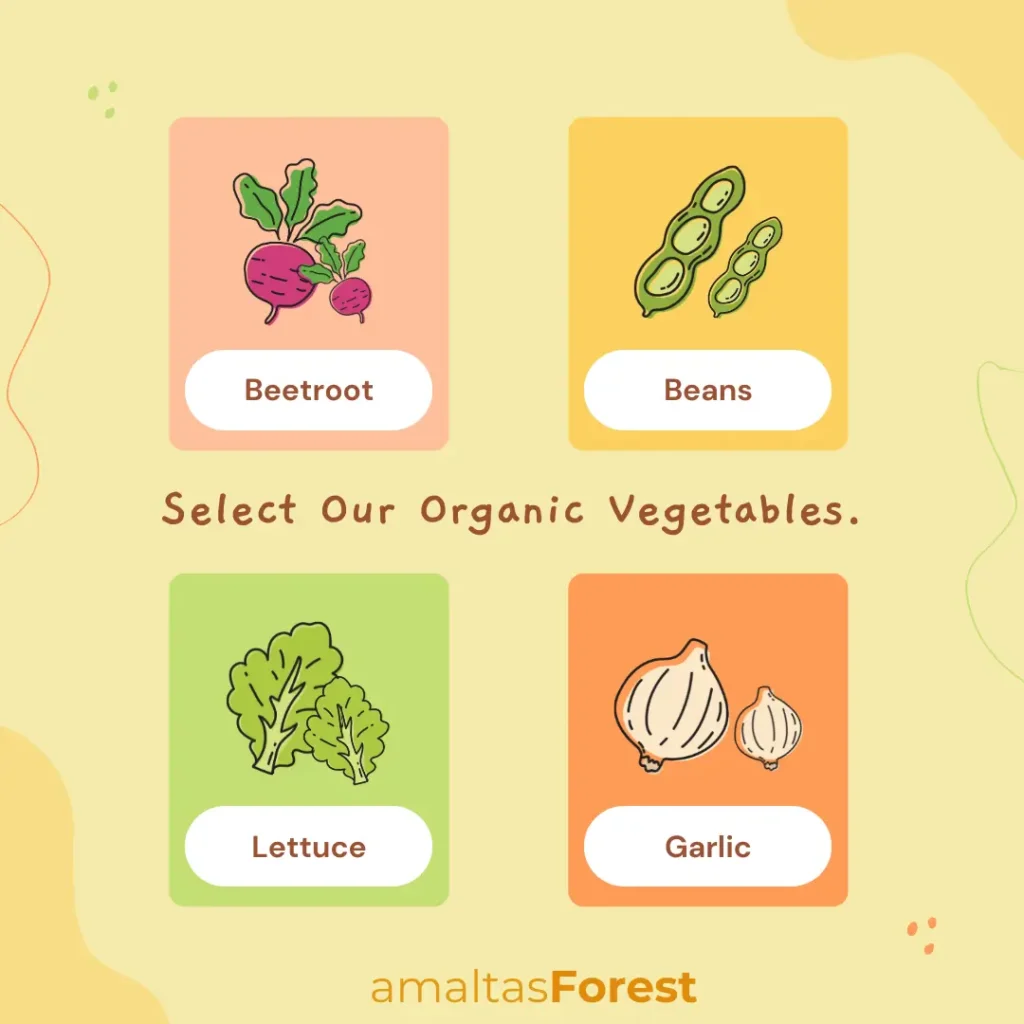
Vegetables are very important for health because they are rich in vitamins, minerals, and fiber. Vegetables like spinach, carrot, beans keeps the stomach and intestine healthy . WHO recommends “ 5 a day ” at least 5 small portions of fruits and vegetables daily for healthy growth and development.
10 vegetables name in english
- Carrot
- Potato
- Tomato
- Spinach
- Cabbage
- Onion
- Cucumber
- Beans
- Broccoli
- Pumpkin
Also check out list of animals that are omnivores with printable worksheets for improving animal awareness.
Different Types of Vegetables
Vegetables are usually grouped by the part of the plant we eat, such as roots, leaves, stems, flowers, fruits, seeds, tuber, exotic and bulbs.
List of Flower Vegetable Names
Flower vegetables are plants whose edible parts are their flowers or unopened flower buds. They are usually rich in vitamins, fiber, and antioxidants. Example include :
- Cauliflower
- Broccoli
- Artichoke
- Globe artichoke
- Broccoli rabe
- Zucchini flowers (courgette flowers)
- Banana flower
- Pumpkin flower
- Drumstick flower
- Agathi flower
- Capers (flower buds)
- Sesbania flower
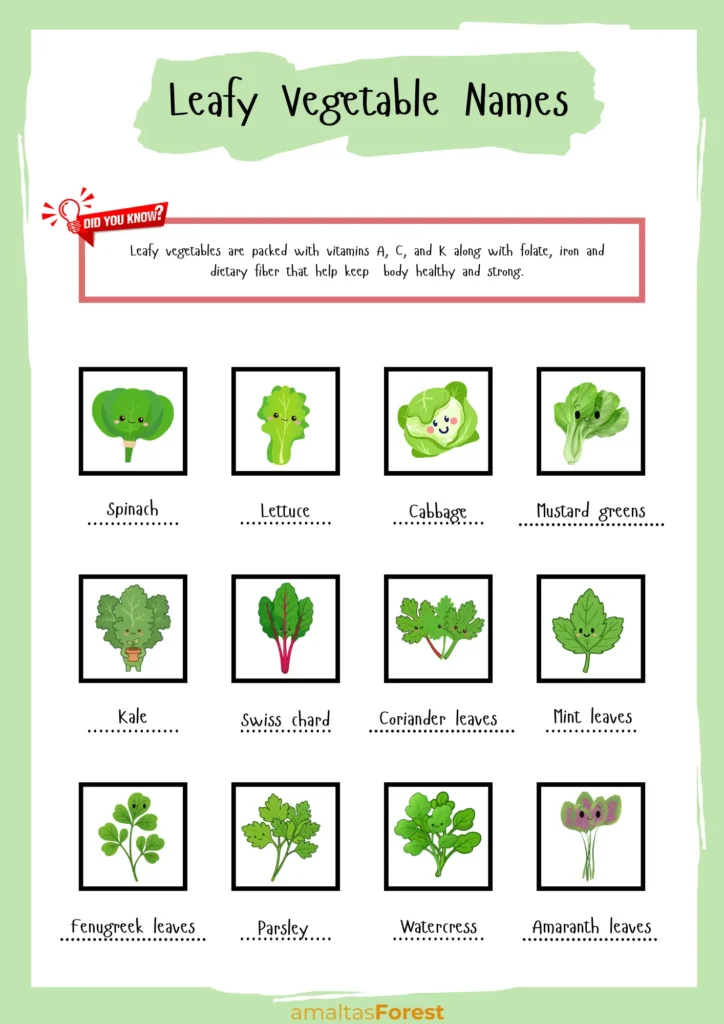
List of Leafy Vegetable Names
Leafy vegetables are plants grown for their edible leaves. They are rich in vitamins A, C, and K, as well as folate, iron, and dietary fiber. Example include :
- Spinach
- Lettuce
- Cabbage
- Mustard greens
- Kale
- Swiss chard
- Coriander leaves
- Mint leaves
- Fenugreek leaves (methi)
- Parsley
- Watercress
- Amaranth leaves
- Moringa leaves
List of Root Vegetable Names
Root vegetables grow underground and are rich in starch, fiber and minerals. Root vegetables include taproots (like carrot, beet, radish) and some tuberous roots (like sweet potato and cassava). They support digestion, provide energy and are high in vitamins A, B, C and minerals such as potassium and iron.
- Carrot
- Beetroot (beet)
- Radish
- Turnip
- Rutabaga (swede)
- Parsnip
- Sweet potato
- Cassava (yucca)
- Lotus root
- Yam
- Taro root
- Daikon
List of Tuber Vegetable Names
Tuber vegetables are swollen underground stems that store food. Tubers are energy‑dense and rich in carbohydrates, fiber and some vitamins (especially B and C). They are widely used for cooking, frying, roasting and making flour.
- Potato
- Sweet potato
- Jerusalem artichoke (sunchoke)
- Ginger
- Turmeric
- Taro (arbi)
- Cassava (yucca)
- Yams
- Elephant foot yam
- Chinese potato
- Purple yam (Ube)
- Oca
List of Fruit Vegetables Names
Fruit vegetables are botanical fruits of plants used as vegetables in cooking. These are rich in water, fiber and antioxidants and also help digestion and hydration. They are often eaten cooked or raw in curries, salads and stir‑fries.
- Tomato
- Cucumber
- Capsicum (Bell Pepper)
- Zucchini (courgette)
- Eggplant (brinjal)
- Okra (bhindi)
- Bell pepper
- Pumpkin
- Bottle gourd (lauki)
- Bitter gourd (karela)
- Ridge gourd (turai)
- Green Beans
- Green Peas
- Green Chilli
List of Bulb Vegetable Names
Bulb vegetables are layers of modified leaves around a central stem. Bulb vegetables are flavourful and contain antioxidants, vitamins (like vitamin C), and compounds that support heart health and immunity. Onion and garlic are also widely used in daily cooking.
- Onion
- Garlic
- Leek
- Shallot
- Chives
- Spring Onion (Green Onion)
- Pearl Onion
- Red Onion
- White Onion
List of Stem Vegetable Names
Stem vegetables are edible plant stems or stalks. These provide fiber, vitamins, and minerals and add crunch, texture to dishes. They are often used in soups, salads, stir‑fries and curries.
- Celery
- Asparagus
- Kohlrabi
- Bamboo shoots
- Lotus stem (kamal kakdi)
- Fennel (fennel bulb is a stem base)
- Potato (Stem Tuber)
- Ginger (Rhizome)
- Turmeric (Rhizome)
- Sugarcane
Exotic Vegetables List
Exotic Vegetables bring new flavours, colours and nutrients to meals and are good for teaching children about variety.
- Romanesco (broccoli‑like)
- Kale (curly leafy green)
- Arugula (rocket)
- Okra
- Bok choy (Chinese cabbage)
- Kohlrabi
- Jerusalem artichoke
- Jicama
- Daikon (large white radish)
- Broccolini
Check out this Carnivorous Animals Colouring Worksheet featuring animals like the Lion and Tiger, great for boosting kids’ motor skills while learning.
Some Common Vegetables
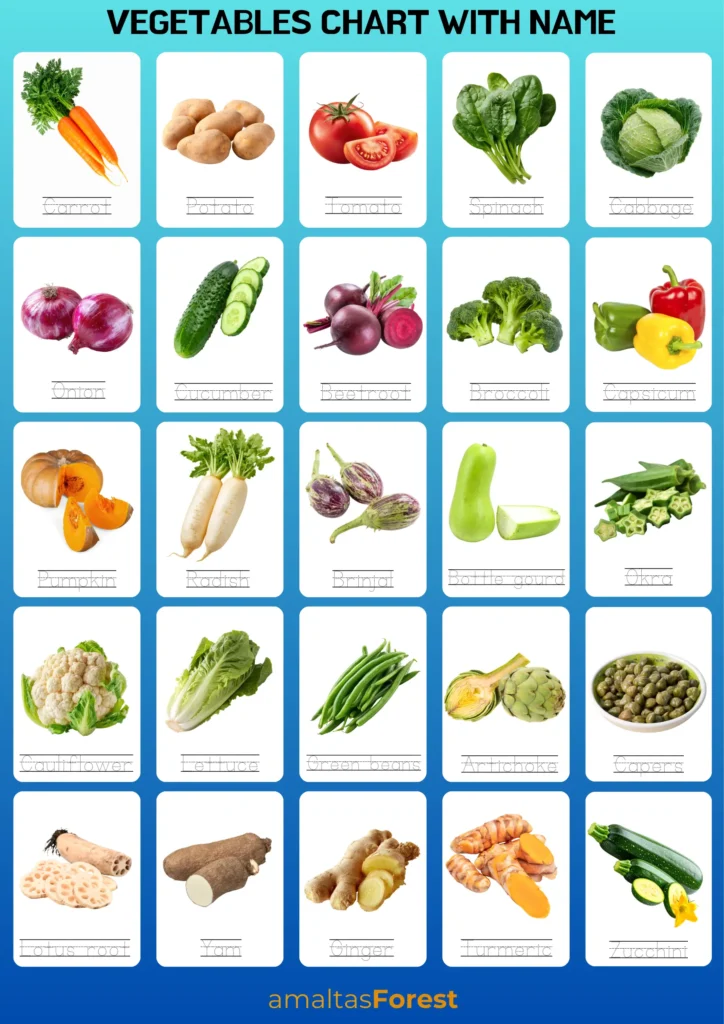
Here is a list of 20 common vegetables along with their nutritional values and health benefits.
| Name of the Vegetable | About it |
| Carrot | A bright orange root vegetable rich in vitamin A, which helps eyes and skin. It is eaten raw, cooked or in juices. |
| Potato | A starchy tuber used in mashed potatoes, fries, curries and chips. It gives energy and is high in carbohydrates and vitamin C. |
| Tomato | A red fruit vegetable used in salads, sauces and curries. It is rich in vitamin C and lycopene, good for heart health. |
| Spinach | A dark green leafy vegetable very high in iron, calcium and vitamins A and C. It supports blood and bone health. |
| Cabbage | A crunchy leafy vegetable used in salads, stir‑fries and curries. It is rich in fiber, vitamin C and antioxidants. |
| Onion | A bulb vegetable with a strong smell, used to flavour most dishes. It helps digestion and supports immunity. |
| Cucumber | A cool, watery fruit vegetable eaten raw in salads or raita. It helps keep the body hydrated and low in calories. |
| Beetroot | A deep‑red root vegetable often boiled or roasted. It is rich in nitrates and iron, which help blood and stamina. |
| Broccoli | A green flower‑likes vegetables high in vitamins C and K, fiber and antioxidants. It is steamed or cooked. |
| Capsicum (Bell pepper) | A colourful fruit vegetable (red, green, yellow) rich in vitamin C and antioxidants. It adds crunch to salads and curries. |
| Pumpkin | A large orange fruit vegetable used in curries, halwa and soups. It is rich in fiber, vitamin A and beta‑carotene. |
| Radish | A crunchy root vegetable, often white or pink, eaten raw in salads. It helps digestion and is rich in vitamin C. |
| Brinjal (Eggplant) | A purple or green fruit vegetable used in curries and stir‑fries. It is low in calories and rich in fiber. |
| Bottle gourd (Lauki) | A light green fruit vegetable used in curries and soups. It has a cooling effect on the body and helps improve digestion keeping the body hydrated. |
| Okra (Bhindi) | A green finger‑likes vegetables rich in fiber and vitamins. It is used in curries and stir‑fries and helps digestion. |
| Cauliflower | A white, compact flower head used in curries, stir‑fried dishes and “rice” alternatives. It is rich in fiber and vitamin C. |
| Lettuce | A soft leafy vegetable used mainly in salads and sandwiches. It is very low in calories but high in water and fiber. |
| Green beans | Long, green pods eaten in curries and stir‑fries. They are rich in protein, fiber and vitamins A and C. |
Do read carnivore animals name lists animal chart help kids to learn animal food habit and living habitat.
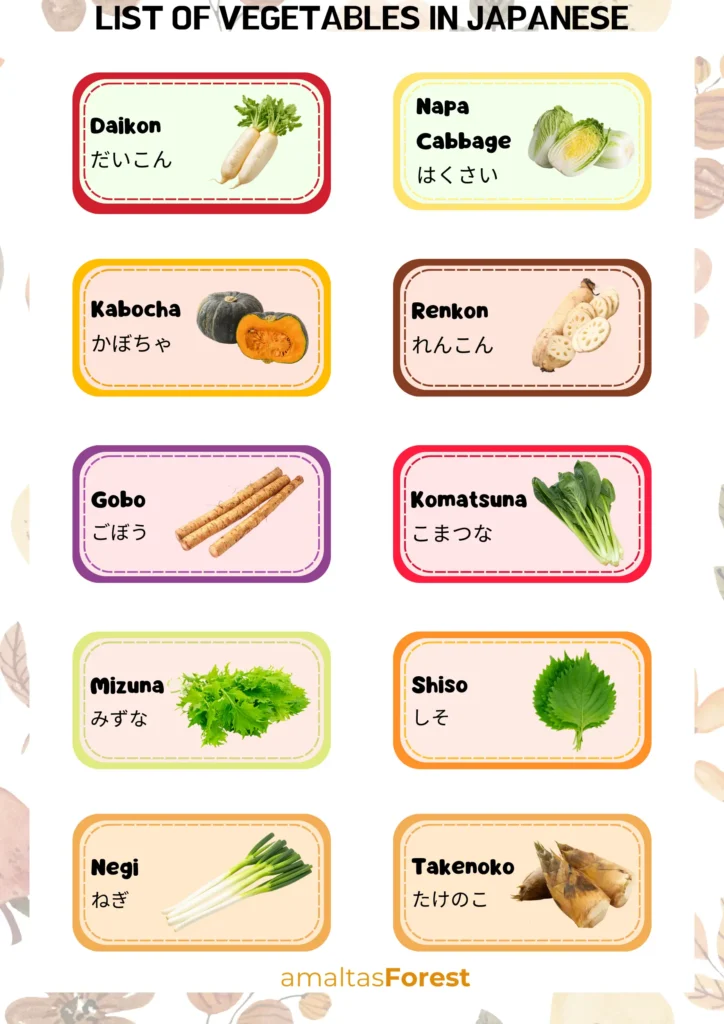
Japanese Vegetable List
Japanese vegetables are known for their freshness, seasonal variety and nutritional value. They are widely used in traditional dishes, soups, salads and stir-fries in Japanese cuisine.
| Name | Japanese Name | Benefits |
| Daikon | だいこん | Rich in vitamin C and also helps digestion and boosts immunity. |
| Napa Cabbage (Hakusai) | はくさい | High in fiber, supports digestion and hydration. |
| Kabocha (Japanese Pumpkin) | かぼちゃ | Rich in beta-carotene, good for eye and skin health. |
| Renkon (Lotus Root) | れんこん | Contains fiber and antioxidants, supports heart health. |
| Gobo (Burdock Root) | ごぼう | Good source of fiber, helps detoxification and digestion. |
| Komatsuna (Japanese Mustard Spinach) | こまつな | High in calcium and iron, strengthens bones. |
| Mizuna (Japanese Mustard Greens) | みずな | Low in calories, rich in vitamins A and C. |
| Shiso (Perilla Leaves) | しそ | Has antibacterial properties and aids digestion. |
| Negi (Japanese Green Onion) | ねぎ | Boosts immunity and adds flavour to soups. |
| Takenoko (Bamboo Shoots) | たけのこ | Rich in fibre and supports gut health. |
| Nasu (Japanese Eggplant) | なす | Contains antioxidants, good for heart health. |
| Satoimo (Taro Root) | さといも | Provides energy and aids digestion. |
| Edamame (Young Soybeans) | えだまめ | High in plant protein and fibre. |
| Wasabi (Japanese Horseradish) | わさび | Has antibacterial and anti-inflammatory properties. |
| Hakurei Turnip | はくれいかぶ | Rich in vitamin C, supports immunity. |
a to z Vegetables Name in English
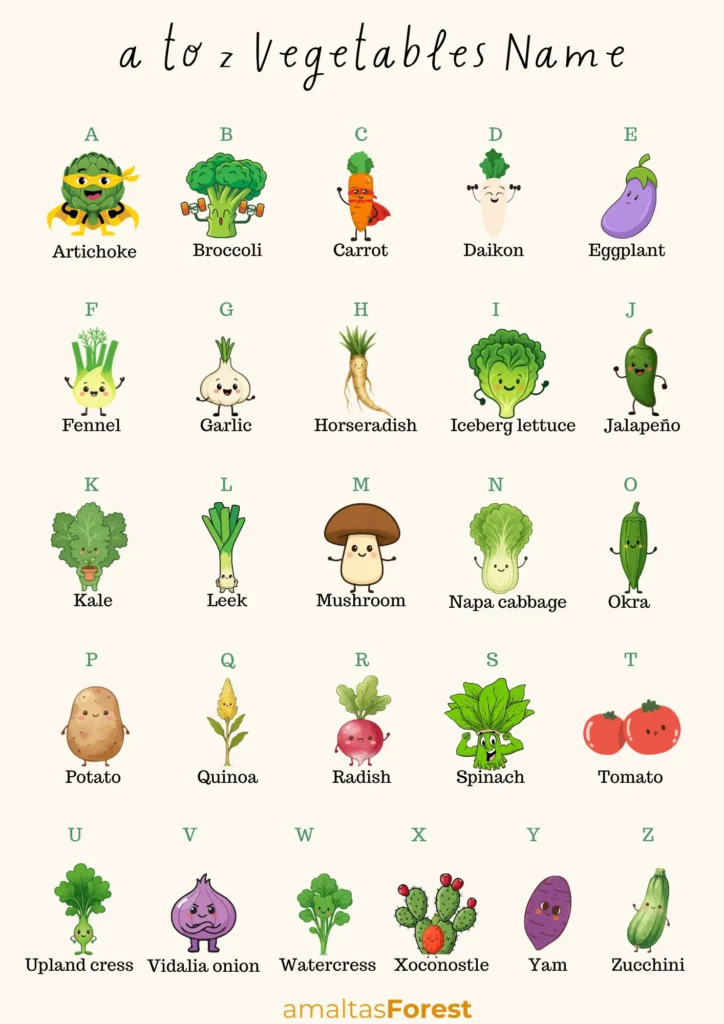
Here is a simple list of vegetables a – z in English, with one common choice per letter.
| A | Artichoke |
| B | Broccoli |
| C | Carrot |
| D | Daikon (large radish) |
| E | Eggplant |
| F | Fennel |
| G | Garlic |
| H | Horseradish |
| I | Iceberg lettuce |
| J | Jalapeño (pepper) |
| K | Kale |
| L | Leek |
| M | Mushroom |
| N | Napa cabbage |
| O | Okra |
| P | Potato |
| Q | Quinoa (often used like a veg seed) |
| R | Radish |
| S | Spinach |
| T | Tomato |
| U | Upland cress |
| V | Vidalia onion |
| W | Watercress |
| X | Xoconostle (cactus‑like veg, less common) |
| Y | Yam |
| Z | Zucchini |
To make the learning more informative check out herbivorous animals names meaning and pictures with activities worksheets.
How to Build Healthy Eating Habits for Kids
Healthy eating habits start early and stay for life, especially when children enjoy vegetables and eat them regularly. Aim for at least 3 – 5 small portions of vegetables daily, depending on the child’s age, and make them colourful and fun instead of “forced food.”
- Eat together as a family – Let kids see adults eating vegetables happily at meals, children copy parents choices.
- Make veggies easy to grab – Keep cut vegetables (carrot sticks, cucumber, bell‑pepper pieces) in the fridge and offer them as snacks.
- Use fun shapes, dips, and colours – Serve vegetables as stars, smiley‑face layouts, or with dips like yogurt or hummus to make tasting more playful.
- Let kids help in cooking and gardening – When children grow or cook vegetables, they become more curious and more likely to taste them.
- Be patient and repeat – It often takes several tries before a child likes a vegetable, keep offering small amounts without pressure.
Interesting Facts About Vegetables
- Many vegetables contain more vitamins and fiber than fruits, and vegetable like carrots and spinach are rich in vitamin A or iron, which help eyes, skin and blood.
- A “rainbow” plate (red tomato, green spinach, orange carrot, purple cabbage) gives different antioxidants that protect the body from diseases later in life.
- Vegetables like cucumber and lettuce are over 90% water, so they help keep kids hydrated and feeling full.
- Eating enough vegetables early helps reduce the risk of obesity, diabetes, heart disease and some cancers in adulthood.
To learn more about vegetables name video Popular Indian Vegetable Names cover vegetable names in English and Hindi.
Vegetables in french
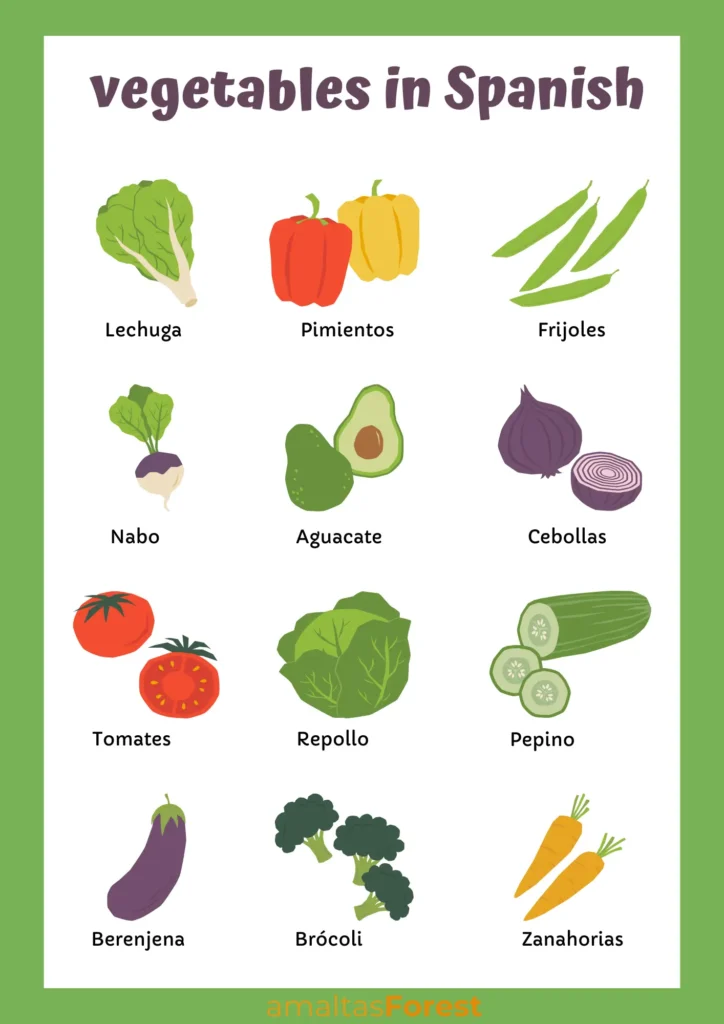
Here are 10 common vegetables in French with their English names, useful for kids or beginners:
- Carrot → la carotte
- Tomato → la tomate
- Potato → la pomme de terre
- Onion → l’oignon
- Cucumber → le concombre
- Spinach → les épinards
- Green beans → les haricots verts
- Zucchini → la courgette
- Eggplant / Aubergine → l’aubergine
- Cabbage → le chou
Learn pet animals name in hindi and english and helps to understand pets as a companion .
Vegetables Names in tamil and english
Here is a simple list of vegetables names in Tamil and English, good for kids or classroom vocabulary.
| English | Tamil |
| 1. Potato | உருளைக்கிழங்கு (Uruḷaikkiḻaṅku) |
| 2. Tomato | தக்காளி (Takkāḷi) |
| 3. Brinjal (Eggplant) | கத்தரிக்காய் (Kattarikkāy) |
| 4. Cucumber | வெள்ளரிக்காய் (Veḷḷarikkāy) |
| 5. Carrot | கேரட் (Kēraṭ) / மஞ்சள் முள்ளங்கி (Mañcaḷ muḷḷaṅki) |
| 6. Cabbage | முட்டைக்கோஸ் (Muṭṭaikkōs) |
| 7. Spinach | கீரை (Kīrai) |
| 8. Onion | வெங்காயம் (Veṅkāyam) |
| 9. Radish | முள்ளங்கி (Muḷḷaṅki) |
| 10. Bitter gourd | பாகற்காய் (Pākaṟkāy) |
Vegetables name in english and hindi
Here are 10 common vegetables with their names in English and Hindi.
| English | Hindi |
| 1. Potato | आलू (Aloo) |
| 2. Tomato | टमाटर (Tomatar) |
| 3. Carrot | गाजर (Gajar) |
| 4. Cucumber | खीरा (Kheera) |
| 5. Spinach | पालक (Palak) |
| 6. Onion | प्याज (Pyaz) |
| 7. Radish | मूली (Mooli) |
| 8. Brinjal (Eggplant) | बैंगन / बैगन (Baingan / Baigan) |
| 9. Bottle gourd | लौकी (Lauki) |
| 10. Okra (Lady Finger) | भिंडी (Bhindi) |
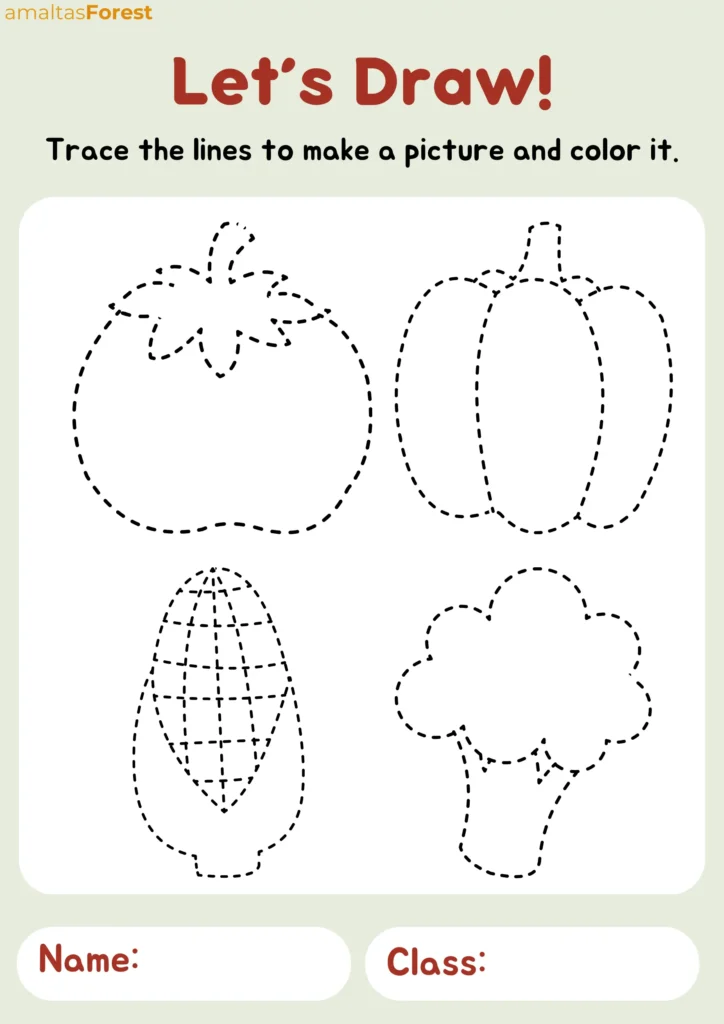
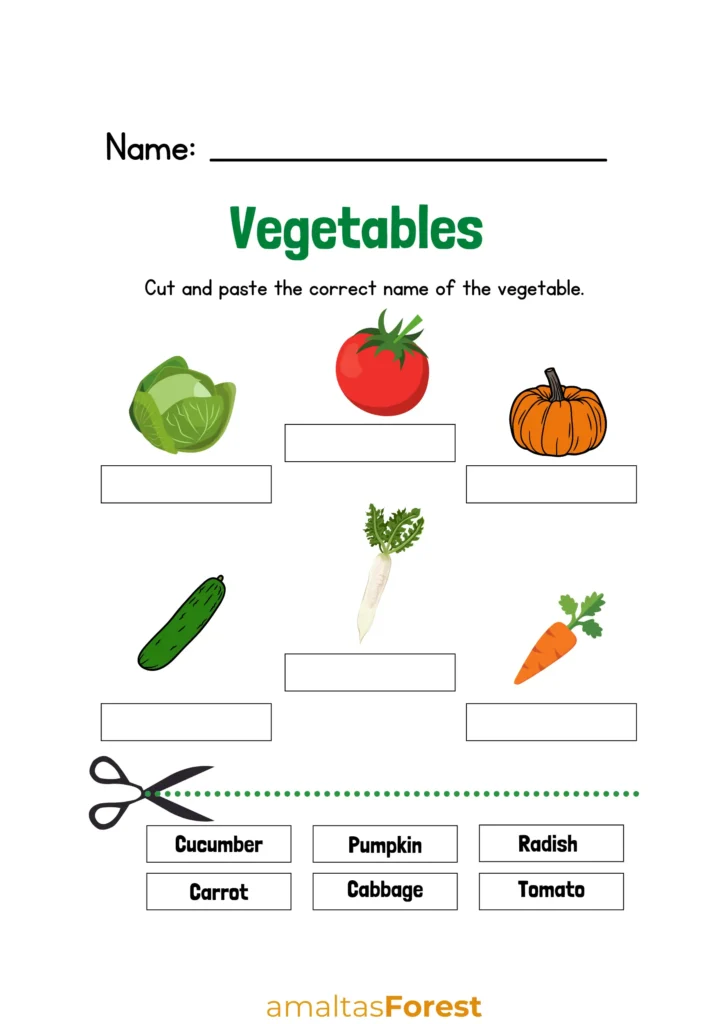
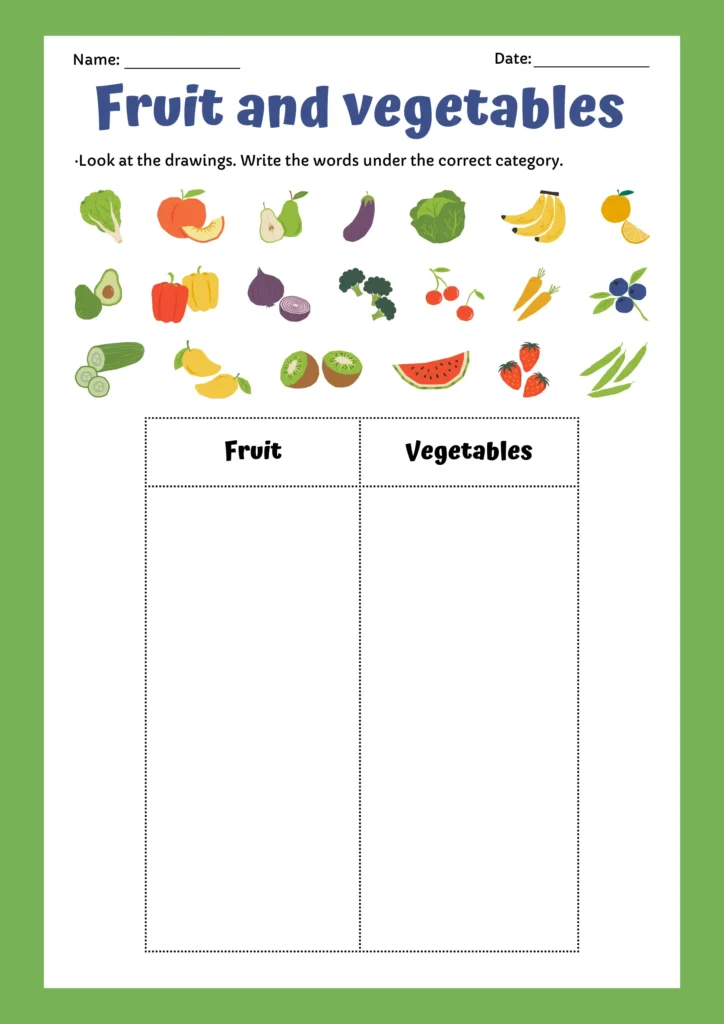
Learn wild animals name and picture lists with facts make the learning more fun and exciting.
Related Blog
- Discover the List of colors name in english a to z to make kids aware of colors names.
- A Practical downloadable and printable List of 50 dry fruits name in english and hindi
- A Practical learning experience of Body parts names in english for kids with pictures and worksheets.
- See how Omnivores animals survive their food habits learn with pictures and worksheets.
- Learn more about Pet animals name in english and hindi help in improving understanding.
- Check out 100 vegetables name in english and hindi help in developing healthy eating habit at early age.
FAQ’s
1. What are the top 5 vegetables ?
The top 5 vegetables commonly loved and used worldwide are potato, tomato, onion, carrot and spinach. They are nutritious, versatile, and used in many everyday dishes.
2. What are the 8 types of vegetables ?
The 8 main types of vegetables are root, stem, leaf, flower, fruit, bulb, seed, and tuber vegetables. They are grouped based on which edible part of the plant we eat.
3. What are 10 green vegetables ?
Ten common green vegetables are spinach, broccoli, cabbage, lettuce, cucumber, green beans, peas, capsicum, zucchini, and okra. They are rich in vitamins, fiber and antioxidants that support overall health.
4. Which vegetable is king ?
The brinjal (eggplant) is often called the “King of Vegetables” because of its rich taste and versatility in many dishes. It is widely used in curries, fries, and traditional recipes.
5. What are the 10 most popular vegetables ?
The 10 most popular vegetables are potato, tomato, onion, carrot, cabbage, cauliflower, spinach, cucumber, broccoli and capsicum.
6. Why eat 7 types of vegetables ?
Eating 7 different types of vegetables each day helps your body get a wide range of vitamins, minerals, fiber and antioxidants. Different vegetables provide different nutrients, so variety supports better immunity, digestion, energy levels and overall health.

Team Amaltas is a group of graduates dedicated to creating a fun and effective learning platform for kids through worksheets and educational resources.