Hello! Little learners lets deep dive into the world of wild animals name. This article is written to take you to Jungle Safari, help you get familiar with wild animals, their characteristics, living habitat and improve your vocabulary, and also help in better pronunciation of names.
What Are Wild Animals? Definition, List, and Differences from Domestic Animals
Wild animals are animals that live freely in nature. They take care of themselves by finding their own food, homes, and families without help from people. Live independently in their natural habitats, relying on their instincts to find food, shelter, and mates without human intervention.
Wild Animals Definition
Wild animals are called ferae naturae in Latin means “of a wild nature”, animals freely roam in their own state outside human control or selective breeding. They are adapted to live in ecosystems like forests, savannas, oceans, mangroves and deserts, for food depend on natural behaviour like hunting, foraging and migration. Unlike pets or farm animals, they are naturally cautious of humans and behave unpredictably to protect themselves.
Also check out water animals name pictures in english and hindi with printable worksheets for improving knowledge.
Wild Animals Name List
Name of different types of wild animals that live in diverse habitats:
- Mammals: Lion, tiger, elephant, wolf, deer, bear, bengal tiger, snow leopard, wolves.
- Birds: Eagle, owl, parrot (in wild flocks), flamingo, hawks, macaws, vulture.
- Reptiles: Snake, crocodile, lizard, turtle, alligator.
- Amphibians: Frog, toad, salamander, caecilians.
- Fish and Marine Life: Shark, whale, octopus (in ocean wilds), dolphins, crabs, jellies.
- Insects/Arthropods: Butterfly, scorpion, spiders, beetles, ants, centipedes.
Key Differences between Wild Animals and Domestic Animals
| Aspect | Wild Animals | Domestic Animals |
| Habitat | Natural environments (forests, oceans) | Human-managed (farms, homes) |
| Dependency | Self-sufficient, hunt/forage alone | Rely on humans for food/shelter |
| Behavior | Instinct-driven, often aggressive | Bred for tameness, docility |
| Reproduction | Natural selection in wild | Selective breeding by humans |
| Lifespan/Health | Shorter, disease-prone without aid | Longer with veterinary care |
| Human Interaction | Avoidance or defensive | Comfortable coexistence |
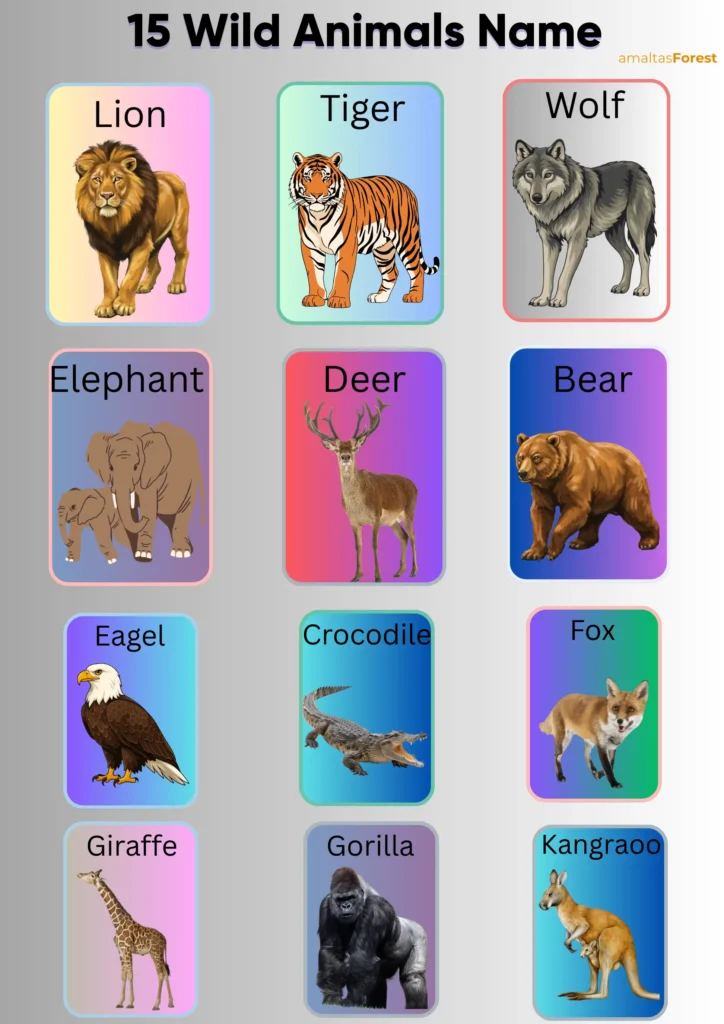
5 Wild Animals Name
Below is the list of 5 wild animals name with pronunciation :
| English | Hindi | Pronunciation |
| Lion | सिंह (Singh) | Sing |
| Tiger | बाघ (Bagh) | Baag |
| Wolf | भेड़िया (Bhediya) | Bhey-dee-ya |
| Elephant | हाथी (Haathi) | Haa-thee |
| Deer | हिरण (Hiran) | Hee-run |
Do read pet animals name in hindi and english in details, you will get introduce with different pet animals.
10 Wild Animals Name
Lets learn more wild animals with characteristic feature suited for children education :
- Bear : Thick fur and powerful claws for digging and catching fish
- Eagle : Sharp vision and hooked beak for hunting from high altitudes
- Crocodile : Strong jaws with sharp teeth for ambush hunting in water
- Fox : Bushy tail and keen senses for nocturnal hunting
- Giraffe : Long neck for reaching leaves high in acacia trees
- Gorilla : Strong arms for climbing and foraging vegetation
- Kangaroo : Powerful hind legs for hopping long distances
- Panda : Thumbs for grasping bamboo shoots as main diet
- Shark : Rows of sharp teeth that regrow constantly
- Snake : Flexible body and fangs for injecting venom
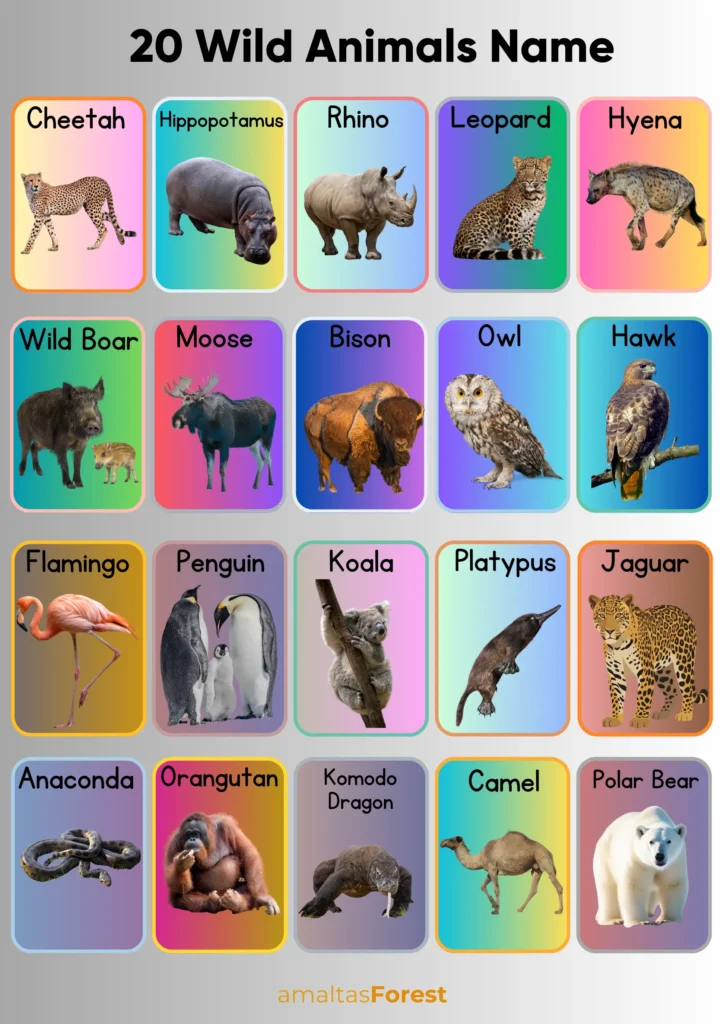
20 Wild Animals Name
Below is the list of 20 Wild Animals Name, each includes its primary natural habitat for easy learning.
- Cheetah : African savannas and grasslands
- Hippopotamus : African rivers and lakes
- Rhino : African grasslands and shrublands
- Leopard : African forests and woodlands
- Hyena : African savannas
- Wild Boar : European forests
- Moose : North American boreal forests
- Bison : North American prairies
- Owl : Worldwide forests and woodlands
- Hawk : Open fields and cliffs
- Flamingo : African and South American lakes
- Penguin : Antarctic coasts and islands
- Koala : Australian eucalyptus forests
- Platypus : Australian freshwater rivers
- Jaguar : South American rainforests
- Anaconda : South American Amazon rivers
- Orangutan : Southeast Asian rainforests
- Komodo Dragon : Indonesian islands
- Camel : Middle Eastern and African deserts
- Polar Bear : Arctic ice and coasts
To make the learning more informative check out carnivorous animals name list and activities worksheets.
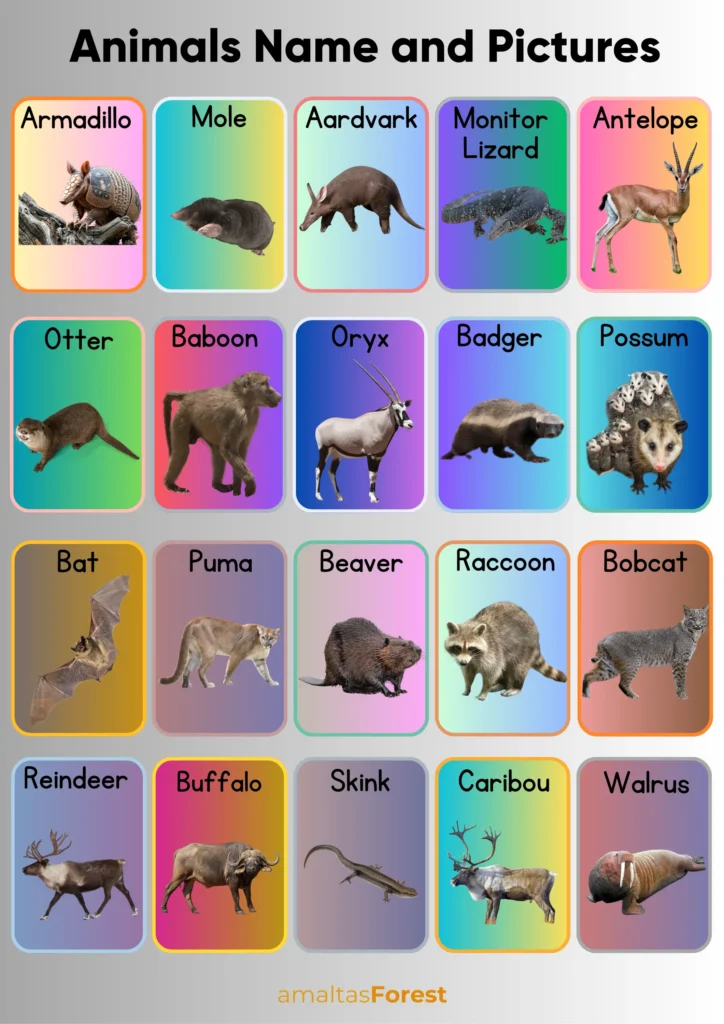
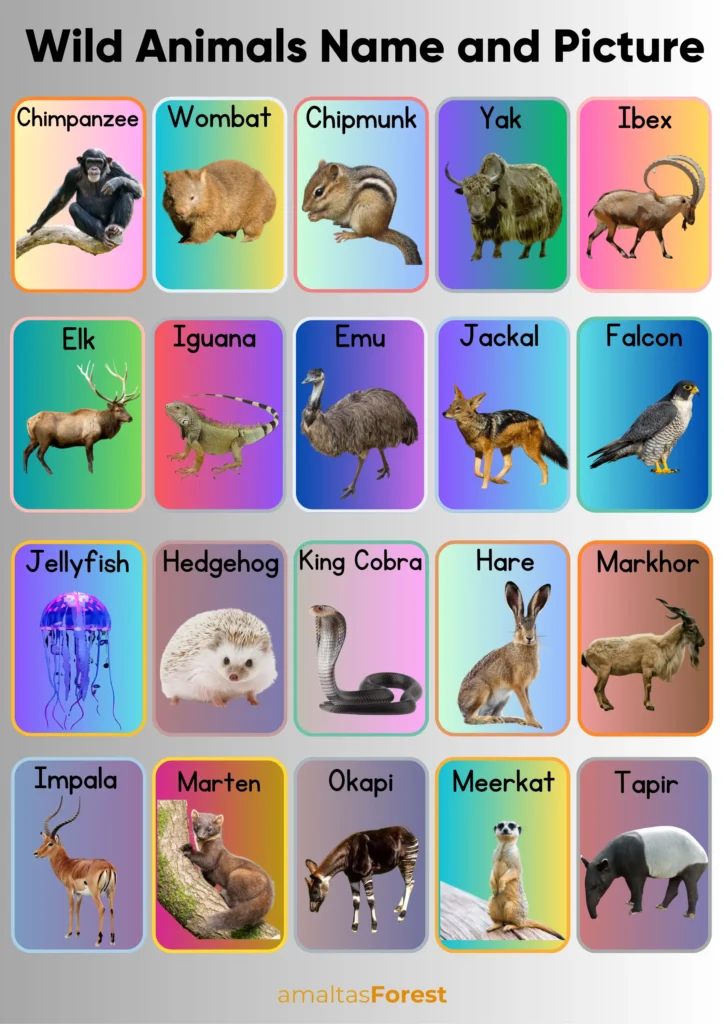
v40 Wild Animals Name
| 1. Armadillo | 21. Mole |
| 2. Aardvark | 22. Monitor Lizard |
| 3. Antelope | 23. Otter |
| 4. Baboon | 24. Oryx |
| 5. Badger | 25. Possum |
| 6. Bat | 26. Puma |
| 7. Beaver | 27. Raccoon |
| 8. Bobcat | 28. Reindeer |
| 9. Buffalo | 29. Skink |
| 10. Caribou | 30. Walrus |
| 11. Chimpanzee | 31. Wombat |
| 12. Chipmunk | 32. Yak |
| 13. Ibex | 33. Elk |
| 14. Iguana | 34. Emu |
| 15. Jackal | 35. Falcon |
| 16. Jellyfish | 36. Hedgehog |
| 17. King Cobra | 37. Hare |
| 18. Markhor | 38. Impala |
| 19. Marten | 39. Okapi |
| 20. Meerkat | 40. Tapir |
100 Wild Animals Name a to z pdf
Wild Animals Name in Hindi and English
Here is a list of 50 common wild animals in English and Hindi, including big cats and predators, forest and jungle animals, desert and grassland animals, birds, and reptiles, designed for early learning with a focus on phonics and animal classification.
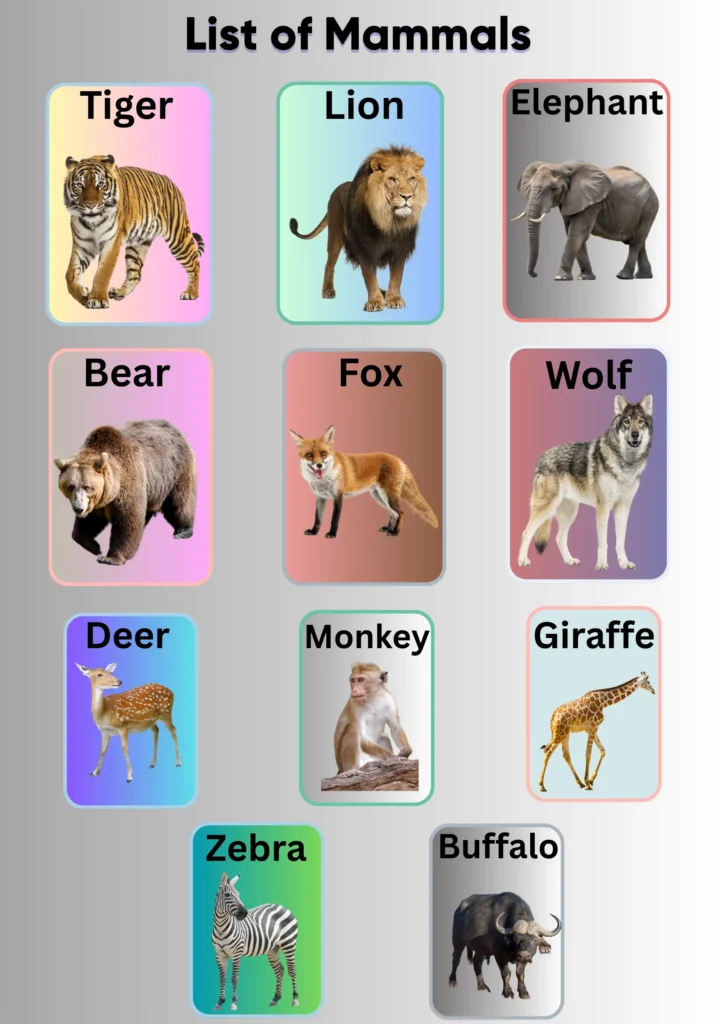
Common list of mammals
| English | Hindi | Pronunciation |
| Tiger | बाघ | Baagh (baa-guh) |
| Lion | शेर | Sher (share) |
| Elephant | हाथी | Haathi (haa-thee) |
| Bear | भालू | Bhaalu (bhaa-loo) |
| Fox | लोमड़ी | Lomdi (loam-dee) |
| Wolf | भेड़िया | Bhediya (bhey-dee-ya) |
| Deer | हिरण | Hiran (hee-run) |
| Monkey | बंदर | Bandar (bun-dur) |
| Giraffe | जिराफ | Jiraf (jee-raaf) |
| Zebra | ज़ेबरा | Zebra (zay-bra) |
Big Cats and Predators
| English | Hindi | Pronunciation |
| Leopard | तेंदुआ | Tendua (ten-doo-a) |
| Cheetah | चीता | Cheeta (chee-ta) |
| Jaguar | जागुआर | Jaaguar (jaa-gwar) |
| Hyena | लकड़बग्घा | Lakarbaggha (luk-ur-bug-ga) |
Forest and Jungle Animals
| English | Hindi | Pronunciation |
| Rhino | गैंडा | Gaanda (gaan-da) |
| Wild Boar | जंगली सूअर | Jangli Suaar (jung-lee swaar) |
| Squirrel | गिलहरी | Gilhari (gil-ha-ree) |
| Porcupine | शहद का कांटा | Sahad ka Kanta (su-hud kaa kuhn-ta) |
| Otter | जल ऊदबिलाव | Jal Udbilav (jul ood-bee-laav) |
Desert and Plains Animals
| English | Hindi | Pronunciation |
| Camel | ऊंट | Unt (oont) |
| Jackal | गीदड़ | Geedar (gee-dur) |
| Wild Ass | जंगली गधा | Jangli Gadha (jung-lee gud-ha) |
Birds and Reptiles
| English | Hindi | Pronunciation |
| Eagle | उकाब | Ukab (oo-kaab) |
| Vulture | गिद्ध | Giddh (gid) |
| Peacock | मोर | Mor (more) |
| Ostrich | शुतुरमुर्ग | Shuturmurg (shoo-tur-murg) |
| Crocodile | मगरमच्छ | Magarmachh (muh-gur-much) |
| Python | अजगर | Ajgar (uj-gur) |
Aquatic and Wetlands Animals
| English | Hindi | Pronunciation |
| Hippo | कस्तूरी | Kasturi (kus-too-ree) |
| Wild Buffalo | जंगली भैंस | Jangli Bhains (jung-lee bhains) |
Wild Animals Name Table: Examples, Habitats, and Features
Wild animals thrive in natural habitats with specialized features for survival. Here’s a table of 50 examples (all new from prior lists), grouped by habitat type for educational value in child learning.
Forest Animals
| Name | Habitat | Key Feature |
| Squirrel | Deciduous forests | Bushy tail for balance |
| Raccoon | Woodlands | Dexterous paws for foraging |
| Lynx | Coniferous forests | Tufted ears for camouflage |
| Badger | Mixed forests | Strong claws for digging |
| Marten | Boreal forests | Agile climber, slender body |
Grassland Animals
| Name | Habitat | Key Feature |
| Gazelle | African plains | Speed for evading predators |
| Wildebeest | Savannas | Herd migration expert |
| Prairie Dog | North American prairies | Burrowing colonies |
| Ostrich | Open grasslands | Flightless, powerful legs |
| Wallaby | Australian plains | Pouch for joeys |
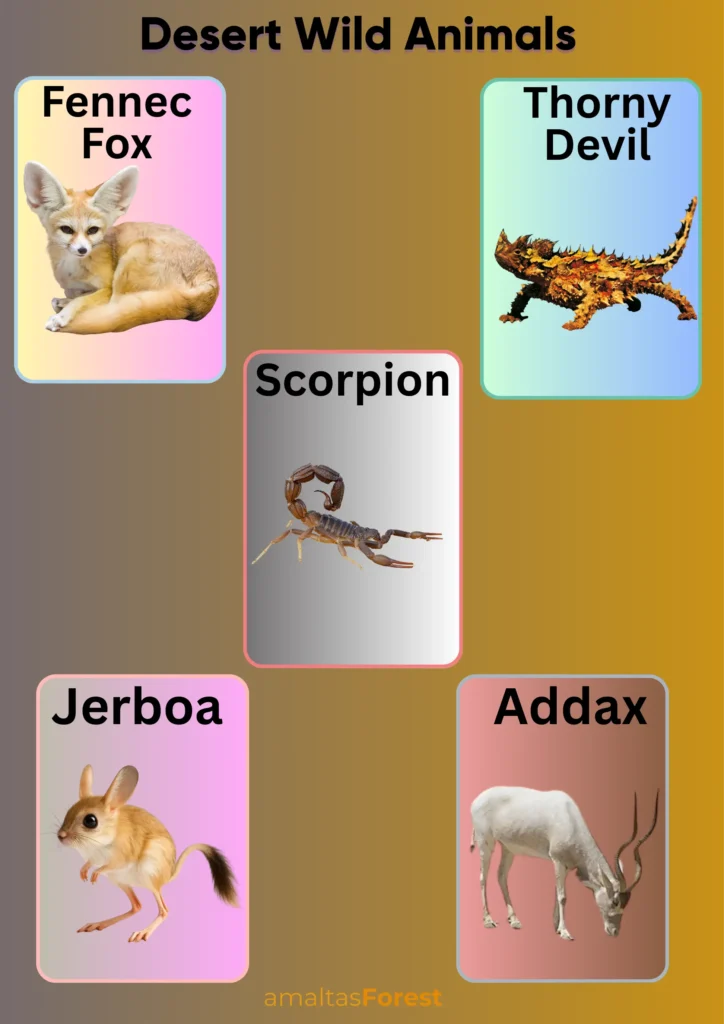
Desert Animals
Learn ee words for kids with printable worksheets make the learning more fun and exciting.
| Name | Habitat | Key Feature |
| Fennec Fox | Sahara dunes | Large ears for heat dissipation |
| Scorpion | Arid deserts | Stinger for defense |
| Jerboa | Sandy deserts | Long hind legs for jumping |
| Addax | Sahara scrub | Hooves for soft sand |
| Thorny Devil | Australian outback | Spiny skin collects water |
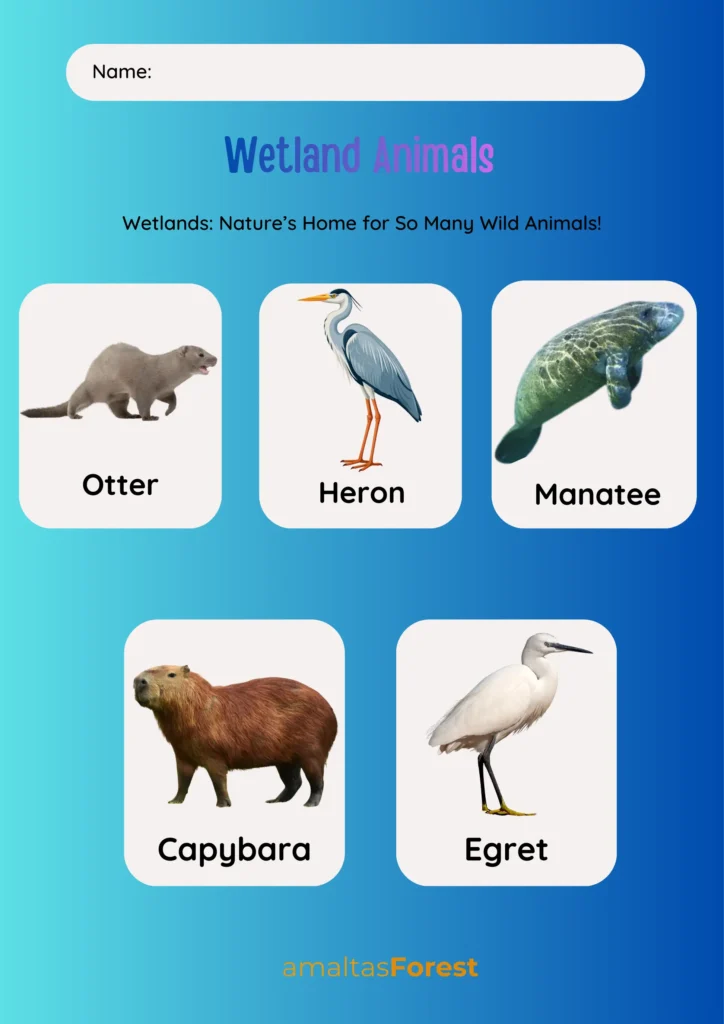
Wetland Animals
| Name | Habitat | Key Feature |
| Otter | Marshes/rivers | Webbed feet for swimming |
| Heron | Swamps | Long beak for spearing fish |
| Capybara | Pantanal wetlands | Largest rodent, semi-aquatic |
| Manatee | Coastal mangroves | Paddle-like flippers |
| Egret | Riverine wetlands | White plumage camouflage |
Mountain Animals
| Name | Habitat | Key Feature |
| Ibex | Alpine cliffs | Curved horns for footing |
| Chamois | Rocky slopes | Backward leap agility |
| Pika | High meadows | Hay storage for winter |
| Markhor | Himalayan ridges | Twisted horns |
| Tahr | Steep mountains | Thick coat for cold |
Ocean Animals
| Name | Habitat | Key Feature |
| Orca | Open ocean | Echo-location hunting |
| Sea Turtle | Coral reefs | Flippers for migration |
| Dolphin | Coastal waters | Playful pod behavior |
| Jellyfish | Pelagic zones | Stinging tentacles |
| Manta Ray | Reef edges | Wide mouth filters plankton |
Rainforest Animals
| Name | Habitat | Key Feature |
| Sloth | Canopy trees | Algae-covered fur |
| Toucan | Tropical canopy | Massive colorful bill |
| Macaw | Amazon understory | Strong beak cracks nuts |
| Tapir | Riverine forest | Short trunk for leaves |
| Okapi | Congo basin | Zebra-like stripes |
Wild Animals Name Important Points for Students and Teachers
Teaching wild animal names helps children learn in a fun way using two languages. It improves their word skills, sparks curiosity, helps them पहचान (identify) animals easily, and teaches them to care for nature and the environment.
- Boosts Vocabulary : Learning 50+ wild animal names in English and Hindi (e.g., “Sher” for lion) expands word banks by 20-30% in early grades. Phonetic practice like “Baagh” (tiger) aids reading fluency and spelling retention.
- Enhances Curiosity : Interactive lists spark questions about habitats and features, increasing class participation by 40%. Examples like giraffe’s long neck prompt exploration of adaptations, turning passive learners into investigators.
- Improves Identification : Tables matching names, habitats (savanna, rainforest), and traits (claws, camouflage) sharpen observation skills. Students distinguish leopard from cheetah via spots, boosting memory and visual discrimination for field trips.
- Fosters Environmental Awareness : Discussing threats like habitat loss cultivates empathy; 70% of kids show pro-conservation attitudes post-lessons. Activities linking animals to ecosystems encourage habits like reducing plastic use to protect marine life.
Fun Animal Facts
Wild animals have amazing traits that spark wonder in kids. Here are 10 fun facts about different wild animals, perfect for classroom sharing or phonics lessons.
1. Surprising Senses
- Octopuses have three hearts: two pump blood to gills, one to the body, helping them change color instantly for camouflage.
- A dog’s nose print is unique, like human fingerprints, with 300 million scent receptors versus our 6 million.
2. Super Strength
- Elephants can’t jump but lift 600 pounds with their trunk, using it like a snorkel while swimming.
- Ants lift 50 times their body weight, forming bridges with bodies to cross gaps in colonies.
3. Speed Demons
- Peregrine falcons dive at 240 mph, folding wings like fighter jets to hunt prey.
- Cheetahs accelerate from 0-60 mph in 3 seconds, with flexible spines for tight turns.
4. Clever Camouflage
- Chameleons shift skin color using nanocrystals, not mood, it’s for blending into leaves.
- Arctic hares turn white in winter, shedding fur to match snow perfectly.
5. Odd Eating Habits
- Flamingos are pink from shrimp diet, upside-down feeding filters algae through beak lampposts.
- Koalas sleep 20 hours daily, eating eucalyptus that’s toxic to most animals.
Short Essay on Wild Animals
Wild animals live freely in nature such as forests, jungles, deserts, and oceans. They are not kept as pets and can take care of themselves. Wild animals find their own food, build shelters, and protect themselves from danger. Animals like lions, elephants, deer, and birds are all wild animals. They are important for keeping nature balanced and healthy. We should protect wild animals and their homes so they can live safely in the wild. 🐘🌳
Wild animals name in hindi
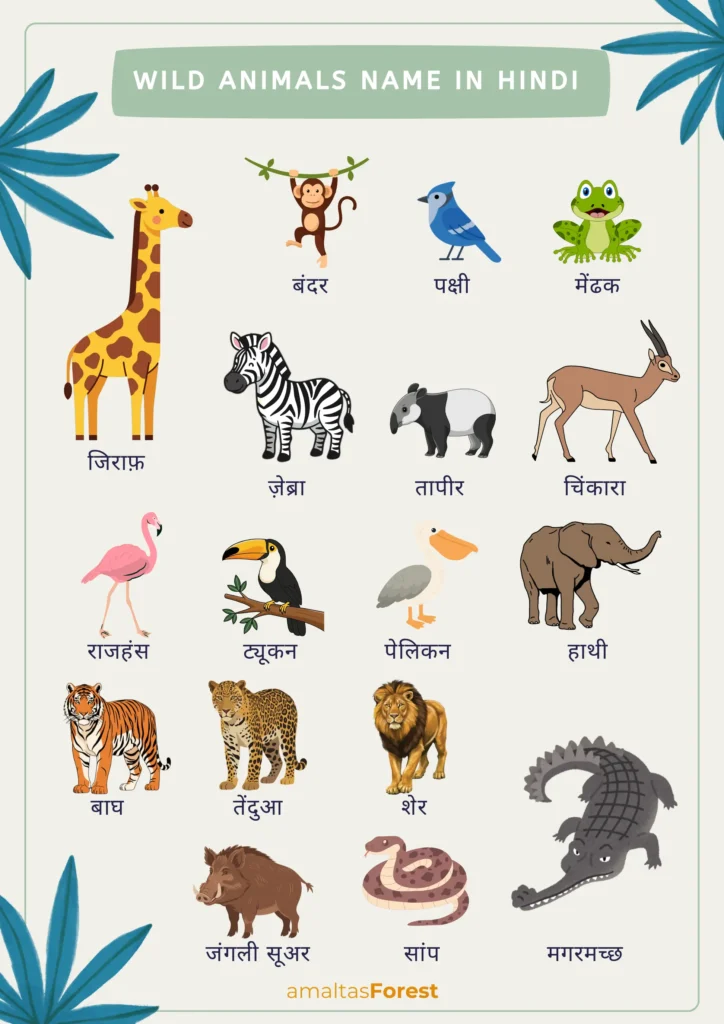
Here are some common wild animals’ names in Hindi:
- शेर – Lion
- बाघ – Tiger
- हाथी – Elephant
- गेंडा – Rhinoceros
- तेंदुआ – Leopard
- चीता – Cheetah
- भालू – Bear
- भेड़िया – Wolf
- लोमड़ी – Fox
- हिरण – Deer
- जिराफ़ – Giraffe
- ज़ेब्रा – Zebra
- बंदर – Monkey
- गोरिल्ला – Gorilla
- मगरमच्छ – Crocodile
- साँप – Snake
- भैंस (जंगली) – Wild Buffalo
- नीलगाय – Blue Bull
Wild Animals Name in Urdu
Here are some common wild animals’ names in Urdu, perfect for kids and beginners:
- شیر — Lion
- چیتا — Cheetah
- شیرِ بنگال / ببر شیر — Tiger
- ہاتھی — Elephant
- ہرن — Deer
- ریچھ — Bear
- بھیڑیا — Wolf
- لومڑی — Fox
- بندر — Monkey
- زرافہ — Giraffe
- زیبرا — Zebra
- مگرمچھ — Crocodile
- سانپ — Snake
- تیندوا — Leopard
- گینڈا — Rhinoceros
Wild Animals Name in marathi
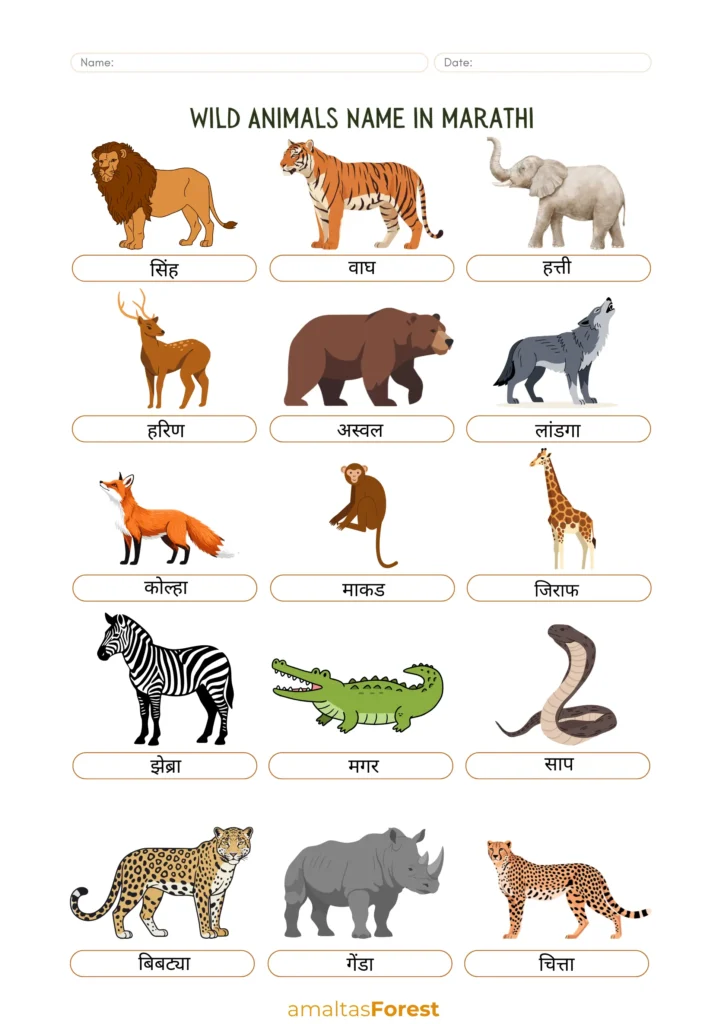
Here are some common wild animals’ names in Marathi, great for kids and early learners:
- सिंह — Lion
- वाघ — Tiger
- हत्ती — Elephant
- हरिण — Deer
- अस्वल — Bear
- लांडगा — Wolf
- कोल्हा — Fox
- माकड — Monkey
- जिराफ — Giraffe
- झेब्रा — Zebra
- मगर — Crocodile
- साप — Snake
- बिबट्या — Leopard
- गेंडा — Rhinoceros
- चित्ता — Cheetah
Wild Animals Name: Tips and Tricks for Easy Learning
Here are some easy tips and tricks to learn wild animals’ names, perfect for kids and beginners:
🐾 Tips and Tricks for Easy Learning
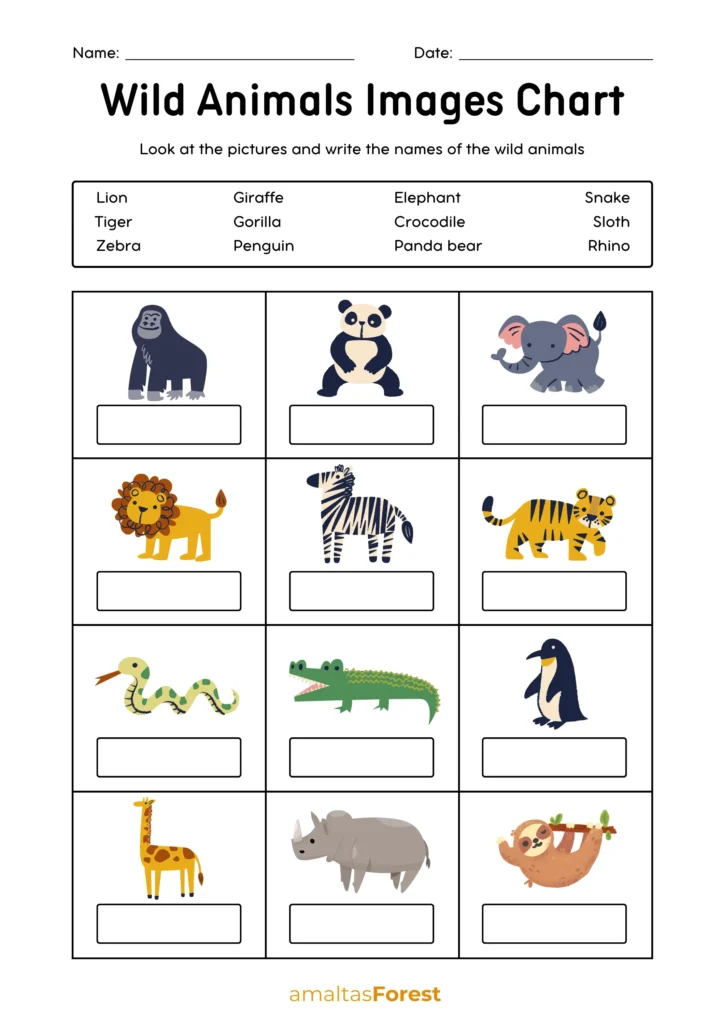
- Use pictures 🖼️: Seeing animal pictures helps children remember names faster.
- Learn with sounds 🔊: Say animal names aloud and copy their sounds (roar, hiss).
- Group animals 🐯🦅: Learn by type, big cats, forest animals, birds, reptiles.
- Use phonics 🔤: Break words into sounds (Li-on, Ti-ger).
- Bilingual learning 🌍: Learn names in English and your native language together.
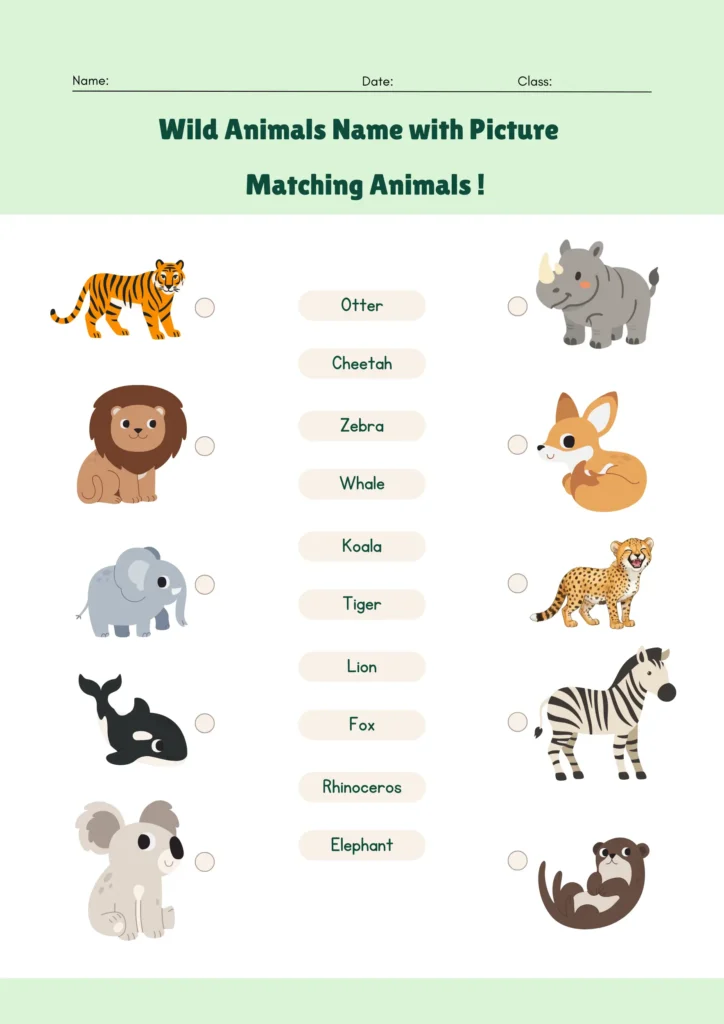
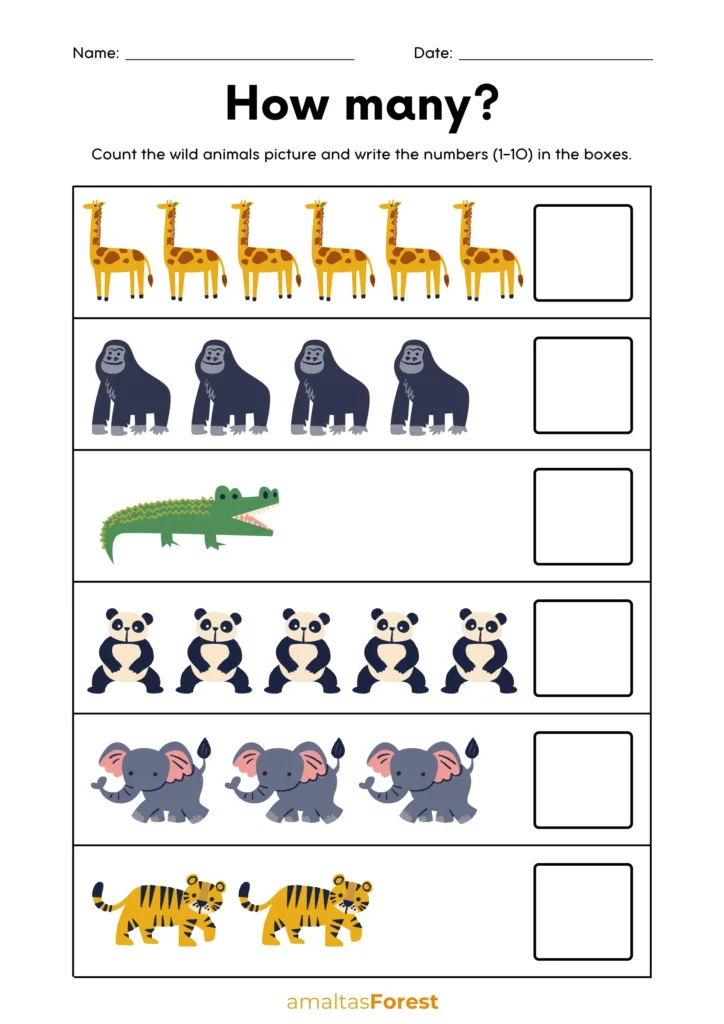
- Play games 🎲: Matching cards, quizzes, and puzzles make learning fun.
- Draw and color 🎨: Coloring animals improves memory and creativity.
- Short daily practice ⏰: A few minutes every day works better than long lessons.
Adi Connection youtube channel to learn wild animals name , and The wild animal names A-Z It is a fun and informative book that takes readers on an exciting journey through the animal kingdom.
Related Blog
- Discover the List of colors name in english a to z to make kids aware of colors names.
- A Practical downloadable and printable List of 50 dry fruits name in english and hindi
- A Practical learning experience of Body parts names in english for kids with pictures and worksheets.
- See how Omnivores animals survive their food habits learn with pictures and worksheets.
- Learn more about Pet animals name in english and hindi help in improving understanding.
- Check out 100 vegetables name in english and hindi help in developing healthy eating habit at early age.
FAQ’s
1. What are the 10 wild animals’ names ?
Some common wild animals are Lion, Tiger, Elephant, Deer, Bear, Wolf, Fox, Leopard, Giraffe, and Crocodile.
2. What is the 20 animal name ?
Here are 20 animal names: Lion, Tiger, Elephant, Giraffe, Zebra, Horse, Cow, Dog, Cat, Monkey, Bear, Deer, Fox, Wolf, Rabbit, Goat, Sheep, Camel, Kangaroo, and Panda.
3. What are the top 10 wild animals in India ?
The top 10 wild animals in India include the Bengal Tiger, Asian Elephant, Indian Leopard, Asiatic Lion, Sloth Bear, Indian Rhino, Gaur (Indian Bison), Wild Water Buffalo, Dhole (Indian Wild Dog), and Nilgai.
4. What is the big 5 wild animals ?
The Big Five wild animals are the Lion, Leopard, Elephant, Rhinoceros, and Cape Buffalo, a term from African safaris for the most iconic and historically hardest animals to hunt.
5. What are the top 10 most beautiful animals ?
The top 10 most beautiful animals often cited are: Peacock, Tiger, White Tiger, Snow Leopard, Dolphin, Horse, Macaw Parrot, Butterfly, Swan, and Mandarin Fish.
6. Who is the king of wild animals ?
The lion is known as the king of wild animals, symbolizing strength, courage, and leadership.

Team Amaltas is a group of graduates dedicated to creating a fun and effective learning platform for kids through worksheets and educational resources.