Hey little learners, do you know what the meaning of omnivore is ? omnivorous definition stands for living organisms that eat both plants and animals. The simple omnivore synonym for kids is “All-Eater” since they munch on everything from veggies to meat.
The flexible diet helps animals to adapt to harsh environments and make their body stronger. This blog will take little learners on a fun journey to meet omnivorous animals like bears, pigs, crows and many more, using omnivores animals images and practice worksheets to build long-term memory.
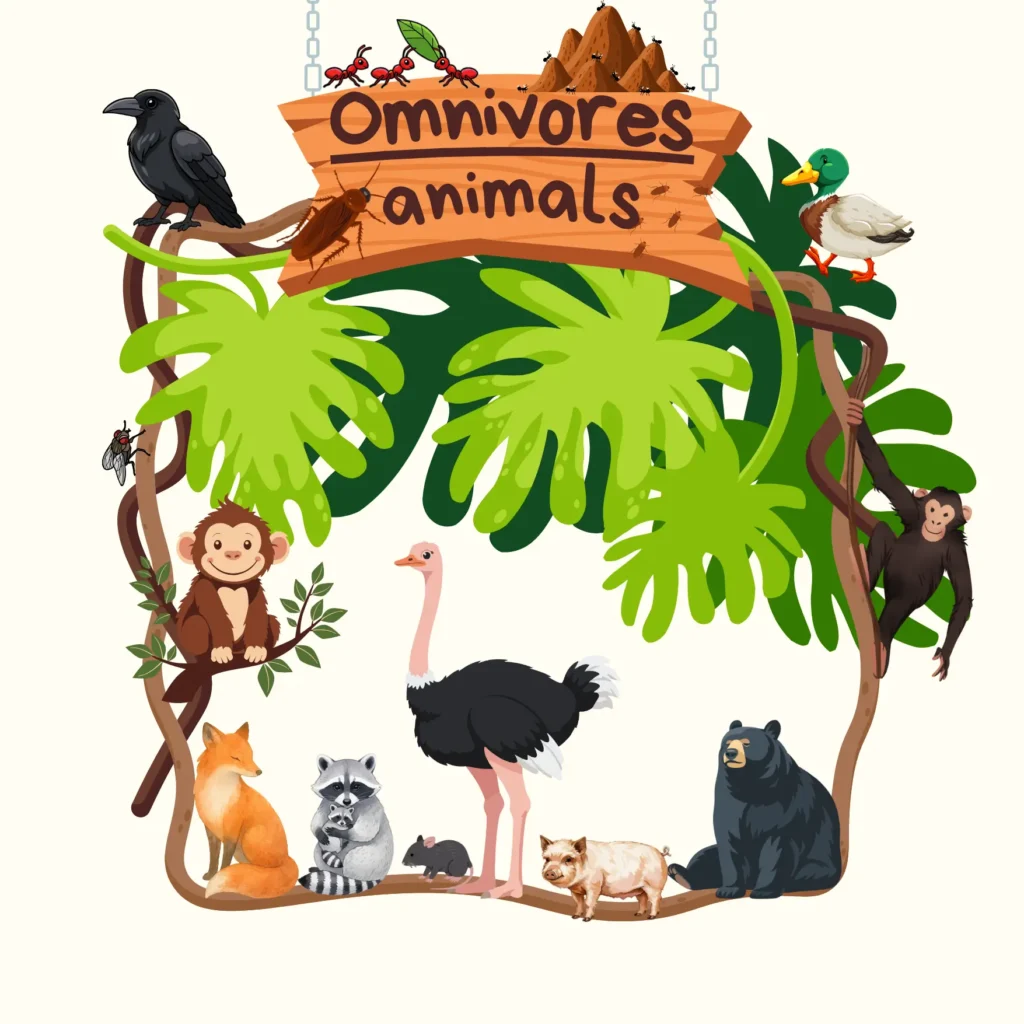
What animals are omnivores ?
Animals that consume both plants and animals matter in their diet to gain energy and nutrients. The omnivorous animals are adaptive to harsh and diverse environments because they are not restricted to a single food type.
Example of omnivorous animals :
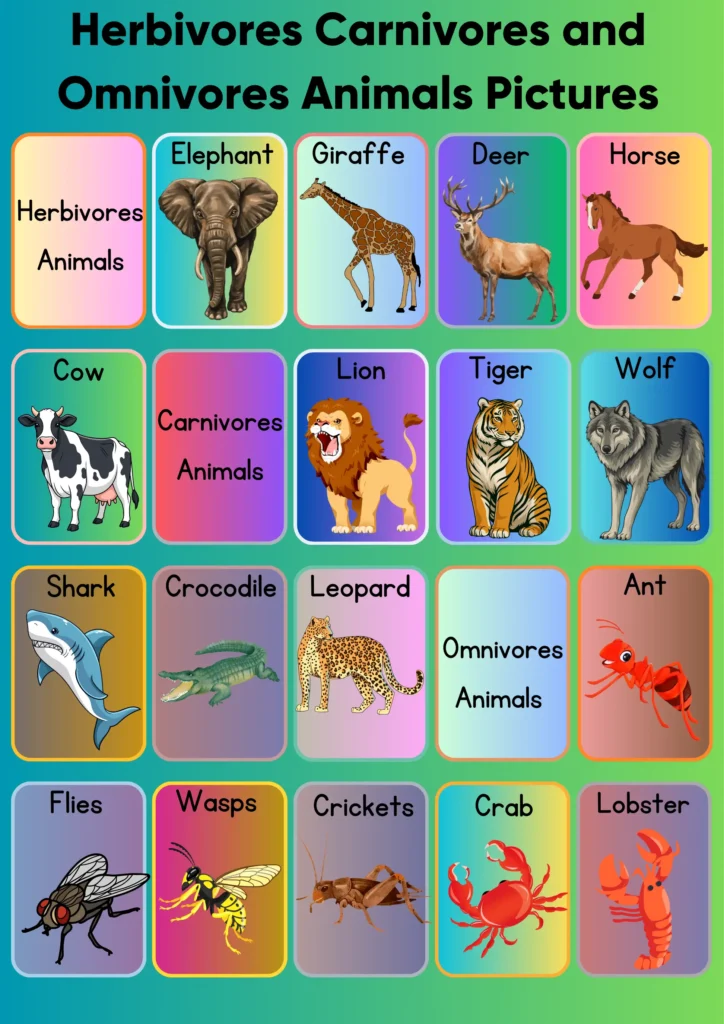
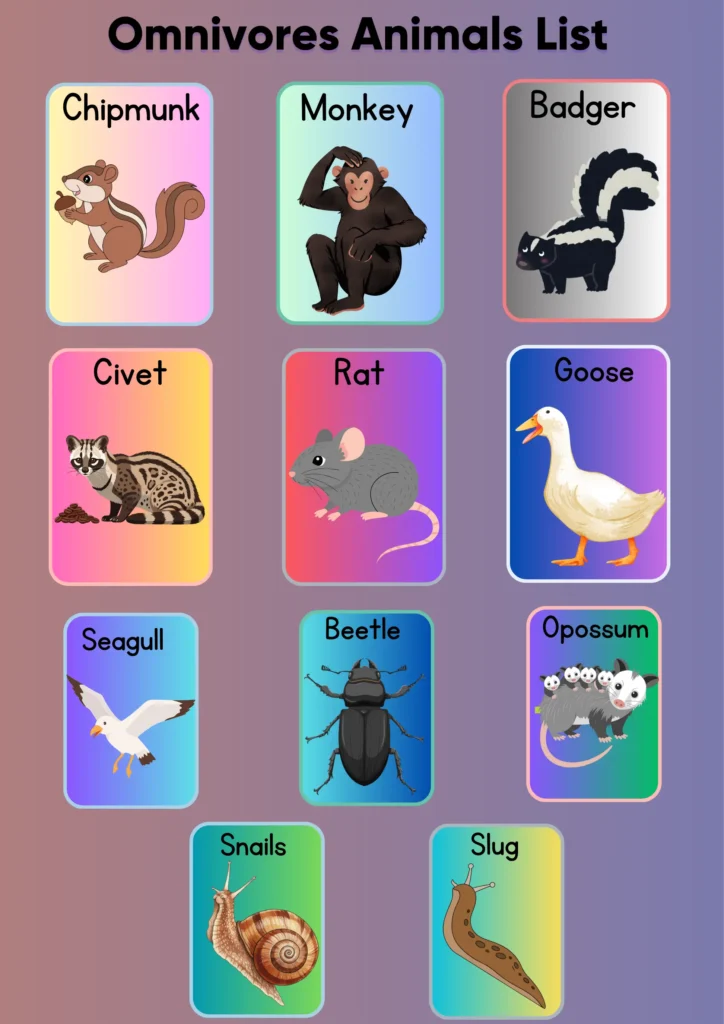
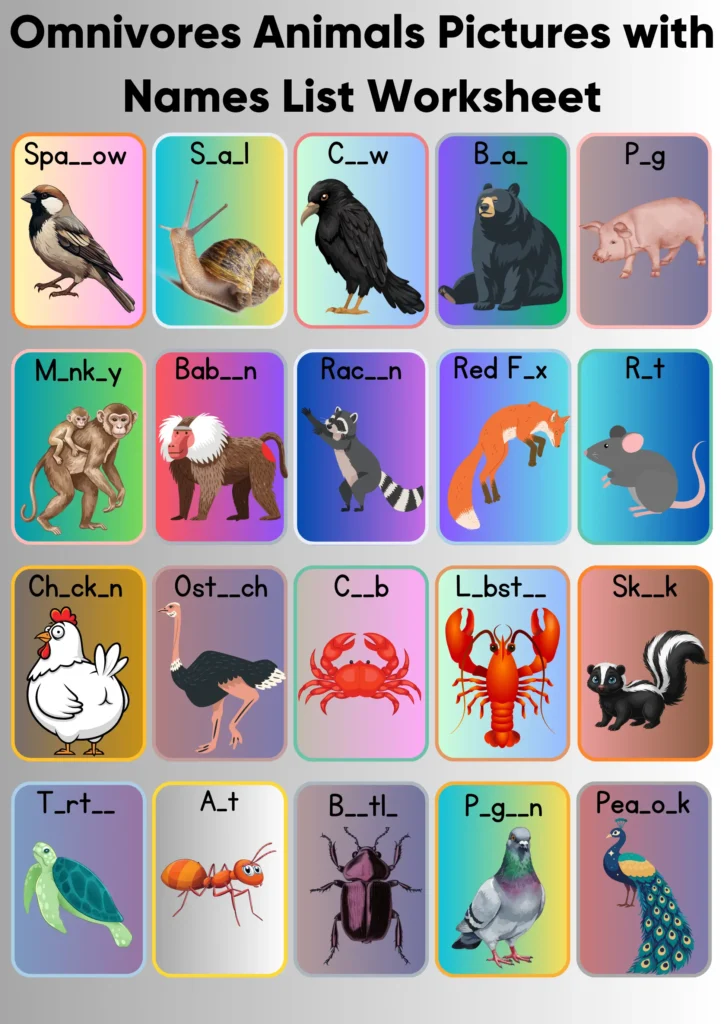
- Mammals : Bear, Racoon, Pig, Fox, Badger, Skunk, Squirrels, Chipmunks, Opossums, Chimpanzees, Baboons, Bonobos, Hedgehogs, Mice & Rats, Fox.
- Birds : Crow, Chicken, Ducks, Seagulls, Ostrich, Woodpeckers, Turkey, Emus, Blackbird, Robin, Swan, Starling, Roadrunner, Seriema, Cassowarie.
- Insects & Others : Cockroaches, Ants, Wasps, Crickets, Grasshoppers, Fruit flies, Dung beetles, Mites, Ticks, Crayfish, Crab, Snails, Slugs.
Food Chain Omnivore
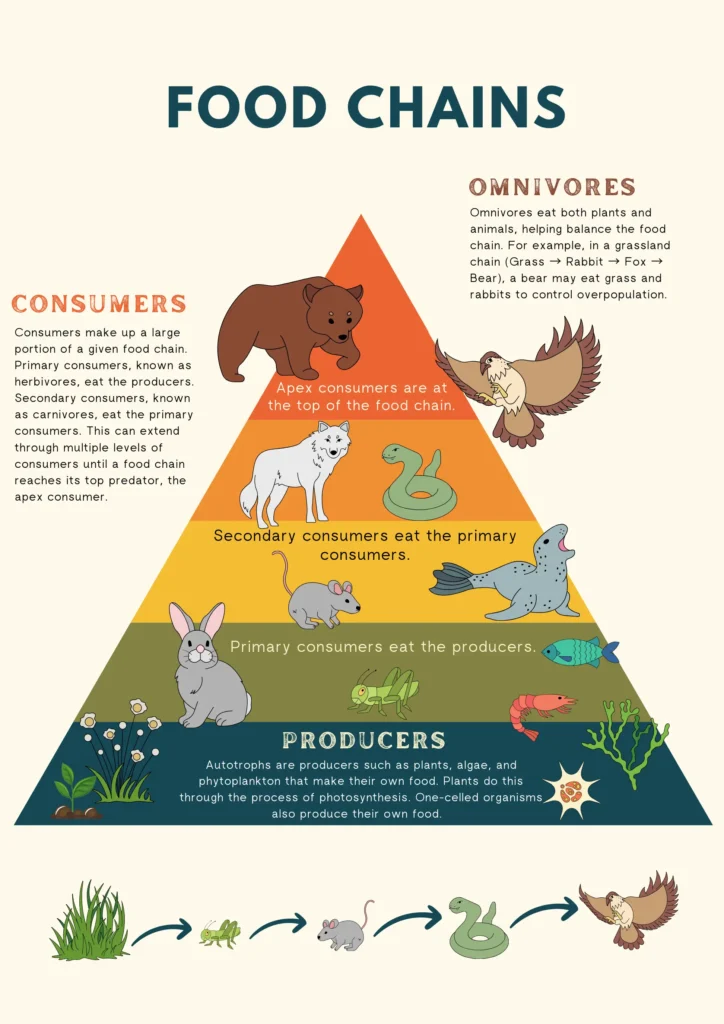
Omnivore animals occupy a flexible position in the food chain consuming both producer (plants) and consumer (animals) which help regulate population across trophic levels. Omnivores act as a primary, secondary and tertiary depending on available food. Prevent the overpopulation of herbivores while praying on them, while also grazing to maintain balance.
For example, in the Grassland chain Grass > Rabbit > Fox > Bear (Omnivore) might eat grass and rabbit to control overpopulation.
Omnivores link herbivores and carnivores, keeping energy moving in ecosystems. Their flexible diets help prevent chain disruptions and support biodiversity by controlling insects and plant growth.
Key Features of Omnivorous Animals
Omnivorous animals have evolved traits that allow them to eat both plant and animal matter, helping them survive in a wide range of environments.
- Teeth : Omnivores have different types of teeth that help them eat many kinds of food. Sharp front teeth (Incisors & Canines) tear meat, while flat back teeth (Molars) grind plants. This mix of teeth, found in animals like bears and humans, lets them handle a wide range of foods, unlike animals that eat only plants or only meat.
- Digestive Tract : Omnivore digestive systems guts are shorter, like those of meat-eaters, so meat is digested quickly, but they also have enzymes that help break down plant material. Animals such as pigs and raccoons have simpler stomachs than plant-eaters, yet they can still digest some plant fibers.
- Body Type : Omnivores often have strong bodies and flexible paws or snouts that help them foraging vegetation and prey. Their adaptable body shapes, seen in animals like badgers, take advantage of many food sources without being highly specialized.
- Ecological Role : They help keep ecosystems balanced by limiting herbivore and insect numbers and spreading seeds when they eat fruit. By feeding at different levels of the food chain, such as foxes eating both rodents and berries, support biodiversity and ecosystem stability.
- Habitat Adaptability : Omnivores survive in forests, cities, deserts, and grasslands because they eat many foods. Raccoons eat garbage in cities and bears eat berries or salmon depending on the season.
Common Behaviors of Omnivores
Omnivorous animals show behaviors that help them survive by being flexible and able to eat a wide range of foods.
- Flexible Eating Habits : Omnivore switches eating diet based on season and availability of food, consumes plants, meat, insects etc. Bears for instance eat berries in summer and salmon during fall (June/Sept/Oct) to build fat reserves. This opportunism prevents starvation during shortages.
- Finding and Catching Foods : Omnivores animals use keen senses like smell and sight for foraging and digging roots or hunting small prey with paws & beaks. Raccoons use their clever paws to feel around in streams for crayfish or dig through trash, while pigs use their strong noses to dig in the ground for roots and bugs.
- Social Flexibility : Many animals come together in small groups to find food or mates, but usually hunt alone, depending on how much food is available. Pigs gather where there is food and watch for danger together, while raccoons search for food alone at night so they don’t have to compete with others.
- Clever Survival Skills : Omnivores sometimes save food for later, like squirrels burying nuts, or look through city trash for easy food. They are good at solving problems, such as bears opening containers or raccoons opening latches, which helps them live around people.
5 Omnivores Animals
| Mammals | Diet |
| 1. Bear | Eats plants, Berries, Fish, Carrion and Small animals |
| 2. Pig | Eats vegetables, Fruits, Insects and Scraps |
| 3. Racoon | Eats fruits, Insects, Nuts, Eggs and leftovers |
| 4. Monkey | Eats fruits, Leaves, Insects, Flowers, Lizard and Eggs |
| 5. Fox | Eats fruits, Leaves, Insects, Carrion, Birds and Eggs |
| Birds | Diet |
| 1. Crow | Eats grains, Insects, Fruit, Seeds and Waste |
| 2. Chicken | Eats seeds, Insects, Worms, Worms and Small animals |
| 3. Ducks | Eats plants, Insects, Grasses, Snail and Small fish |
| 4. Pigeon | Eats seeds, Fruits, Berries, Worms and Insects |
| 5. Seagull | Eats fish, Insects, Eggs, Shellfish, Bread and Food scraps |
| Insects | Diet |
| 1. Ant | Eats plants, Insects, Honeydew, Sweets, Meats, Oil nuts and Leftover food |
| 2. Cockroach | Eats plants, Decaying matter, Feces, Meat and Waste |
| 3. Cricket | Eats plants, Insects, Fungi, Aphids and Dead matter |
| 4. Beetle | Eats plants, Fungi, Nectar, Wood and Small insects |
| 5. Grasshopper | Eats plants, Lettuce, Alfalfa, Flowers, Seeds and Small insects |
Omnivorous Animals 10 Examples
Here are 10 common examples of omnivorous animal names, each eating both plants and animals for survival.
- Opossum : Eats Fruits, Insects, Small animals, Birds, Snake and leftovers
- Badger : Eats roots, Berries, Insects, Earthworms, Fruits, Amphibians and small animals
- Hedgehog : Eats insects, Fruits, Eggs, Caterpillars, Small Frog and small animals
- Skunk : Eats berries, Insects, Eggs, Nuts, Frog, Mice and small animals
- Chimpanzee : Eats fruits, Leaves, Insects, Bark, Honey, Blossoms and small animals
- Rat : Eats grains, Fruits, Insects, Vegetables, Meat and Scraps
- Mouse : Eats seeds, Insects, Fruit, Nuts, Sweets and Small animals
- Turtle : Eats plants, Insects, Aquatic plants, Leafy greens, Fruits and Small fish
- Goose : Eats plants, Insects, Clover, Grasses, Aquatic vegetation and Small animals
- Sparrow : Eats seeds, Insects, Grains and Small worms
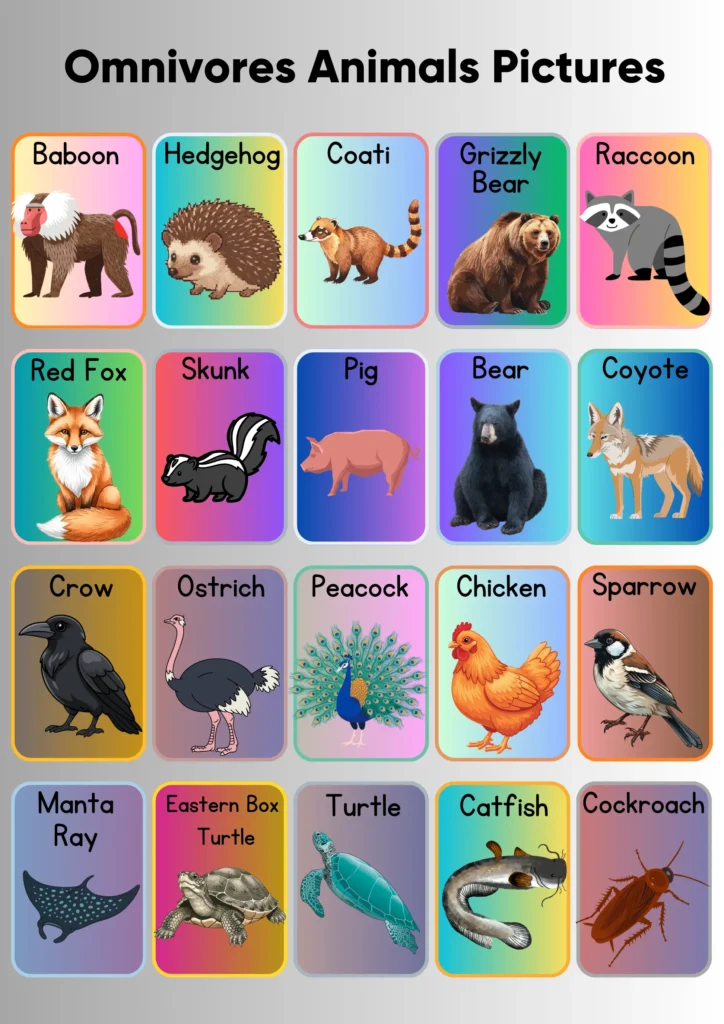
20 Omnivores Animals Name
| Mammals | Diet |
| 1. Baboon | Fruits, insects, small animals |
| 2. Hedgehog | Insects, fruits, eggs |
| 3. Coati | Fruits, insects, small animals |
| 4. Grizzly Bear | Plants, berries, fish, animals |
| 5. Raccoon | Fruits, insects, eggs, waste |
| 6. Red Fox | Fruits, insects, small animals |
| 7. Skunk | Insects, berries, small animals |
| 8. Pig | Roots, fruits, insects |
| 9. Bear | Plants, fish, animals |
| 10. Coyote | Fruits, insects, small animals |
| 11. Chipmunk | Seeds, fruits, insects |
| 12. Monkey | Fruits, leaves, insects |
| 13. Badger | Roots, insects, small animals |
| 14. Civet | Fruits, insects, small animals |
| 15. Rat | Grains, fruits, insects |
| Birds | Diet |
| 16. Crow | Grains, insects, leftovers |
| 17. Ostrich | Plants, seeds, insects |
| 18. Peacock | Grains, fruits, insects |
| Insects & Others | |
| 19. Manta Ray | Plankton, small fish |
| 20. Eastern Box Turtle | Plants, insects, worms |
| 21. Turtle | Plants, insects, small fish |
| 22. Catfish | Plants, insects, small animals |
| 23. Cockroach | Plants, meat, waste |
Sahara Desert Omnivores
The Sahara Desert is one of the toughest places in the world to live, so very few omnivorous animals live there. However, some animals that can adapt survive by eating both plants and animals.
- Fennec Fox (Vulpes zerda): Primarily eats insects (locusts), rodents and birds but also fruits and roots when available.
- Honey Badger (Mellivora capensis): Feeds mainly on lizards, snakes, amphibians and scorpions but consumes plants, fruits and honey.
- Desert Hedgehog (Paraechinus aethiopicus): Hunts insects, carrion and small vertebrates while eating seeds and vegetation.
- Rüppell’s Fox (Vulpes rueppelli): Targets rodents and insects, termites, beetles but supplements with berries and grasses.
- Sand Cat (Felis margarita): Hunts lizards and rodents primarily, occasionally eating plant matter and eggs.
Omnivores Animals in hindi
भक्षणभोगी (omnivorous) जानवर वे होते हैं जो पौधे और मांस दोनों खाते हैं। यहां 10 सामान्य उदाहरण दिए गए हैं।
सामान्य उदाहरण
- भालू (Bear): फल, शहद, मछली और छोटे जानवर खाते हैं।
- सूअर (Pig): जड़ें, कीड़े, फल और कच्चा मांस।
- लोमड़ी (Fox): चूहे, पक्षी और जामुन।
- बंदर (Monkey): फल, पत्तियां, कीड़े और छोटे जीव।
- सियार (Jackal): छोटे जानवर, फल और लाशें।
अन्य उदाहरण
- कौआ (Crow): बीज, फल, कीड़े और लाश।
- नेवला (Mongoose): सांप, चूहे और फल।
- बंदरगाह (Raccoon): मछली, अंडे, फल और कचरा।
- बदजर (Badger): कीड़े, जड़ें और छोटे स्तनधारी।
- स्कंक (Skunk): कीड़े, छोटे जानवर और जामुन।
Explore More about Some Common Omnivores
Common omnivorous animals like Bears, Pig and Crows possess a versatile digestive system, enzyme for breaking down both plant cellulose and animal protein. Their opportunistic feeding supports population stability across seasons.
Key Characteristics
Bears have sharp canines for tearing meat and flat morals for grinding vegetation. Their digestive systems combine shorter small intestines for rapid protein digestion with microbial fermentation to process plant material. Reducing starvation risk compared to strict carnivores or herbivores.
- Bears: Consume berries, roots, nuts, grasses, fish and mammals, grizzlies eat up to 90% of plants in summer.
- Pigs: Forage roots, grains, insects, soybean meal, vegetables and carrion, wild boars devour 50-70% vegetation.
- Crows: Eat seeds, fruits, eggs, grains, carrion and scraps, urban crows favor human waste alongside insects.
Importance of Omnivorous Animals for the Environment
Omnivorous animals help the environment by linking different food-chain levels, controlling populations, and recycling nutrients. Omnivores function as both plant eaters and animal eaters, bridging herbivores and carnivores in food webs, and studies show their presence can reduce extreme population fluctuations and stabilize ecosystems.
Urban omnivores such as raccoons and crows eat insects, seeds, and human food waste, shaping city food webs and helping clean up leftovers and carcasses.
YouTube channels Little Fox – Kids Stories and Songs to learn the names of omnivorous animals through videos and interactive content.
FAQ’s
1. Are dogs omnivores ?
Yes dogs are omnivores animals over a period of time their digestive system adopted to consume both plant (Grains, Vegetables) and animals (Meat, Fat) diet
2. What do omnivores eat ?
Omnivores consume both plants (Grains, Vegetables, Fruits) and animals (Meat, Fat) diet due to versatile adaptation characteristics.
3. Are snakes omnivores ?
No snakes are carnivores, they consume other animals, a diet consisting of rodents, eggs, insects, fish, amphibians and other reptiles.
4. Are cows omnivores ?
No cows are herbivores, primary diet is plants based matter like fruits, grass, vegetables, hay etc.
5. Rabbits are omnivores ?
No rabbits are strictly herbivorous, their diet is dependent on grasses, leafy greens, hay and vegetables.
6. Are eagles omnivores ?
No eagles are strict carnivores, eat only meat, small mammals, reptiles, birds and other animals for energy.
7. Is a frog a herbivore, carnivore or omnivore ?
Frogs are primarily carnivores in their adult stage, eating small animals and insects but during early life stage (Tadpole), typically herbivores consume algae/plants or are omnivorous.