Hey little learners ! You know what plant-eating animals are called ? their diet, habitat, characteristics and some exciting fun facts about “plant-eaters”.
Let’s end the suspense! These animals are called herbivores. The herbivorous definition is animals that eat plants, and the herbivorous meaning animals eating plants, fruits, leaves, seeds and grasses. Herbivores are found at the beginning of food chains because they get their energy from plants. Herbivorous animals examples include deer, horses, cow, elephant, donkey etc.
The word “herbivorous” is pronounced as /ˌhɜːrˈbɪvərəs/ or “hur-BIV-uh-ruhs” in American English, with stress on the third syllable. “Herbivore” sounds like /ˈhɜːrbɪvɔːr/ or “UR-bi-vor.”
In this blog, we take little learners on a fun journey to explore a list of herbivorous animals, herbivorous aquatic animals, easy essays on herbivorous animals, their diet, and engaging worksheets and drawing activities for practice.
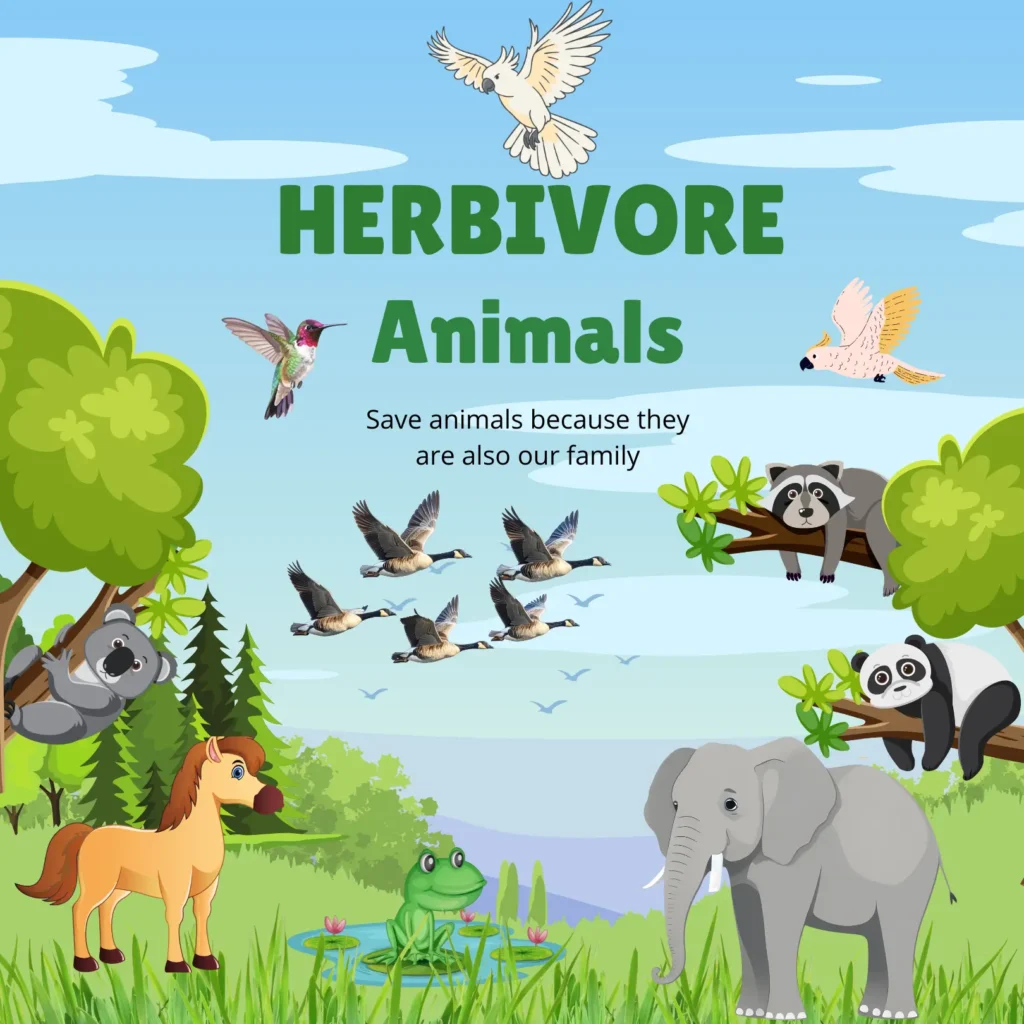
What Are Herbivores ?
In biology, the herbivore definition is an animal that eats plants, grasses, fruits, seeds and leaves for food. Herbivores are also called plant-eating animals. Some herbivorous animal’s names include cow, goat, deer, rabbit, and elephant etc. Herbivorous animals are heterotrophs, which means they cannot make their own food and depend on plants for energy.
Herbivores Classification
- Frugivores : Frugivores are animals that mostly eat fruits. When they eat fruit, the seeds come out in their droppings and grow into new plants. Animals like monkeys (such as spider monkeys), fruit bats, and toucans are frugivores. By spreading seeds, they help forests grow.
- Granivores : Granivores are animals that mostly eat seeds and grains. They have strong beaks or teeth to break hard shells. Pigeons, sparrows, finches, and squirrels are common granivores. These animals help nature by controlling seed populations and by helping different plants grow in an area.
- Nectivores : Nectivores are animals that consume nectar from flowers providing high energy sugar. They have long tongues or beaks to reach the nectar easily. Hummingbirds, sunbirds, honey possums, and butterflies are examples of nectivore. They help flowers in spreading pollen.
- Folivores : Folivores are animals that eat mostly leaves, which are hard to digest. Examples include koalas, gorillas, sloths, and some caterpillars. They have special stomach bacteria to help break down the leaves.
Herbivore Characteristic
- Teeth and Mouth : Herbivores have flat teeth called molars and premolars to grind plants, and their sharp canines are small or missing. Wide mouths and strong jaws, like in cows and horses, help them chew tough grass or bark. Some, like rabbits, have a gap between their teeth, called a diastema, to help them bite plants easily.
- Digestive System : Herbivores have long, special digestive systems to break down plants with the help of tiny microbes. Ruminants like deer have multi-chambered stomachs, while animals like elephants use large ceca for fermentation. Their alkaline saliva also helps digest tough, low-nutrient plants slowly.
- Sensory and Behavioral Traits : Herbivores have eyes on the sides of their heads for a wide view to spot predators. They often live in herds for safety, spend a lot of time eating low-energy plants, and use their strong sense of smell to find food.
Herbivore Adaptation
Over time, herbivores have developed special adaptations to deal with plant defenses like thorns, toxins, and tough tissues. These adaptations can be grouped into mechanical, biochemical, plant defence and behavioral types that help them eat plants safely.
- Herbivore adaptations and Plant defence : Plants protect themselves in many ways. Some have thorns, some make bad-tasting or harmful chemicals, and some even send signals to call insects that chase plant-eaters away. This back-and-forth battle between plants and herbivores helps both change and adapt over time.
- Mechanical Herbivore adaptations : Herbivores have special body parts to eat plants easily. Some have flat teeth to grind food, long necks like giraffes to reach leaves, or special mouths to get past thorns and bark. They also have long stomach systems with helpful microbes, and animals like elephants use their trunks to pull off leaves safely.
- Bio-chemical Herbivore adaptations : Herbivores have special enzymes and helpful gut bacteria that make plant chemicals safe to eat. Some insects, like caterpillars ( sequester toxins), even keep plant toxins to protect themselves from enemies. Animals like koalas have strong livers that can safely break down oils from eucalyptus leaves.
- Behavioural Herbivore adaptations : Herbivores use smart behaviors to stay safe and get good food. They choose soft, young leaves, live in groups to watch for danger, and move to new places when seasons change. Some, like geese, eat together quickly to stay safe while feeding.

Five Herbivorous Animals
Five herbivorous animals with diet and distinctive features based on adaptation traits to process fibrous vegetation.
- Cow : Cow eats grass, hay, silage during grazing. Distinctive feature : Four-chambered stomach (ruminant) for microbial fermentation of cellulose, enabling nutrient extraction from tough forage.
- Elephant : Elephants eat leaves, bark, roots, and fruits, and eat up to 150 kg of food each day. Their long, flexible trunks help them gather and strip plant food easily.
- Rabbit : Rabbits eat grass, herbs, vegetables, and bark. They have teeth that keep growing to help them chew tough plants, and they re-eat soft droppings to get extra nutrients from their food.
- Koala : Koalas mainly eat eucalyptus leaves, which do not have much nutrition. They have special gut bacteria that help remove harmful oils and get energy from these tough leaves.
- Giraffe : Giraffes eat leaves, twigs, and fruits from tall trees like acacia. Their long necks and long tongues help them reach high leaves that other animals cannot.
10 Herbivores Animals
| Name | Diet | Distinctive Feature |
| Horse | Grass, Hay, Grains (Oat,Corn, Barley), Herbs, Salt & Minerals | Flat teeth for grinding tough plants and split upper lip allows precise cropping of short vegetation. |
| Deer | Leaves, Twigs, Bark, Acorns, Grass, Fruits, Forbs, Crops, Fungi, Lichen | Strong legs for fast running, four chambered stomach, re-chewing cud for nutrient extraction. |
| Sheep | Grasses, Clover, Forbs, Grains (Oat, Corn, Barley) | Thick wool coat for protection, and paired molars for grinding. |
| Goat | Leaves, Shrub, Bark, Weeds, Hay, Small amt. of grains | Flexible lips and a broad palate enable selective browsing of thorny plants. Also climb steep rock. |
| Panda | Bamboo shoots, stem and Leaves | Strong jaws and teeth to crush bamboo. Enlarged wrist bone for grabbing bamboo. |
| Zebra | Graze tough, dry grasses, leaves, shrubs, bark (when needed) | Black and white stripes for camouflage. High crowned molars. |
| Hippopotamus | Grasses, Aquatic plant (at night), Roots, Fruits | Massive jaws with incisors for clipping grass, secretion of blood sweat for protection. |
| Gorilla | Leaves, Stem, Fruit, Pith, Flowers | Large canines and powerful jaw muscles. |
| Sloth | Leaves, Fruits, Buds, Flowers | Slow metabolism and multi-chambered stomach. |
| Iguana | Dark green leaves, Flowers, Fruits | Throat fan for thermoregulation. |
Herbivorous Aquatic Animals
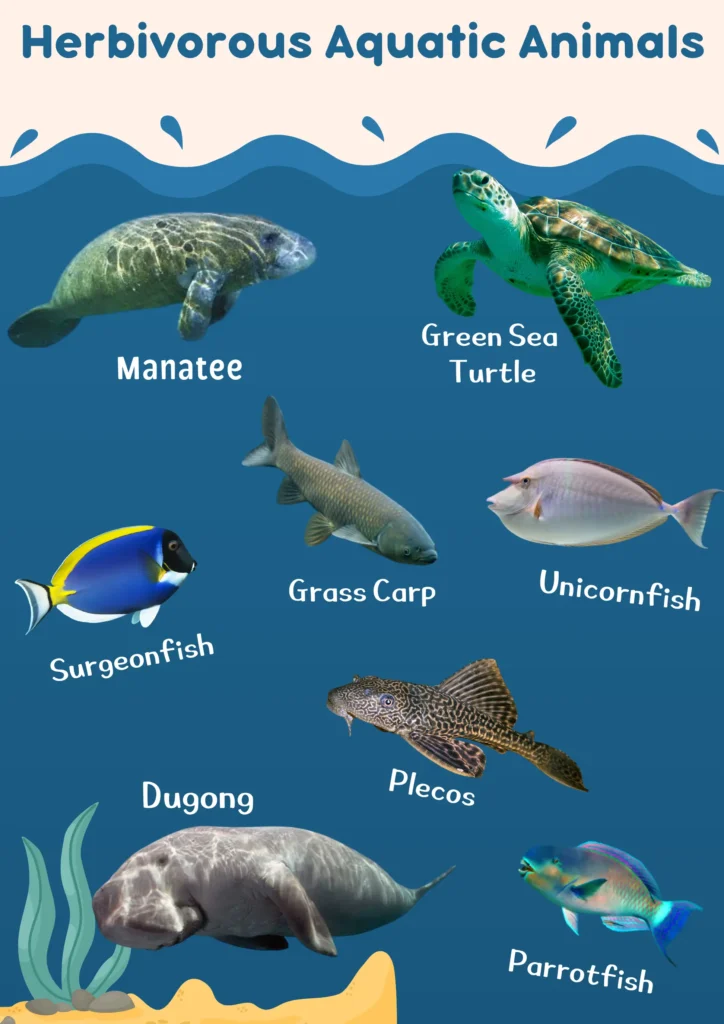
Below is the list of aquatic herbivorous animals, consume marine plants, algae, sea grasses or sea weeds living in ocean, rivers and coastal waters.
- Manatee : Manatee (sea cow) eat seagrasses, turtle grass, shoal grass, hydrilla, water hyacinth, water lettuce, coontail, eelgrass, algae, mangrove leaves or acorns. Animals have whisker-like lips, multi-chambered stomach, robust molars for grinding, consume 10-15% of their body weight daily.
- Dugong : Dugong eat seagrasses, roots, rhizomes, meadows. Barrel-shaped bodies and broad paddle-like tails enable efficient maneuvering. Molars for grinding fibrous material, bristled snout for uprooting grass.
- Parrotfish : Parrotfish consume algae (growing on rocks/coral), microalgae, cyanobacteria, endolithic algae. Fish have parrot-like beak jaws for biting algae, throat teeth that grind ingested material into sand.
- Surgeonfish : Feed on filamentous algae, turf algae, cyanobacteria, detritus (scraped from coral, rocks, seagrass). Have sharp, retractable spines on their tail used for defence. Specialized jaws for precise biting or pulling of attached algae.
- Unicornfish : Focuses on dense green leafy brown algae, turf algae scraped from coral and rocks. Unicornfish feature prominent horn-like projections on their foreheads. Sharp tail peduncle spines for defence.
- Plecos (Loricariidae family) : Graze on algae wafers, spirulina, blanched vegetables (zucchini, cucumber, peas), driftwood, more focus on green algae. Downward facing sucker mouths with rasping teeth for scraping algae from surfaces. Armored bony plates covered their bodies for protection.
- Green Sea Turtle : Graze on manatee grass, red, green, and brown algae, sea lettuce. Lower jaws and beaks adapted for cropping and grinding, streamlined flippers and powerful bites for tearing fibrous plants.
- Grass Carp : Feed on aquatic plants like hydrilla, water hyacinth, duckweed, pondweed, and algae. Have a long coiled intestine for digesting fibrous plants through fermentation. Pharyngeal teeth for grinding vegetation, streamlined bodies with no scale.
Plant Eating Animals Names
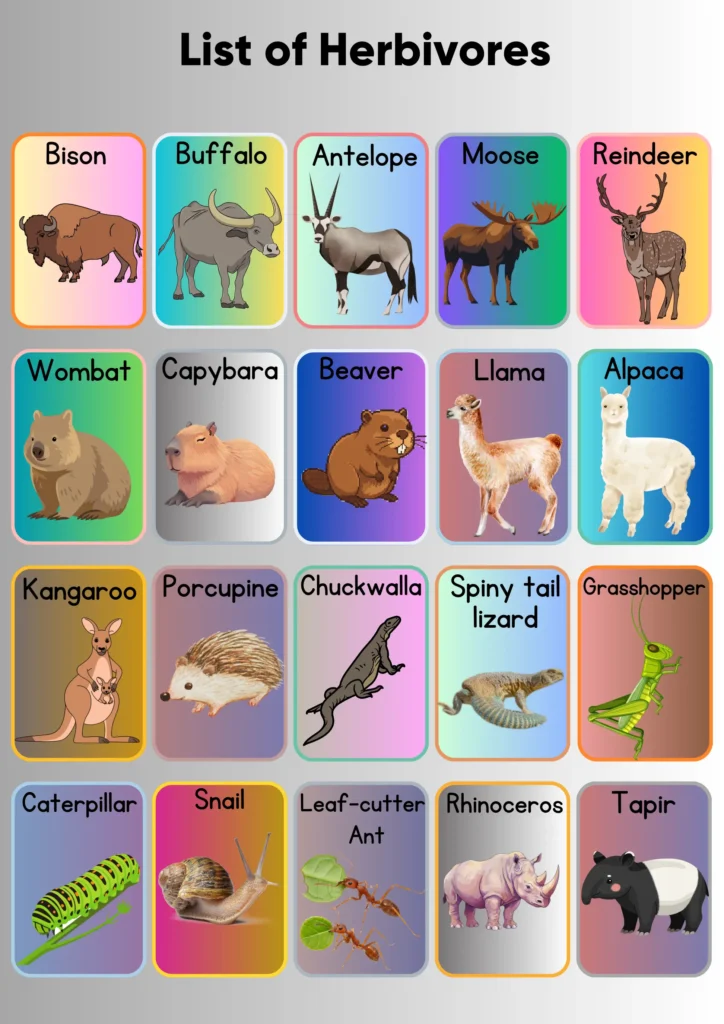
Herbivorous animals are vegetarian animals Approximately 32% of present-day animal species are herbivores.
| Animals | Diet |
| Bison | Grasses, Sedges, Leaves, Weeds, Twigs |
| Buffalo | Grass, Aquatic Plants, Sedges, Mosses, Herb |
| Antelope | Grasses, Leaves, Shoots, Flowers |
| Moose | Leaves, Twigs, Bark, Aquatic plants, Willow, Aspen, Birch |
| Reindeer | Lichens, Mosses, Grasses, Fungi, Fern, Birch trees |
| Wombat | Grass, Root, Bark, Tubers, Sedges |
| Capybara | Grasses, Aquatic plants, Barks, Tubers |
| Beaver | Bark, Leaves, Aquatic plants, Water lilies, Cattails, Willow |
| Llama | Grass, Shrubs, Hay, Fibrous plant |
| Alpaca | Grass, Hay, Grain, Timothy grass |
| Kangaroo | Grass, Leaves, Shrubs, Bark |
| Porcupine | Bark, Leaves, Fruits, Berries, Seeds, Stems |
| Chuckwalla | Flowers, Leaves, Sweetbush, Creosote bush |
| Spiny tail lizard | Leaves, Seeds, Desert plant, Grasses, Flower, Fruit |
| Grasshopper | Leaves, Grass, Corn, Wheat, Barley, Lettuce, Spinach, Beans |
| Caterpillar | Plant, Leaves, Flowers, Fruits, Bark, Twigs |
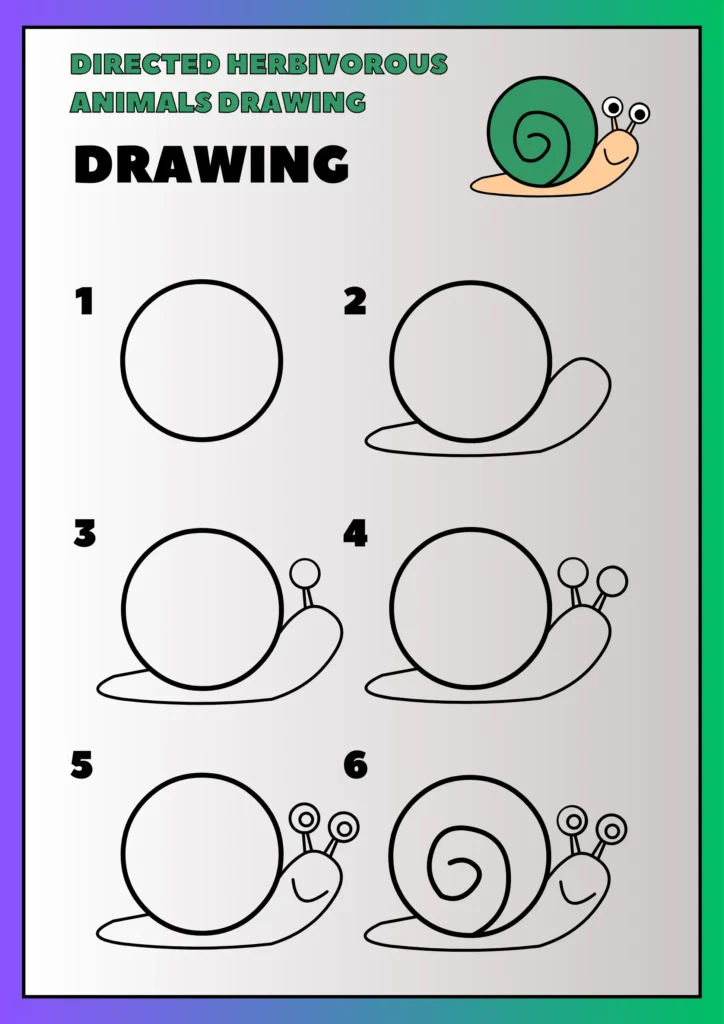
| Snail | Leaves, Algae, Fruits, Fungi, Duckweed |
| Leaf-cutter Ant | Leaves, Fungus, Plant sap |
| Rhinoceros | Grass, Leaves, Branches, Aquatic plants |
| Tapir | Leaves, Twigs, Aquatic plants, Fruits, Buds |
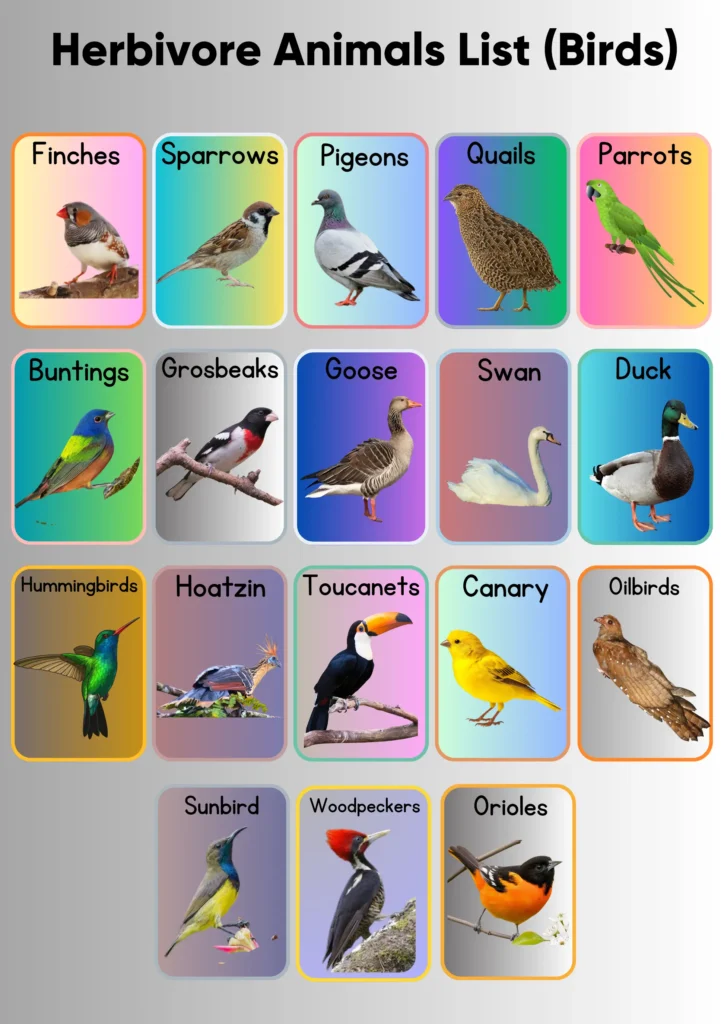
Herbivore Animals List (Birds)
| Birds Name | Diet |
| Finches | Millets, Canary seeds, Flax, Spinach, Broccoli, Fruits, Carrots, Squash |
| Sparrows | Millet, Sunflower, Corn, Wheat, Fruits, Berries |
| Pigeons | Bread, Fries, Rice, Legumes, Seeds, Fresh greens |
| Quails | Millet, Sunflower, Corn, Leafy greens, Fruits |
| Parrots | Vegetables, Fruits, Grains, Pellets, Nut, Seeds |
| Buntings | Berries, Seeds, Buds, Leaves, Twigs |
| Grosbeaks | Seeds, Fruits, Buds, Berries |
| Goose | Grass, Aquatic plants |
| Swan | Aquatic plants, Algae |
| Duck | Aquatic plants, Seeds |
| Hummingbirds | Nectar |
| Hoatzin | Leaves, Buds, Flowers, Fruits, Marshy vegetation |
| Toucanets | Fruits and Berries |
| Canary | Seed mix, Pellets, Greens |
| Oilbirds | Eat fruits, Palms oil fruit |
| Woodpeckers | Acorns, Peanuts, Sunflower, Berries, Tree sap, Nuts |
| Sunbird | Nectar of flowers, Fruit, Berries |
| Orioles | Fruits, Nectar |
Herbivores Animals Name Essay with Examples and Word Counts
Herbivorous animals are those animals that eat plant-based food. Their diet includes grass, leaves, fruits, seeds, and vegetables. These animals have strong teeth and digestive systems that help them break down plant material. Common examples of herbivorous animals are cow, horse, deer, goat, elephant, and rabbit. Herbivores are very important for the environment because they help control plant growth and provide food for carnivorous animals. Many herbivores are domestic animals that help humans by providing milk, wool, and transportation. Thus, herbivorous animals are essential for maintaining ecological balance.
Fun Facts about Herbivores
- Koalas sleep up to 20 hours daily because their low-nutrient eucalyptus diet demands minimal energy expenditure.
- Cows have four chambered stomachs, for digesting grass.
- Giant Pandas rely on specific bamboo enzymes from gut bacteria.
- Giraffes have long tongues (up to 45 cm) to reach leaves high in trees.
- Elephants can eat up to 150 kg of plants a day.
- Some herbivores, like tortoises, can live over 100 years.
Test Your Knowledge of Herbivorous Animals
Task 1: Match the Animal to Its Diet
Match Column A (Animals) with Column B (Diet)
Column A
- Cow
- Giraffe
- Rabbit
- Elephant
- Parrot
Column B
- A. Leaves from tall trees
- B. Grass
- C. Fruits and seeds
- D. Carrots and leafy vegetables
- E. Grass, leaves, and fruits
Answers:
1-B, 2-A, 3-D, 4-E, 5-C
Herbivorous Animals Meaning in Hindi
शाकाहारी जानवर की परिभाषा:
वे जानवर जो केवल पौधों या वनस्पति से बने भोजन (जैसे घास, पत्तियाँ, फल, बीज) खाते हैं, उन्हें शाकाहारी जानवर कहते हैं।
प्रमुख हिंदी शब्दावली
- शाकाहारी प्राणी: पौधों को खाने वाले जानवर।
- शाकभक्षी: केवल शाक (पौधे) खाने वाले।
- पर्णाहारी: मुख्यतः पत्तियाँ खाने वाले।
उदाहरण:
गाय, भैंस, बकरी, हिरण, हाथी, घोड़ा, खरगोश, जिराफ आदि।
Herbivore Games and Resources
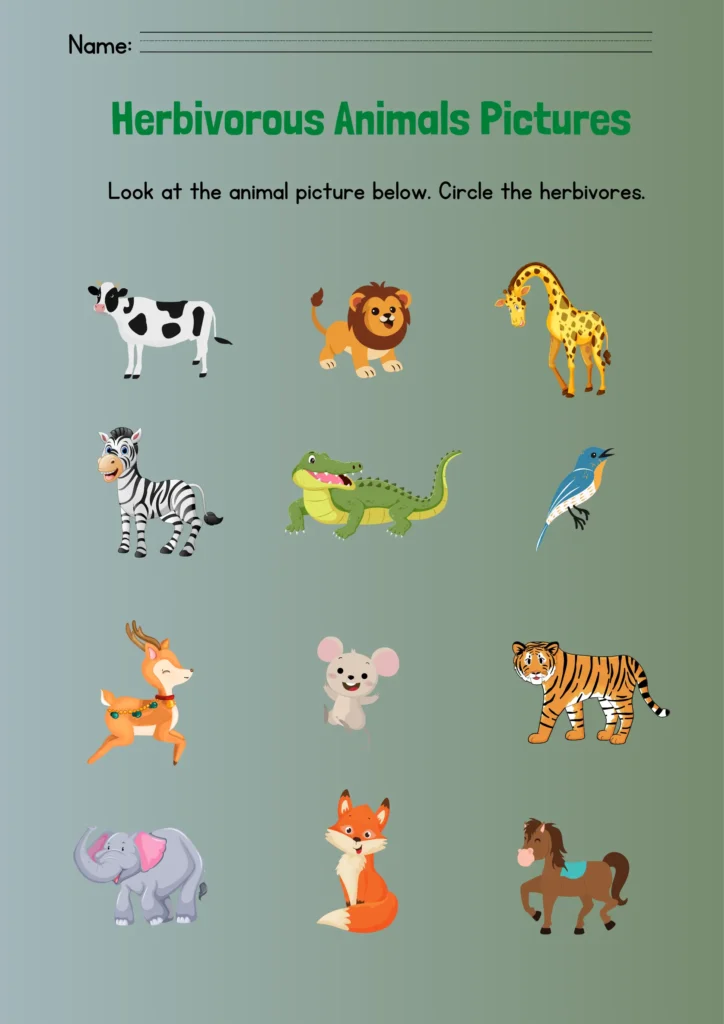
1. Herbivore or Not?
Time: 5 minutes
How to Play:
- Teacher says an animal name.
- Students clap if it is a herbivore, stay silent if not.
Examples:
Cow ✅ | Lion ❌ | Giraffe ✅ | Tiger ❌ | Elephant ✅
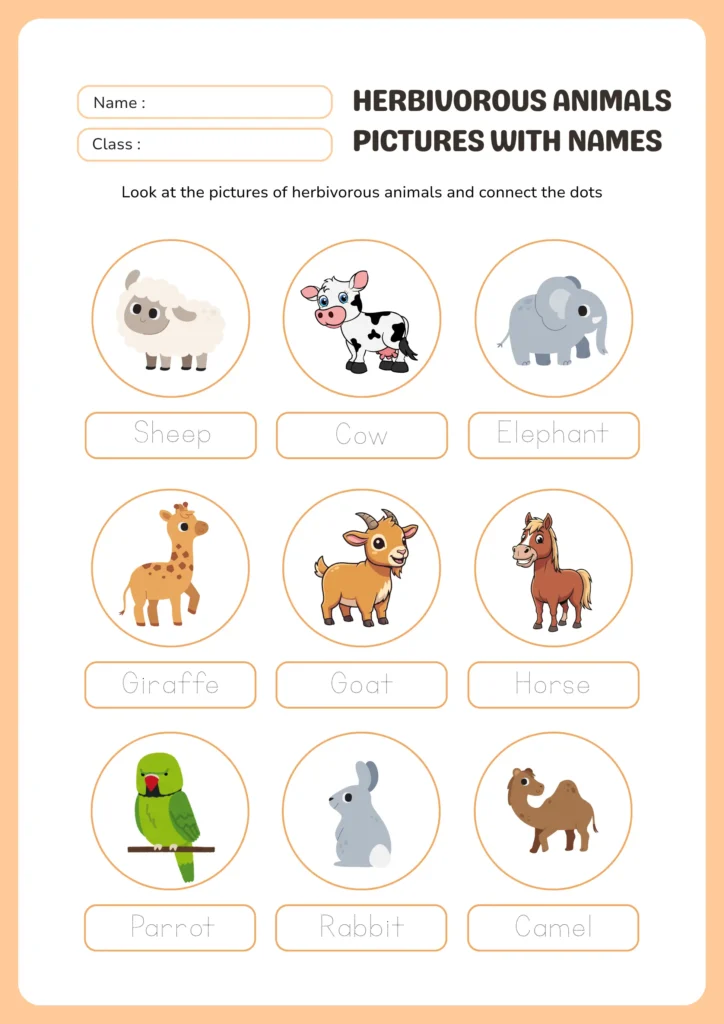
2. Match the Food
Time: 5–7 minutes
Materials: Paper cards or board
How to Play:
- One side: animals (cow, rabbit, parrot)
- Other side: foods (grass, carrot, seeds)
- Students draw lines to match them.
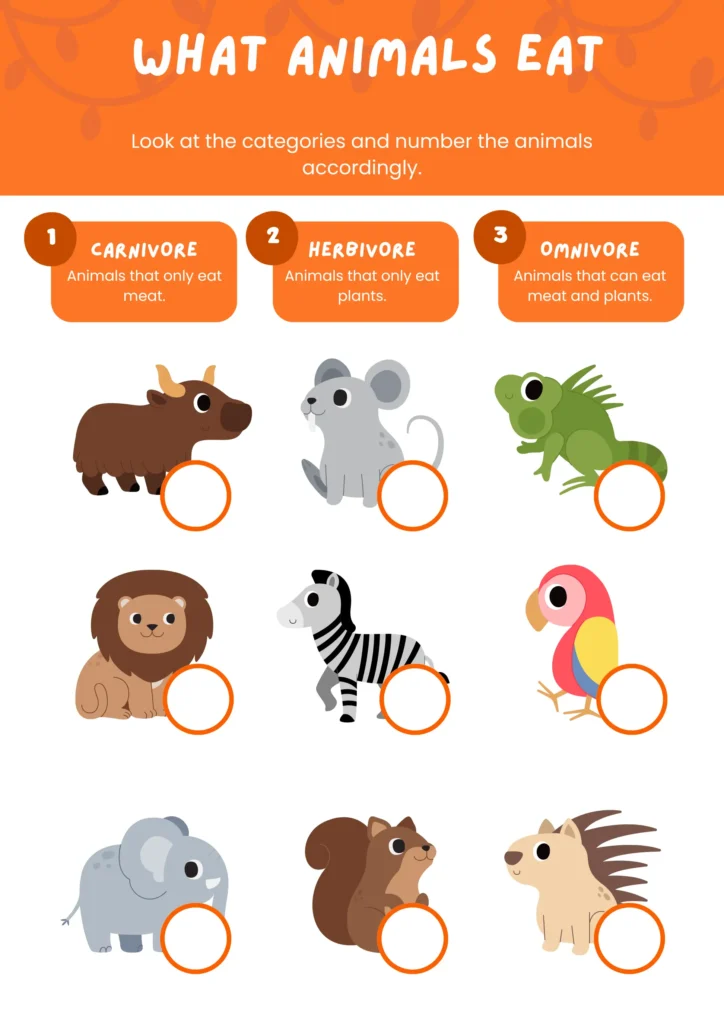
3. Youtube Kiddopedia channel , HERBIVOROUS ANIMALS Names and Sounds | Learn Herbivore Animals.
4. Foxton Primary Science: Carnivores Herbivores Omnivores (Key Stage 1 Science).
FAQ’s
1. Are cows herbivores ?
Yes, cows are herbivores because they eat grass, leaves, and other plant-based foods.
2. Is rhinoceros herbivores ?
Yes, a rhinoceros is a herbivore because it eats grass, leaves, shoots, and fruits.
3. Is deer herbivores ?
Yes, deer are herbivores because they eat grass, leaves, fruits, and plants.
4. Is goat herbivorous ?
Yes, goats are herbivorous animals as they eat grass, leaves, and plant material.
5. What are 7 animals that are herbivores?
Seven herbivorous animals are cow, goat, elephant, deer, rabbit, giraffe, and horse, all of which eat plants.

Team Amaltas is a group of graduates dedicated to creating a fun and effective learning platform for kids through worksheets and educational resources.