
Dry fruits have been a popular snack and ingredient in kitchens all around the world for centuries. But what exactly are dry fruits, and why are they often called a “power food” ? Simply put, dry fruits are fruits or nuts that have had their water removed, making them small but packed with nutrients. In India, dry fruits have always been an essential part of daily diets for people of all ages . From kids needing nutrients for brain development to adults looking for a healthy energy source and elders who benefit from improved digestion and bone health, dry fruits fit perfectly into everyone’s routine.
What Are Dry Fruits?
Dry fruits are fruits or nuts that have had most of their water removed through drying. This process helps preserve them for a longer time while making their nutrients more concentrated. Dry fruits include nuts like almonds, cashews, and walnuts, as well as dried fruits such as raisins, dates, and apricots .
Fresh fruits can be dried in two main ways: naturally or mechanically. Natural drying usually involves sun-drying, where fruits are left out in the sun for several days until most of the moisture evaporates. Mechanical drying uses machines like dehydrators or ovens to quickly remove moisture under controlled conditions, helping to keep the fruits clean and fresh.
Also check out fruits name in english and hindi with printable worksheets for improving motor skills.
Types of Dry Fruits
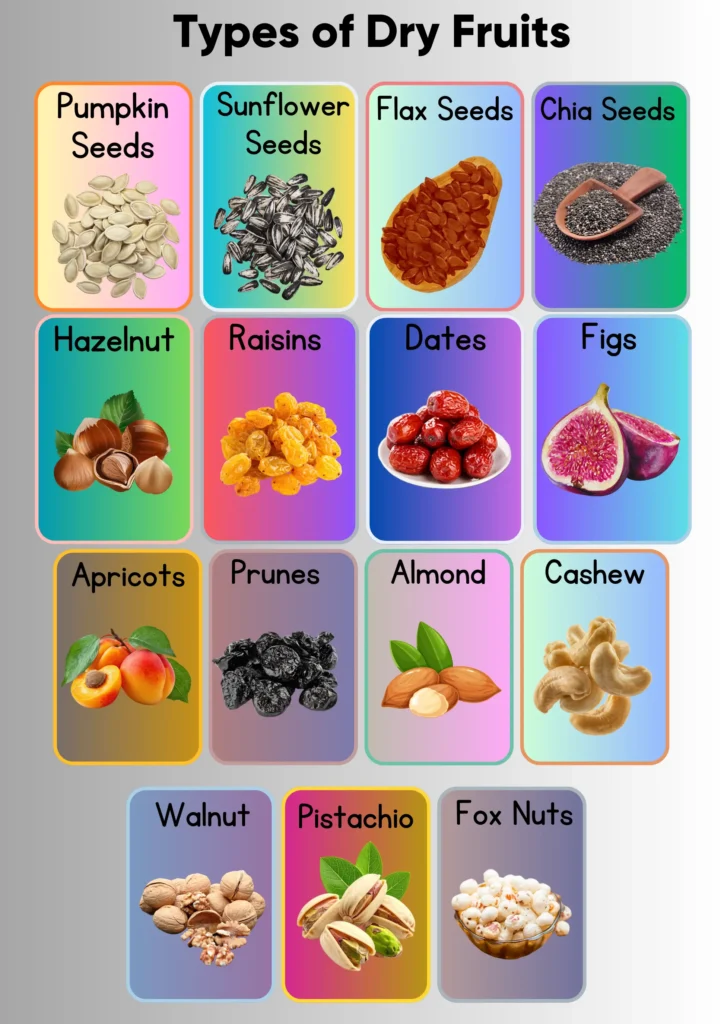
Dry fruits come in different varieties, each offering unique flavors and health benefits. Broadly, they can be divided into three main categories: nut dry fruits, dried fruits (fruit-based), and seeds or specialty dry fruits.
Nut Dry Fruits
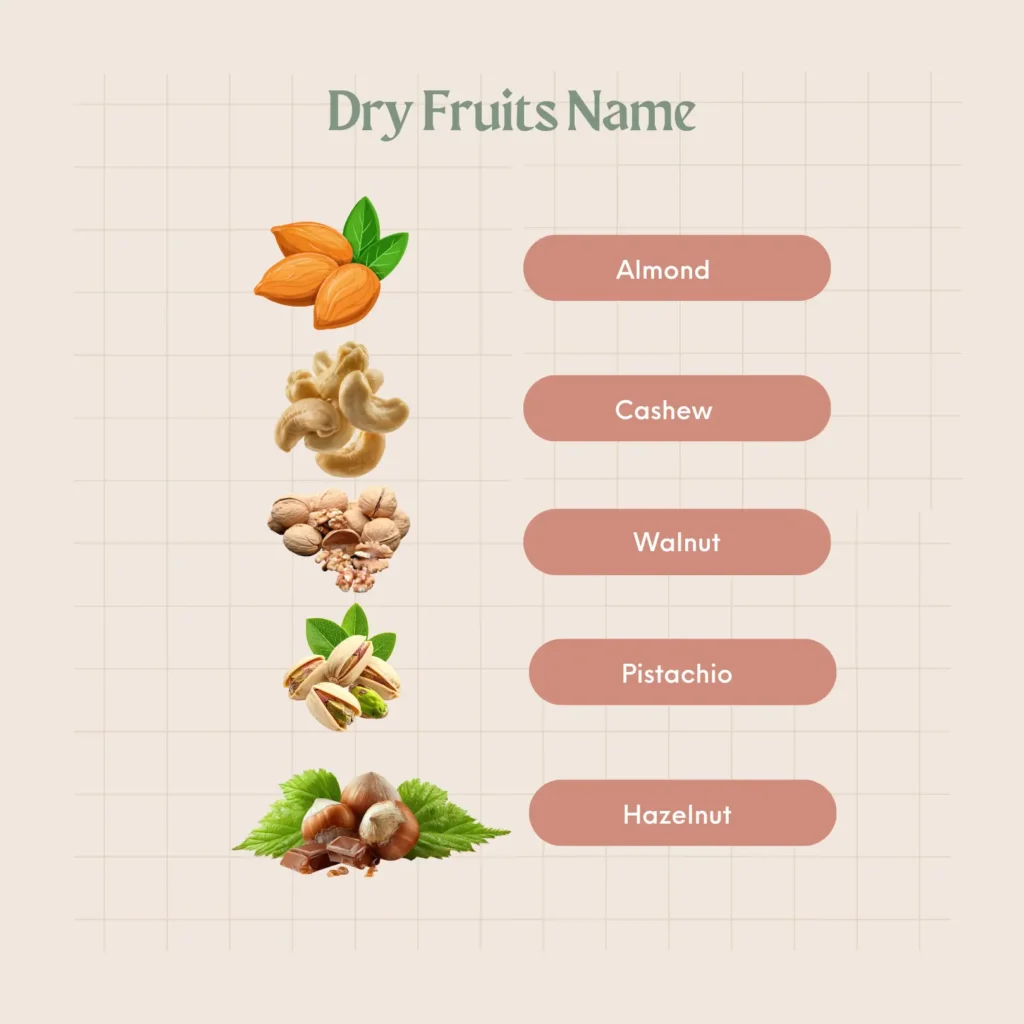
Nut dry fruits are the crunchy, nutrient-rich seeds we often enjoy as snacks or use in cooking and baking. These nuts are packed with healthy fats, protein, and essential vitamins and minerals. Some popular nut dry fruits include:
- Almond
- Cashew
- Walnut
- Pistachio
- Hazelnut
Dried Fruits (Fruit-Based)
Dried fruits are fresh fruits that have been dried to remove moisture, concentrating their natural sweetness and nutrients. They make delicious snacks and can be added to many recipes. Common dried fruits include:
- Raisins
- Dates
- Figs
- Apricots
- Prunes
Seeds & Specialty Dry Fruits
Besides nuts and dried fruits, some seeds and specialty dry fruits are also popular for their health benefits:
- Pumpkin Seeds
- Sunflower Seeds
- Flax Seeds
- Chia Seeds
- Fox Nuts (Makhana)
Do read 100 vegetables name in english and hindi in details, you will get introduce with different vegetables names.
List of All Dry Fruits Names in English
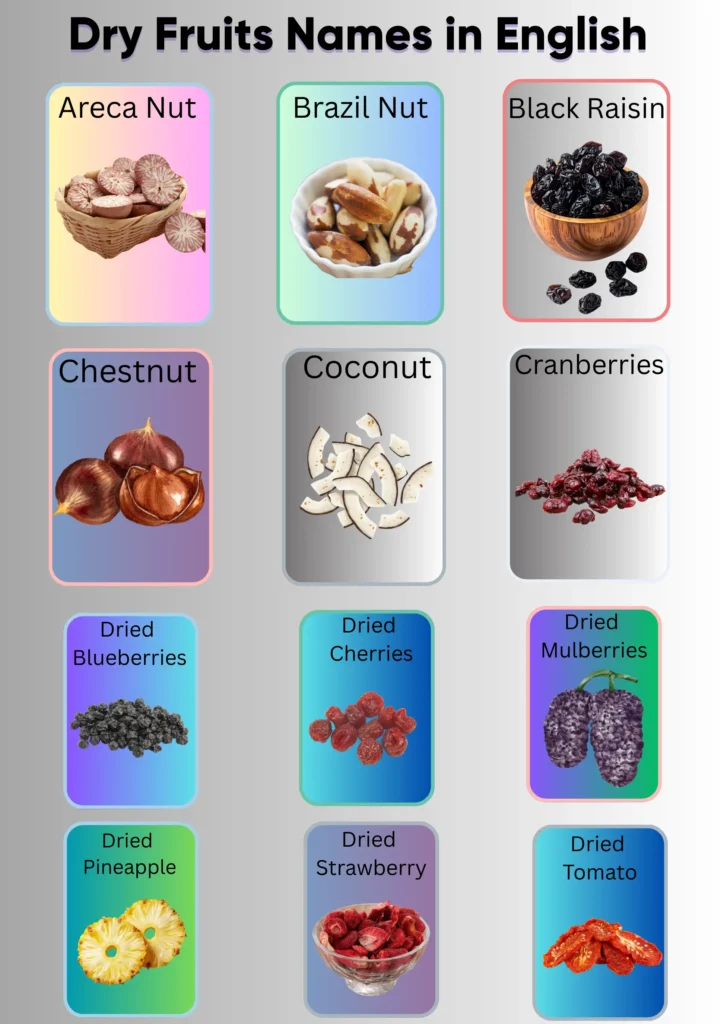
Here is a complete list 50 dry fruit name of popular dry fruits in English. These dry fruits are commonly used in snacks, cooking, and traditional recipes, and are packed with nutrients that benefit health.
- Almond
- Apricot (Dried)
- Areca Nut
- Brazil Nut
- Black Raisin
- Cashew
- Chia Seeds
- Chestnut
- Coconut (Dried)
- Cranberries (Dried)
- Dates
- Dried Blueberries
- Dried Cherries
- Dried Mulberries
- Dried Pineapple
- Dried Strawberry
- Dried Tomato
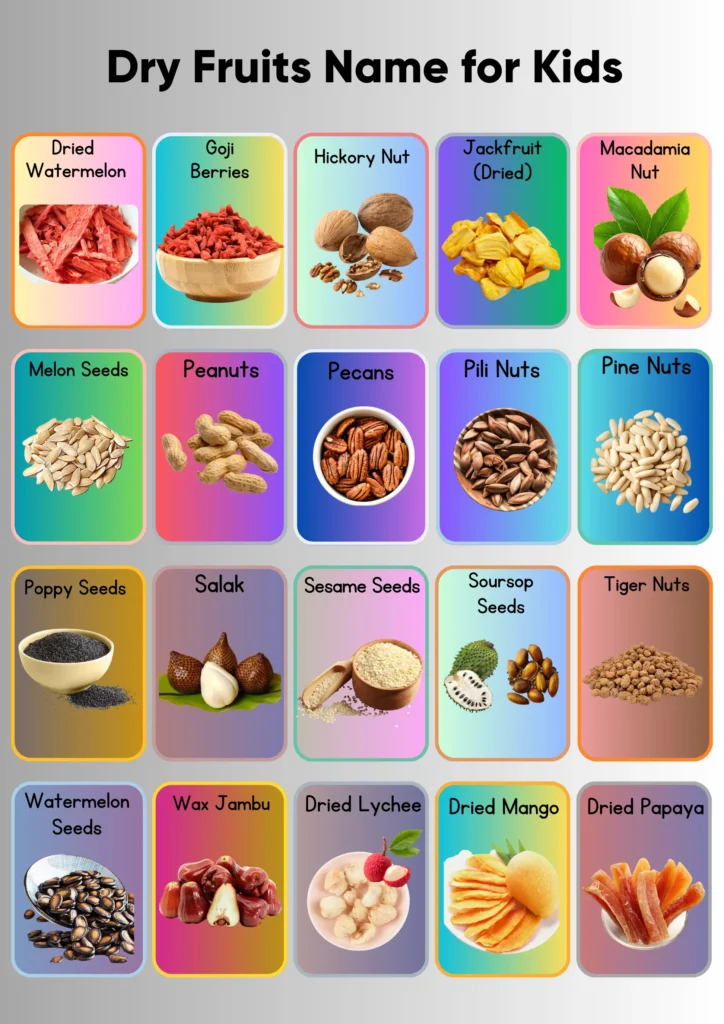
- Dried Watermelon
- Figs (Dried)
- Flax Seeds
- Goji Berries (Dried)
- Hazelnut
- Hickory Nut
- Jackfruit (Dried)
- Kaju (Cashew Nut)
- Kismis (Raisin)
- Lotus Seeds
- Macadamia Nut
- Makhana (Fox Nuts)
- Melon Seeds
- Peanuts
- Pecans
- Pili Nuts
- Pine Nuts
- Pistachio
- Poppy Seeds
- Prunes (Dried Plum)
- Pumpkin Seeds
- Raisins
- Salak (Snake Fruit, Dried)
- Sesame Seeds
- Soursop Seeds
- Sunflower Seeds
- Tiger Nuts
- Walnut
- Watermelon Seeds
- Wax Jambu (Dried)
- White Raisins
- Yellow Raisins
- Almond Butter (technically processed dry fruit)
- Dried Mulberry
- Dried Coconut Chips
- Dried Mango
- Dried Papaya
- Dried Banana Chips
- Brazil Nuts
- Candied Ginger (dried fruit variant)
- Chestnuts (Roasted/Dried)
- Dried Figs
- Dried Lychee
10 Common Dry Fruits Names with Benefits
Here are 10 popular dry fruits along with their key health benefits. These dry fruits are not only delicious but also packed with nutrients that support overall well-being.
- Almond : Known to improve brain health, almonds are rich in vitamin E, healthy fats, and antioxidants that help boost memory and concentration.
- Cashew : Cashews provide a great source of energy and help strengthen the immune system due to their high content of minerals like zinc and magnesium.
- Raisins : These dried grapes aid digestion by providing fiber and natural sugars that help keep your digestive system healthy.
- Dates : Naturally sweet and rich in iron and potassium, dates are excellent for quick energy and help maintain healthy blood pressure.
- Walnut : Walnuts support heart and brain health thanks to their omega-3 fatty acids and antioxidants.
- Pistachio : Pistachios promote good eye health as they contain lutein and zeaxanthin, important antioxidants for vision.
- Fig : Figs are excellent for gut health, providing fiber that helps regulate bowel movements and promotes a healthy digestive tract.
- Apricot : Packed with vitamins A and C, apricots help maintain healthy skin and improve its texture and appearance.
- Prunes : Known for their natural laxative effect, prunes help relieve constipation and support digestive health.
- Cranberries : These berries are well-known for supporting urinary tract health and preventing infections.
Top 20 Dry Fruits Names with Nutritional Value
Here is a list of 20 popular dry fruits along with their approximate calorie content and key nutrients.
| Dry Fruit | Calories (per 28g / 1 oz) | Key Nutrients |
| Almond | 160 | Vitamin E, Magnesium, Healthy fats, Protein |
| Cashew | 155 | Copper, Magnesium, Iron, Healthy fats |
| Walnut | 185 | Omega-3 fatty acids, Antioxidants, Protein |
| Pistachio | 160 | Vitamin B6, Potassium, Fiber, Protein |
| Raisins | 85 | Iron, Potassium, Fiber, Antioxidants |
| Dates | 75 | Potassium, Magnesium, Fiber, Natural sugars |
| Figs | 74 | Calcium, Fiber, Potassium, Antioxidants |
| Apricots | 78 | Vitamin A, Vitamin C, Fiber, Potassium |
| Prunes | 67 | Fiber, Vitamin K, Potassium, Antioxidants |
| Cranberries | 50 | Vitamin C, Fiber, Antioxidants |
| Hazelnut | 180 | Vitamin E, Healthy fats, Magnesium |
| Macadamia | 200 | Healthy fats, Thiamine, Manganese |
| Peanuts | 170 | Protein, Healthy fats, Niacin |
| Pecans | 200 | Healthy fats, Fiber, Thiamine |
| Pine Nuts | 190 | Magnesium, Vitamin K, Protein |
| Pumpkin Seeds | 150 | Magnesium, Zinc, Protein |
| Sunflower Seeds | 165 | Vitamin E, Magnesium, Selenium |
| Flax Seeds | 150 | Omega-3 fatty acids, Fiber, Protein |
| Chia Seeds | 140 | Omega-3 fatty acids, Fiber, Calcium |
| Fox Nuts (Makhana) | 100 | Protein, Calcium, Magnesium |
To make the learning more informative check out Soft c and Hard c sound words with pictures and activities worksheets.
Health Benefits of Consuming Dry Fruits Daily
Dry Fruits Benefits
Including dry fruits in your daily diet can offer a wide range of health benefits. Here are some of the key advantages:
- Improves Brain Function
Many dry fruits, like almonds and walnuts, are rich in healthy fats and antioxidants that help boost memory, focus, and overall brain health. - Boosts Immunity
Dry fruits contain essential vitamins and minerals such as vitamin E, zinc, and iron that strengthen the immune system and help your body fight infections. - Provides Instant Energy
Packed with natural sugars, healthy fats, and proteins, dry fruits are an excellent source of quick and sustained energy, making them perfect snacks for busy days or workouts. - Improves Digestion
The fiber content in dry fruits like raisins, figs, and prunes supports healthy digestion and helps prevent constipation. - Supports Heart Health
Nuts like walnuts and pistachios are rich in heart-healthy fats that help lower bad cholesterol levels and improve cardiovascular health.
Dry Fruits That Help Make Kids Smarter
Dry fruits are not only tasty snacks but also powerful brain boosters, especially for growing kids. Including these dry fruits in your child’s diet can support better memory, focus, and overall brain development.
- Almonds for Memory
Almonds are rich in vitamin E and healthy fats that help improve memory and cognitive function, making them a great snack to support learning. - Walnuts for Brain Development
Packed with omega-3 fatty acids and antioxidants, walnuts play a key role in brain growth and development, enhancing concentration and problem-solving skills. - Dates for Energy
Dates provide natural sugars and essential minerals that give kids an instant energy boost, keeping them active and attentive throughout the day. - Raisins for Focus
Raisins contain iron and antioxidants that improve blood flow to the brain, helping kids stay focused and alert during studies or activities.
Learn ie words list for kids to improve vocabulary and helps to understand voiceless and voiced words .
Popular Indian Dry Fruit Mixes
In India, dry fruits are often combined into delicious and nutritious mixes that suit different tastes and occasions. Here are some popular Indian dry fruit mixes you might enjoy:
- Trail Mix
A simple and healthy combination of nuts, seeds, and dried fruits like almonds, cashews, raisins, and pumpkin seeds. It’s a perfect on-the-go snack for energy and nutrition. - Soaked Dry Fruit Mix
Many Indian households soak a mix of dry fruits overnight to make them softer and easier to digest. This mix usually includes almonds, walnuts, raisins, and dates and is often eaten in the morning for a nutrient boost. - Kids Nutrition Mix
Specially curated mixes for children often contain mild-flavored nuts and dried fruits such as cashews, raisins, and apricots. These mixes are designed to provide essential vitamins and minerals to support growth and brain development. - Festival Dry Fruit Laddoos
During Indian festivals, dry fruits are blended with jaggery or sugar to make laddoos, which are delicious energy bites. These laddoos are rich in nutrients and enjoyed as festive treats or healthy snacks.
How to Add Dry Fruits to Your Kids’ Diet
Including dry fruits in your child’s diet is easier than you think. Here are some simple and tasty ways to make dry fruits a regular part of their meals and snacks:
- In Breakfast
Sprinkle chopped almonds, walnuts, or raisins over oatmeal, cereal, or yogurt. You can also add soaked dry fruits to upma, poha, or idli batter for an extra nutritional boost. - As Snacks
Offer dry fruits like cashews, pistachios, or dates as healthy snacks between meals. You can also prepare homemade dry fruit energy bars or mixes for a quick grab-and-go option. - In Kids’ Lunchbox
Add dry fruits to their lunchbox by mixing them into rice, pulao, or chapati rolls. Small portions of roasted nuts or dry fruit chikkis can also make tasty and nutritious lunchbox treats. - In Desserts & Smoothies
Blend dates, figs, or soaked almonds into smoothies for natural sweetness and creaminess. Dry fruits can also be chopped and added to homemade puddings, halwas, or fruit salads.
Storage Tips for Dry Fruits
Proper storage of dry fruits is important to keep them fresh, tasty, and nutritious for longer. Here are some simple tips to help you store dry fruits the right way:
- Use Airtight Containers
Always store dry fruits in airtight containers to prevent exposure to air and moisture, which can cause them to spoil or become stale. - Refrigeration Tips
For longer shelf life, especially in warm or humid climates, keep dry fruits like nuts and seeds in the refrigerator. This helps preserve their natural oils and prevents them from turning rancid. - Shelf Life of Dry Fruits
Most dry fruits can last from 6 months to a year if stored properly. However, soaked dry fruits should be consumed within a day or two to avoid fermentation. - Avoid Moisture & Sunlight
Keep dry fruits away from moisture and direct sunlight, as both can degrade their quality and cause mold growth.
Learn ee words for kids with printable worksheets make the learning more fun and exciting.
Benefits of Eating Healthy Dry Fruits Regularly
Eating healthy dry fruits regularly can have a positive impact on your overall well-being. Here’s why including them in your daily diet is a great choice:
- Long-Term Health Benefits
Regular consumption of dry fruits supports strong bones, healthy skin, and improved brain function. They provide essential nutrients that help maintain energy levels and keep your body functioning at its best over time. - Prevent Lifestyle Diseases
Dry fruits are rich in antioxidants, healthy fats, and fiber, which help reduce the risk of chronic diseases like heart disease, diabetes, and obesity. Their nutrients also aid in controlling blood pressure and cholesterol levels. - Ideal for All Age Groups
From growing kids to active adults and elders, dry fruits offer benefits for every stage of life. They help support growth, boost immunity, improve digestion, and promote healthy aging.
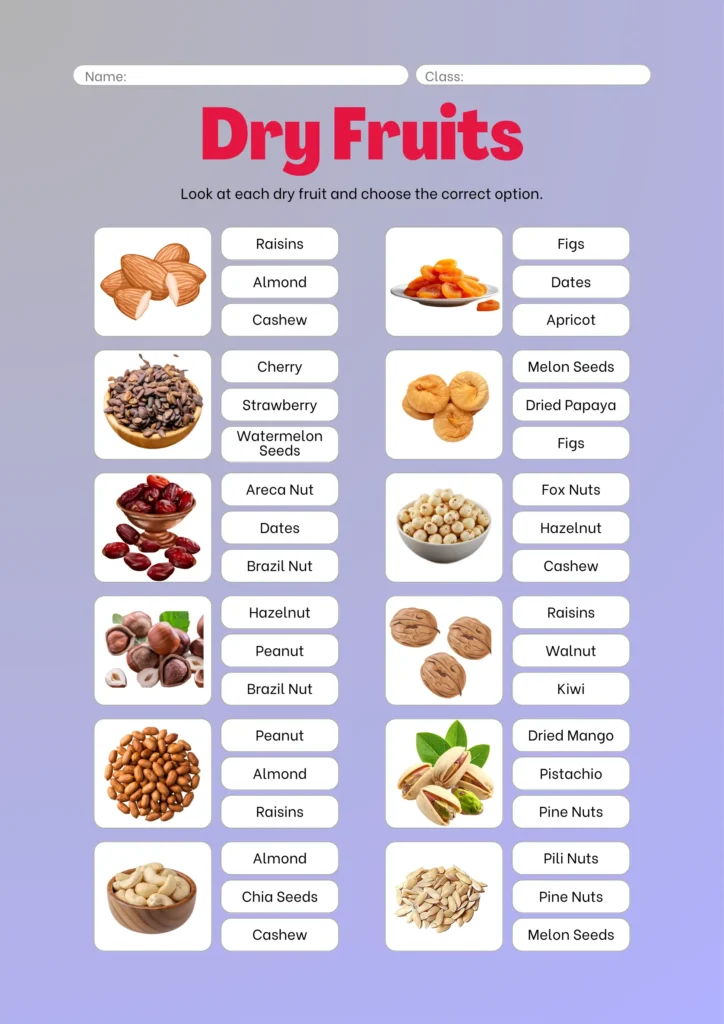
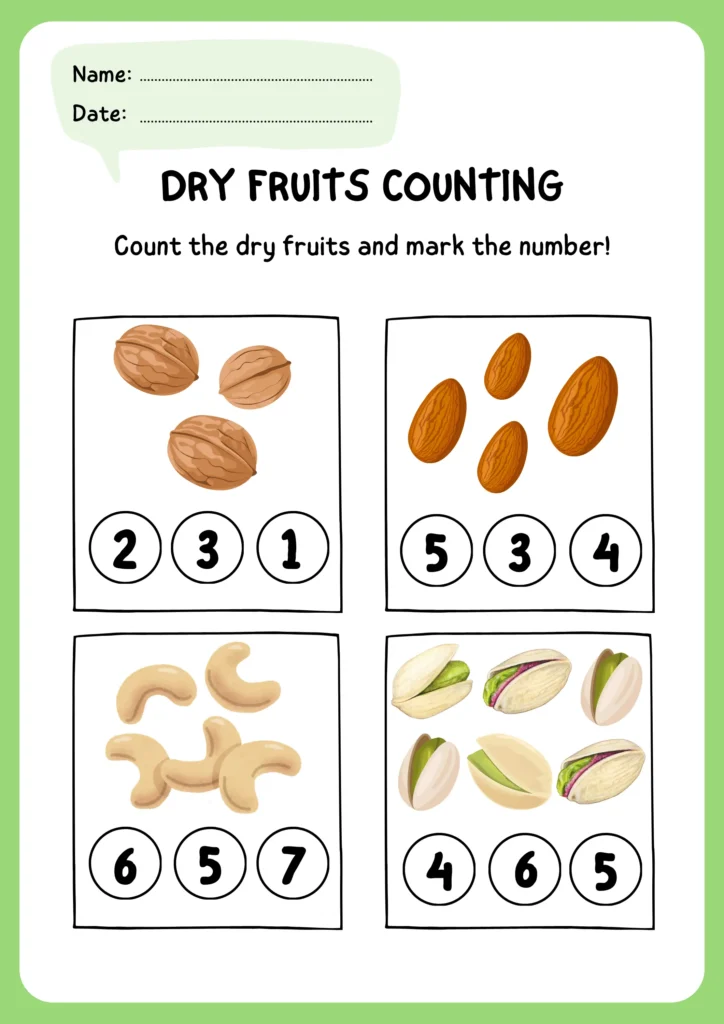
Fun Quiz – Test Your Knowledge on Dry Fruits Names
Ready to test how well you know your dry fruits? Try these fun quiz activities to challenge yourself or play with friends and family!
- Multiple Choice
Pick the correct dry fruit name from the options given. For example, “Which dry fruit is known as the brain booster?”
a) Cashew
b) Almond
c) Raisins
- Match the Dry Fruit
Match the dry fruit names to their pictures or health benefits. This helps reinforce your memory and learn more about each dry fruit. - Guess the Image
Look at close-up pictures or partial images of dry fruits and try to guess which one it is. This game makes learning fun and visual!
Conclusion
Dry fruits are nature’s little power-packed snacks, full of essential nutrients that benefit people of all ages. Whether you want to boost brain function, improve digestion, or simply enjoy a tasty and healthy treat, dry fruits offer an easy and delicious way to support your health. By including a variety of dry fruits in your daily diet and following proper storage tips, you can enjoy their benefits all year round.

Related Blog
- Discover the List of colors name in english a to z to make kids aware of colors names.
- A Practical downloadable and printable List of 50 dry fruits name in english and hindi
- A Practical learning experience of Body parts names in english for kids with pictures and worksheets.
- See how Omnivores animals survive their food habits learn with pictures and worksheets.
- Learn more about Pet animals name in english and hindi help in improving understanding.
- Check out 100 vegetables name in english and hindi help in developing healthy eating habit at early age.
FAQ’s
1. How many dry fruits should I eat daily ?
A small handful (about 20-30 grams) of mixed dry fruits daily is enough to get their nutritional benefits without consuming too many calories.
2. Can kids eat dry fruits every day ?
Yes, kids can eat dry fruits daily in moderate amounts. They provide essential nutrients that support growth and brain development.
3. Are soaked dry fruits better ?
Soaking dry fruits makes them softer and easier to digest, and it can increase nutrient absorption, making soaked dry fruits a healthy choice.
4. Which dry fruit is best for brain ?
Almonds and walnuts are considered the best dry fruits for brain health due to their high content of healthy fats, antioxidants, and vitamins.
5. What is the best time to eat dry fruits ?
The best time to eat dry fruits is in the morning on an empty stomach or as a mid-morning snack. Avoid eating them late at night to prevent digestive discomfort.
6. Name 10 dry fruits name in hindi and english ?
Almond (Badam), Cashew (Kaju), Raisin (Kishmish), Walnut (Akhrot), Pistachio (Pista), Dates (Khajoor), Fig (Anjeer), Apricot (Khubani), Peanut (Moongfali), Chestnut (Shahbaloot).

Team Amaltas is a group of graduates dedicated to creating a fun and effective learning platform for kids through worksheets and educational resources.